




[:es]
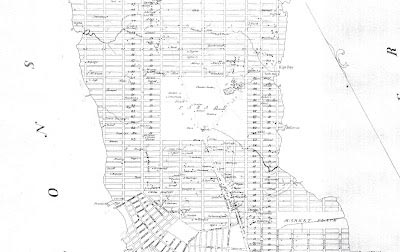
Geografía y geometría han estado íntimamente unidas desde los orígenes del urbanismo. A través de la geometría se hizo simple la planificación de los cultivos, y también la construcción de la ciudad. La trama reticulada no sólo permite el control del presente —y la asunción del pasado— sino que alberga el futuro crecimiento, en teoría infinito.
La particularidad de Manhattan, de Nueva York, está en su extensión limitada, en el agua que rodea la isla. En 1811, una comisión dirigida por DeWitt Clinton hizo de la geografía geometría, con un sorprendente plan: cubrir la totalidad de la isla con una malla de 12 anchas avenidas longitudinales y 155 calles transversales —siguiendo la lógica de la forma— generando aproximadamente 2.000 manzanas rectangulares, 2.000 islas artificiales de habitación en un mar de tráfico.
Como la gran retícula quedaba interrumpida por los límites físicos de la isla, enseguida adquirió una notable importancia el tercero de los ejes del espacio: la verticalidad. Ya que el horizonte, por geografía y por geometría, era finito, el cielo sería el nuevo límite. La malla se volvía tridimensional, y el crecimiento en altura, virtualmente ilimitado.
antonio s. río vázquez . arquitecto
a coruña. junio 2012
Autor del blog, El tiempo del lobo
[:gl]Ven de
Xeografía e xeometría estiveron íntimamente unidas desde as orixes do urbanismo. A través da geometría fíxose simple a planificación dos cultivos, e tamén a construción da cidade. A trama reticulada non só permite o control do presente —e a asunción do pasado— senón que alberga o futuro crecemento, en teoría infinito.
A particularidade de Manhattan está na súa extensión limitada, no auga que rodea a illa. En 1811, unha comisión dirixida por DeWitt Clinton fixo da xeografía geometría, cun sorprendente plan: cubrir a totalidade da illa cunha malla de 12 anchas avenidas longitudinales e 155 rúas transversales —seguindo a lóxica da forma— xerando aproximadamente 2.000 mazás rectangulares, 2.000 illas artificiais de habitación nun mar de tráfico.
Como a gran retícula quedaba interrompida polos límites físicos da illa, enseguida adquiriu unha notable importancia o terceiro dos eixes do espazo: a verticalidad. Xa que o horizonte, por xeografía e por geometría, era finito, o ceo sería o novo límite. A malla volvíase tridimensional, e o crecemento en altura, virtualmente ilimitado.
antonio s. río vázquez . arquitecto
a coruña. juño 2012
Autor do blogue, El tiempo del lobo
Geography and geometry have been intimately joined from the origins of the urbanism. Across the geometry the planning of the cultures became simple, and also the construction of the city. The plot reticulada not only allows the control of the present – and the assumption of the past – but it shelters the future growth, theoretically immensely.
The particularity of Manhattan is in his limited extension, in the water that surrounds the island. In 1811, one commission directed by DeWitt Clinton it did of the geography geometry, with a surprising plan: to cover the totality of the island with a mesh of 12 broad longitudinal avenues and 155 transverse streets – following the logic of the form – generating approximately 2.000 rectangular apples, 2.000 artificial islands of room in a sea of traffic.
Since the great reticle was remaining interrupted by the physical limits of the island, immediately a notable importance acquired the third party of the axes of the space: the uprightness. Since the horizon, for geography and for geometry, was finite, the sky would be the new limit. The mesh was becoming three-dimensional, and the growth in height, virtually unlimited.
antonio s. río vázquez . architect
a coruña. juny 2012
Author of the blog, El tiempo del lobo
Follow on[:]