



InicioartículosEl dominio como problema fundamental y físico de los fenómenos límite y...

[:es]El dominio como problema fundamental y físico de los fenómenos límite y frontera | Luis Gil[:gl]O dominio como problema fundamental e físico dos fenómenos límite e fronteira | Luis Gil[:en]Mastery as a fundamental and physical problem of boundary and border phenomena | Luis Gil[:]

[:es]https://veredes.es/blog/alegoria-la-frontera-limite-luis-gil/

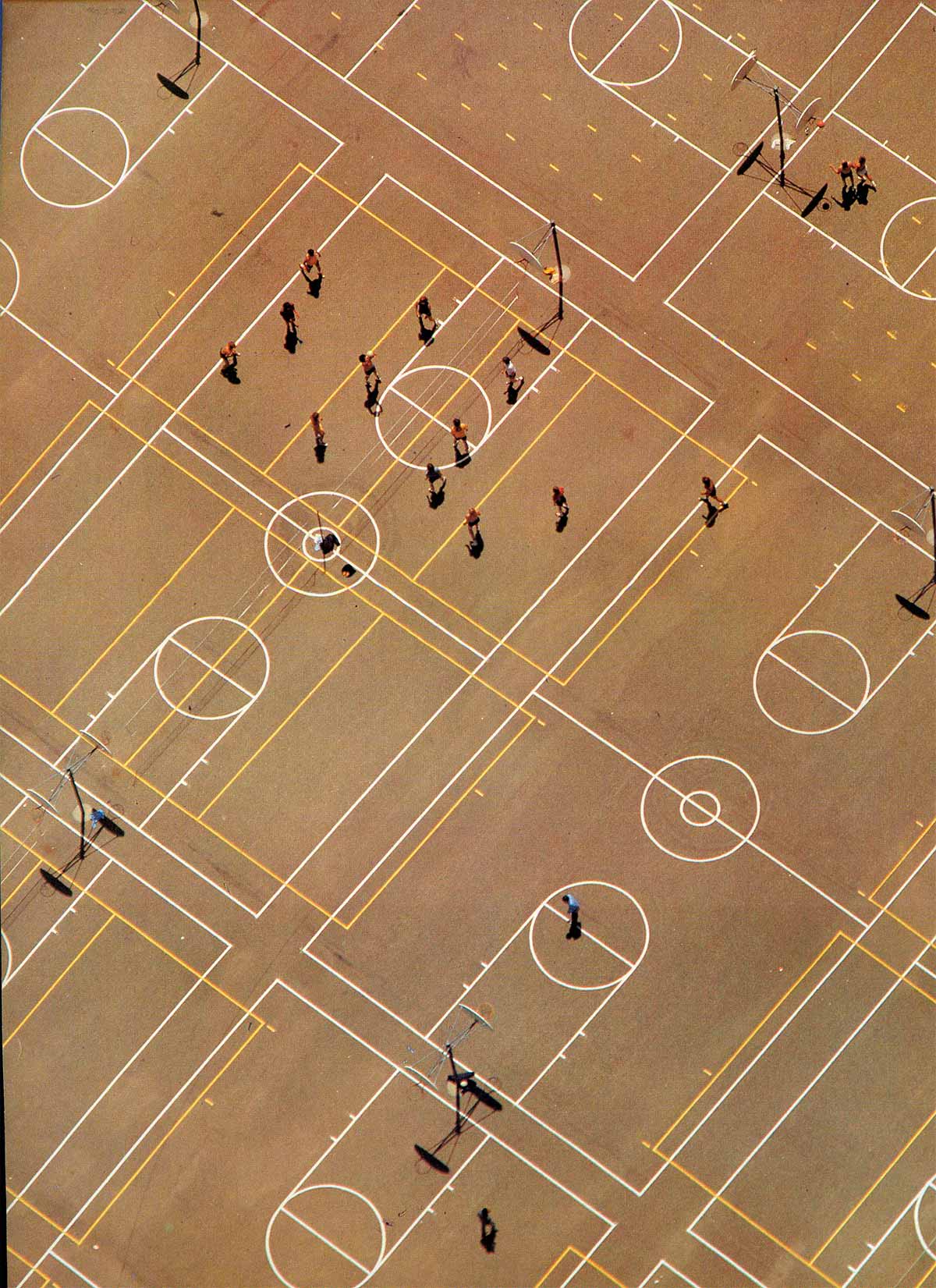
Ball Players by Georg Gerster, Santa Barbara, 1974

El movimiento y el caminar es innato a la actividad del hombre, por variados motivos, desde la grandes migraciones y movimientos en la búsqueda de caza del Paleolítico hasta nuestros días. Un movimiento que en origen era forzado por la propia necesidad de sobrevivir ante la adversa naturaleza, muy anterior a la posterior sedentarización y articulación del hombre con el territorio a través del control y uso del suelo mediante la actividad agrícola. La agricultura fijó el movimiento continuo del hombre y le hizo sedentario en mayor o menor escala hasta llegar al último grado de elaboración en lo estático que fue la ciudad, como condensador cultural y articulador económico de otras inercias y comportamientos en el habitar.

No se puede hablar de la cuestión territorial del comienzo del dominio sin la mejor referencia literaria del habitante nómada frente al sedentario. Sin hablar de Abel frente a Caín… Esta doble forma de habitar el territorio, en movimiento o estatismo, es la disyuntiva vital de su ser. Mientras que Caín, en la división del trabajo, encarna al hombre fijado a la tierra que sobrevive a través de la agricultura, Abel es hombre en movimiento, el pastor y nómada que sigue a sus rebaños (De alguna manera Abel es un primer Homo-ludens pues dispone de parte libre de tiempo para otras actividades). Esta diferente forma de actuar sobre el soporte territorial establece una dualidad en el habitar humano que ha persistido en diferentes escalas hasta la llegada o acontecer de los recientes fenómenos que han sucedido en la segunda mitad del s. XX y que se relatamos en el primer apartado.

La cuestión de dominio tiene que ver directamente con el habitar nómada y de cuándo se produce la sedentarización. La localización, el asentamiento, imprime carácter al espacio, pues debe ser marcado y controlado. Pararse quiere decir controlar el espacio sobre el que se está, al contrario de la imposibilidad de domesticarlo cuando se está en movimiento.
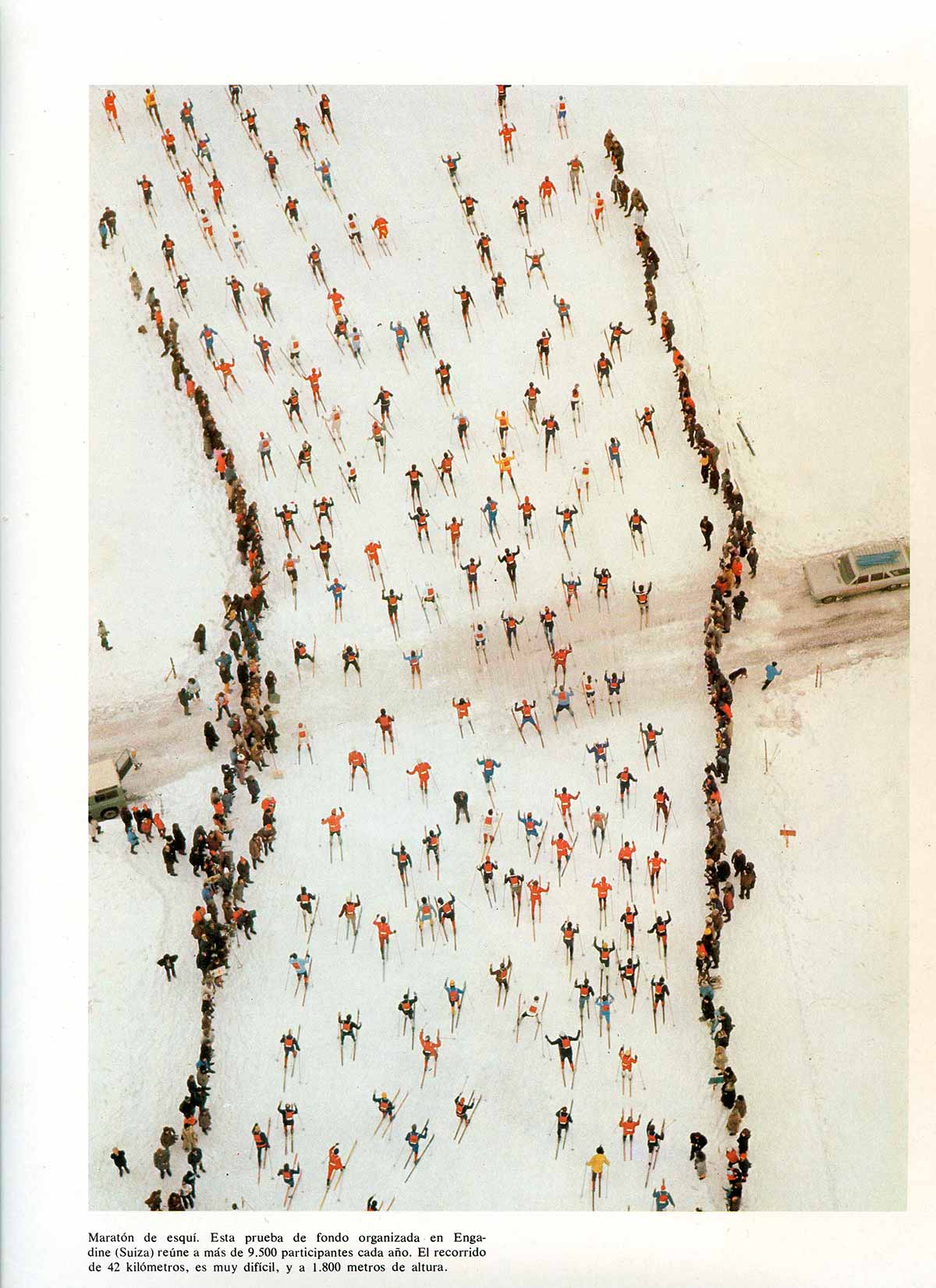
Engandin marathon, Georg Gerster (1972)

Bruce C. Chatwin nos explicó cómo el conflicto humano entre esta doble forma de habitar aparece porque el hombre estático, el que a fin de cuentas hace poblamiento y ciudad, se apropia del territorio, lo ocupa de forma continua, lo cierra y lo intenta controlar y cercar, defendiendo su parcela de otros dominios cercanos (fenómeno que se repite a todas las escalas, hasta llegar a la territorial), mientras que el nómada solo puede controlar aquello que usa en cada momento, produciéndose una apropiación que es mínima o temporal, sin existir la ambición de territorializar un espacio como propio sino de intercambiar momentos.

Desde entonces y durante la mayor parte de la historia más reciente del hombre (los últimos 3.000 años) el andar y caminar sólo se han justificado, desde la obligación por la subsistencia primero, y más tarde del comercio que de forma indirecta a sido uno de los más frecuentes impulsos para salir de lo estático, de aquel espacio propio en quietud.

De esta forma el gasto de energía, social y cultural, necesario para abandonar lo conocido y emprender el viaje, sea este caminado o abordado con otros medios de transporte, sólo se justifica por el objetivo de conseguir una forma de vida superior, sea en lo económico, sea en lo cultural-político.

Será sólo a partir del s. XIX, cuando el viaje, así como el caminar, que cruza mundos diferentes, se comenzará a entender de forma lúdica principalmente impulsado por una nueva forma de ver que nace con el romanticismo y es impulsada más tarde por la aparición de una nueva clase social, la burguesía.
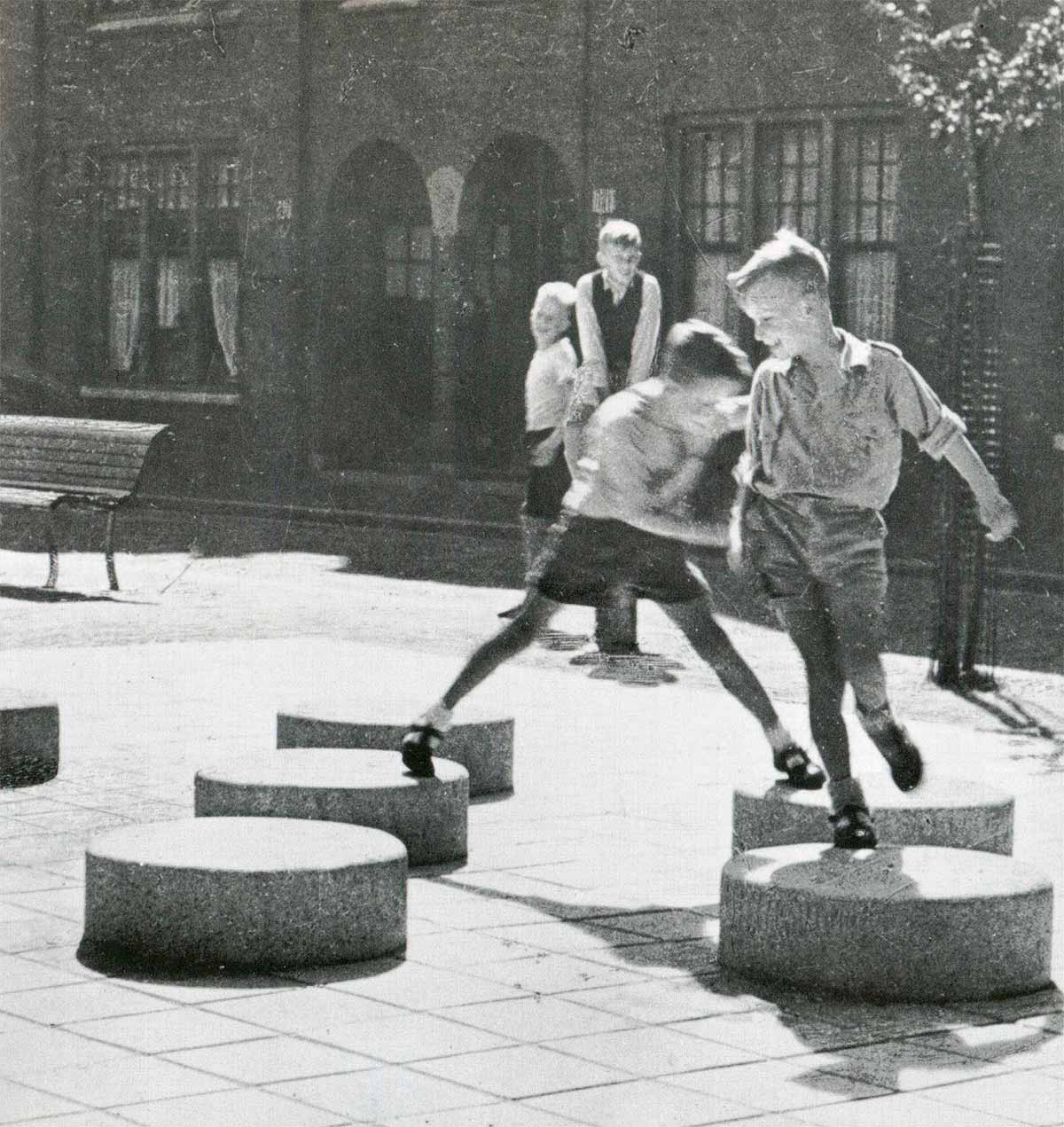
Playground Zaanhof, 1950, Aldo van Eyck

Luis Gil Pita, arquitecto
Santiago de Compostela, Noviembre 2019

Límites, naturaleza y artificio | Luis Gil

Capítulo del artículo Alegoría de la frontera y el límite, publicado originalmente en la revista Obradoiro nº34, invierno de 2009.

[:gl]

Ball Players by Georg Gerster, Santa Barbara, 1974

O movemento e o camiñar é innato á actividade do home, por variados motivos, desde as grandes migracións e movementos na procura de caza do Paleolítico ata os nosos días. Un movemento que en orixe era forzado pola propia necesidade de sobrevivir #ante a adversa natureza, moi anterior á posterior sedentarización e articulación do home co territorio a través do control e uso do chan mediante a actividade agrícola. A agricultura fixou o movemento continuo do home e fíxolle sedentario en maior ou menor escala ata chegar ao último grao de elaboración no estático que foi a cidade, como condensador cultural e articulador económico doutras inercias e comportamentos no habitar.

Non se pode falar da cuestión territorial do comezo do dominio sen a mellor referencia literaria do habitante nómade fronte ao sedentario. Sen falar de Abel fronte a Caín… Esta dobre forma de habitar o territorio, en movemento ou estatismo, é a disxuntiva vital da súa ser. Mentres que Caín, na división do traballo, encarna ao home fixado á terra que sobrevive a través da agricultura, Abel é home en movemento, o pastor e nómade que segue aos seus rabaños (Dalgunha maneira Abel é un primeiro Homo- ludens pois dispón de parte libre de tempo para outras actividades). Esta diferente forma de actuar sobre o soporte territorial establece unha dualidade no habitar humano que persistiu en diferentes escalas ata a chegada ou acontecer dos recentes fenómenos que sucederon na segunda metade do s. XX e que se relatamos no primeiro apartado.

A cuestión de dominio ten que ver directamente co habitar nómade e de cando se produce a sedentarización. A localización, o asentamento, imprime carácter ao espazo, pois debe ser marcado e controlado. Pararse quere dicir controlar o espazo sobre o que se está, ao contrario da imposibilidade de domesticarlo cando se está en movemento.

Engandin marathon, Georg Gerster (1972)

Bruce C. Chatwin explicounos como o conflito humano entre esta dobre forma de habitar aparece porque o home estático, o que a final de contas fai poblamiento e cidade, aprópiase do territorio, ocúpao de forma continua, péchao e téntao controlar e cercar, defendendo a súa parcela doutros dominios próximos (fenómeno que se repite a todas as escalas, ata chegar á territorial), mentres que o nómade só pode controlar aquilo que usa en cada momento, producíndose unha apropiación que é mínima ou temporal, sen existir a ambición de territorializar un espazo como propio senón de intercambiar momentos.

Desde entón e durante a maior parte da historia máis recente do home (os últimos 3.000 anos) o andar e camiñar só se xustificaron, desde a obrigación pola subsistencia primeiro, e máis tarde do comercio que de forma indirecta a sido un dos máis frecuentes impulsos para saír do estático, daquel espazo propio en quietude.

Desta forma o gasto de enerxía, social e cultural, necesario para abandonar o coñecido e emprender a viaxe, sexa este camiñado ou abordado con outros medios de transporte, só se xustifica polo obxectivo de conseguir unha forma de vida superior, sexa no económico, sexa no cultural-político.

Será só a partir do s. XIX, cando a viaxe, así como o camiñar, que cruza mundos diferentes, comezarase a entender de forma lúdica principalmente impulsado por unha nova forma de ver que nace co romanticismo e é impulsada máis tarde pola aparición dunha nova clase social, a burguesía.

Playground Zaanhof, 1950, Aldo van Eyck

Luis Gil Pita, arquitecto
Santiago de Compostela, November 2019

Capítulo do artigo Alegoría da fronteira e o límite, publicado orixinalmente na revista Obradoiro nº34, inverno de 2009.

[:en]

Ball Players by Georg Gerster, Santa Barbara, 1974

The movement and walking is innate to the activity of man, for various reasons, from the great migrations and movements in the search for Paleolithic hunting to the present day. A movement that was originally forced by the need to survive against the adverse nature, much earlier than the subsequent sedentary and articulation of man with the territory through the control and use of land through agricultural activity. Agriculture fixed the continuous movement of man and made him sedentary on a greater or lesser scale until he reached the last degree of elaboration in the static that was the city, as a cultural condenser and economic articulator of other inertia and behaviors in living.

You cannot talk about the territorial question of the beginning of the domain without the best literary reference of the nomadic inhabitant in front of the sedentary one. Not to mention Abel in front of Cain … This double way of inhabiting the territory, in movement or statism, is the vital dilemma of his being. While Cain, in the division of labor, embodies the man fixed to the land that survives through agriculture, Abel is a moving man, the shepherd and nomad who follows his flocks (Abel is somehow a first Homo- Ludens has free time for other activities). This different way of acting on territorial support establishes a duality in human habitation that has persisted on different scales until the arrival or occurrence of the recent phenomena that have happened in the second half of the s. XX and that we relate in the first section.

The question of dominance has to do directly with nomadic inhabiting and when sedentary life occurs. The location, the settlement, gives character to the space, as it must be marked and controlled. Standing means controlling the space on which it is, contrary to the impossibility of taming it when it is in motion.

Engandin marathon, Georg Gerster (1972)

Bruce C. Chatwin explained to us how the human conflict between this double way of living appears because the static man, who ultimately makes a settlement and city, appropriates the territory, occupies it continuously, closes it and tries to control it and fencing, defending its plot from other nearby domains (phenomenon that is repeated at all scales, until reaching the territorial), while the nomad can only control what he uses at any time, producing an appropriation that is minimal or temporary, without the ambition to territorialize a space as its own but to exchange moments.

Since then and for most of the most recent history of man (the last 3,000 years), walking and walking have only been justified, since the first subsistence obligation, and later of trade that indirectly has been one of the most frequent impulses to get out of the static, of that own space in stillness.

In this way, the expenditure of energy, social and cultural, necessary to abandon the known and undertake the trip, be it walked or approached with other means of transport, is justified only by the objective of achieving a superior way of life, whether in economic, be it cultural-political.

It will be only from s. XIX, when the trip, as well as the walk, which crosses different worlds, will begin to be understood in a playful way mainly driven by a new way of seeing that is born with romanticism and is later driven by the emergence of a new social class, The bourgeoisie.

Playground Zaanhof, 1950, Aldo van Eyck

Luis Gil Pita, architect
Santiago de Compostela, November 2019

Article chapter Allegory of the border and the limit, originally published in the Obradoiro magazine nº34, winter 2009.

[:]

Luis Gil Pita
Luis Gil Pitahttps://gilpitanietopenamariaarquitectos.com/
Arquitecto por la ETSA en 1997, desde ese año colabora en el estudio de Manuel Gallego Jorreto hasta 1999. Becado de investigación en Holanda en 2000-1, con un estudio sobre lo fronterizo y liminar en arquitectura, por la Diputación de A Coruña, fue posteriormente Profesor invitado en el área de proyectos de la Facultad de Arquitectura de Guimaráes, Universidade do Minho, del 2001 hasta el 2007. Desde el inicio de su carrera ha publicado asiduamente artículos y ha participado como editor en diferentes publicaciones alrededor de la arquitectura.
ARTÍCULOS RELACIONADOS
ARTÍCULOS DEL AUTOR
0 0 votos
Article Rating
Suscribirse
Notificarme
guest
0 Comments
Los más recientes
Los más viejos Los más votados

Espónsor

Síguenos

23,683FansMe gusta
5,321SeguidoresSeguir
1,844SeguidoresSeguir
23,782SeguidoresSeguir

Promoción

También:

feedly

Columnistas destacados

Íñigo García Odiaga
87 Publicaciones0 COMENTARIOS
Antonio S. Río Vázquez
57 Publicaciones0 COMENTARIOS
José del Carmen Palacios Aguilar
54 Publicaciones0 COMENTARIOS
Aldo G. Facho Dede
50 Publicaciones0 COMENTARIOS