



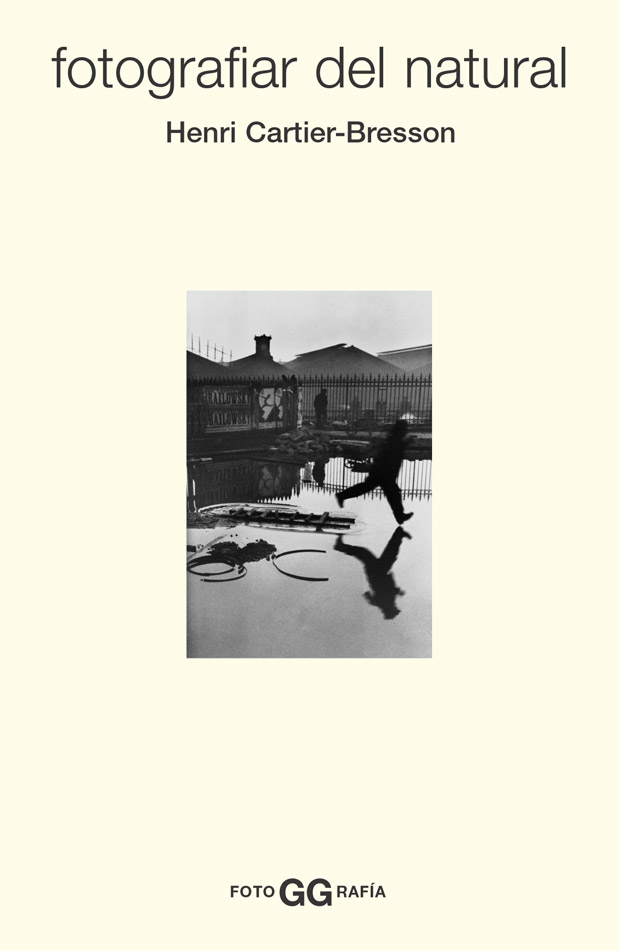
Considerado como uno de los fotógrafos más influyentes de nuestro tiempo, Henri Cartier-Bresson elevó la práctica del snap shotting a la categoría de arte disciplinar. Crítico y observador penetrante, sus escritos acerca de la teoría y la práctica de la fotografía han ejercido una influencia fundamental en los fotógrafos contemporáneos.
Fotografiar del natural constituye la primera recopilación en un único volumen de los textos más emblemáticos de Cartier-Bresson, entre los que se encuentran ‘Los europeos’ y ‘El instante decisivo’, uno de sus escritos más conocidos que supuso un punto y aparte en la carrera del fotógrafo. Este volumen reúne también sus relatos de viajes a Moscú o China, y artículos dedicados a sus amigos André Breton, Alberto Giacometti o Jean Renoir. Todos ellos destilan la misma intensidad e inmediatez visual que caracteriza a su obra fotográfica.
Henri Cartier-Bresson (1908-2004) es considerado uno de los grandes referentes de la fotografía de la segunda mitad del siglo XX y uno de los padres del fotoperiodismo. Desde la agencia Magnum, que fundó en 1947 junto a Robert Capa, David (Chim) Seymour, William Vandivert y George Rodger, realizó algunos de los grandes reportajes sobre Europa, Oriente y la antigua URSS que le dieron fama mundial como cronista gráfico.
Considerado como un dos fotógrafos máis influentes do noso tempo, Henri Cartier-Bresson elevou a práctica do snap shotting á categoría de arte disciplinar. Crítico e observador penetrante, os seus escritos acerca da teoría e a práctica da fotografía exerceron unha influencia fundamental nos fotógrafos contemporáneos.
Fotografar do natural constitúe a primeira recompilación nun único volume dos textos máis emblemáticos de Cartier-Bresson, entre os que se encontran ‘Os europeos’ e ‘O instante decisivo’, un dos seus escritos máis coñecidos que supuxo un punto e á parte na carreira do fotógrafo. Este volume reúne tamén os seus relatos de viaxes a Moscú ou China, e artigos dedicados aos seus amigos André Breton, Alberto Giacometti ou Jean Renoir. Todos eles destilan a mesma intensidade e inmediatez visual que caracteriza á súa obra fotográfica.
Henri Cartier-Bresson (1908-2004) é considerado un dos grandes referentes da fotografía da segunda metade do século XX e un dos pais do fotoxornalismo. Dende a axencia Magnum, que fundou en 1947 xunto a Robert Capa, David (Chim) Seymour, William Vandivert e George Rodger, realizou algunhas das grandes reportaxes sobre Europa, Oriente e a antiga UNIÓN DE REPÚBLICAS SOCIALISTAS SOVIÉTICAS que lle deron fama mundial como cronista gráfico.
Considered as one of the most influential photographers of our time, Henri Cartier-Bresson raised the practice of the snap shotting to the category of art to discipline. Critic and penetrating observer, his writings brings over of the theory and the practice of the photography they have exercised a fundamental influence in the contemporary photographers.
Coming out in photographs of the native constitutes the first summary in the only volume of the Cartier-Bresson’s most emblematic texts, between which they find ‘ The and Europeans’ The decisive instant ‘, one of his writings more acquaintances that he supposed a point and new paragraph in the career of the photographer. This volume assembles also his statements of trips to Moscow or China, and articles dedicated to his friends André Breton, Alberto Giacometti or Jean Renoir. All of them reveal the same intensity and visual immediacy that it characterizes to his photographic work.
Henri Cartier-Bresson (1908-2004) is considered to be one of the big modals of the photography of the second half of the 20th century and one of the parents of the photojournalism. From the agency Magnum, which founded in 1947 together with Robert Capa, David (Chim) Seymour, William Vandivert and George Rodger, it realized some of the big articles on Europe, East and the former USSR that they gave to him world reputation as graphical chronicler.