




Fase 1: verano 2008
Nos enfrentamos a una plaza heterogénea en su uso y en su relación con la ciudad. Hoy está ocupada por coches aparcados en superficie y rodeada por vías con una elevada densidad de tráfico. Es urgente hacer algo, pero la escasez de recursos nos obliga a proponer una intervención low-cost:
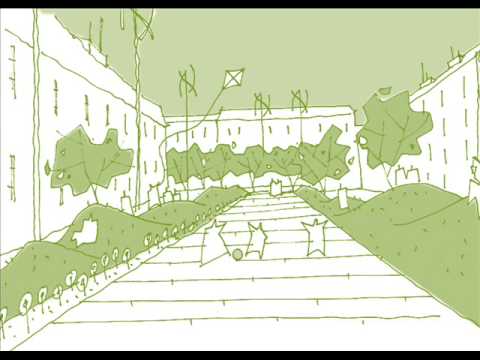
Con la tierra resultante de las excavaciones llevadas a cabo actualmente en las manzanas cercanas, proponemos crear unas franjas verdes de topografía artificial sobre las que se reubicarán los árboles existentes en Toftegaards.
Estas franjas funcionarán como barrera para la plaza, y serán unos oasis que posibilitarán un uso más flexible del espacio público: sobre ellos se podrá leer, tomar el sol, dejarse caer…y eliminarán la necesidad de mobiliario urbano, reduciendo al mínimo el coste de la intervención.
Se reordenarán las plazas de aparcamiento necesarias y el acceso a los edificios perimetrales.
Los intersticios entre las franjas verdes serán vacíos donde podrán tener lugar los eventos que los vecinos consideren necesarios: bailes, teatro al aire libre, manifestaciones…
Fase 2: invierno 2009
La plaza seguirá dividiéndose en franjas. Esta vez, se proyectan tres franjas de captación de energía: una recogerá el agua de lluvia para ser utilizada en las aguas grises de los edificios que conforman la plaza, otra franja captará energía eólica gracias a pequeños aerogeneradores y una tercera captará energía solar por medio de pequeñas flores fotovoltáicas.
La energía generada hará en un primer momento que la plaza de Toftegaards sea autosuficiente, y más tarde la venta del excedente permitirá la financiación de las siguientes fases del proyecto.
Fase 3: verano-otoño 2009
Se lanzará una página web donde los vecinos, según las posibilidades económicas de cada momento, sugerirán nuevas franjas de uso. Así, los vacíos entre las franjas de las dos primeras fases de la intervención se irán ocupando paulatinamente.
Se define un mobiliario urbano hinchable común a las distintas franjas para dar unidad a la intervención, basado en el uso de plásticos obtenidos del reciclaje de botellas y bolsas (PET y LDPE respectivamente). Los pavimentos, también de plástico reciclado, tendrán colores para diferenciar cada franja de actividad.
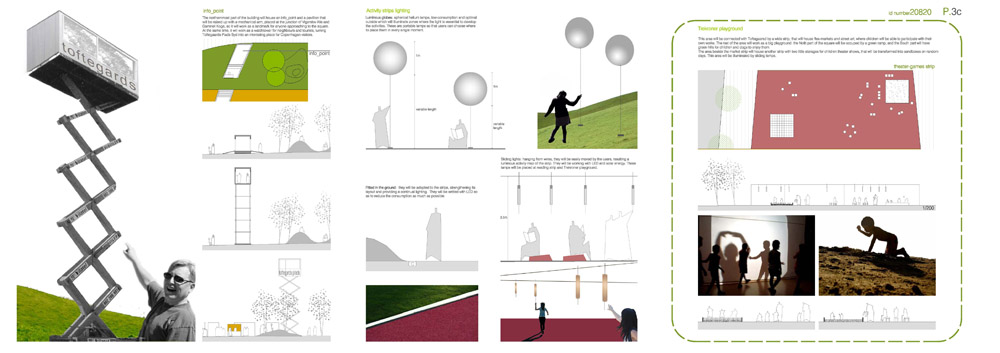
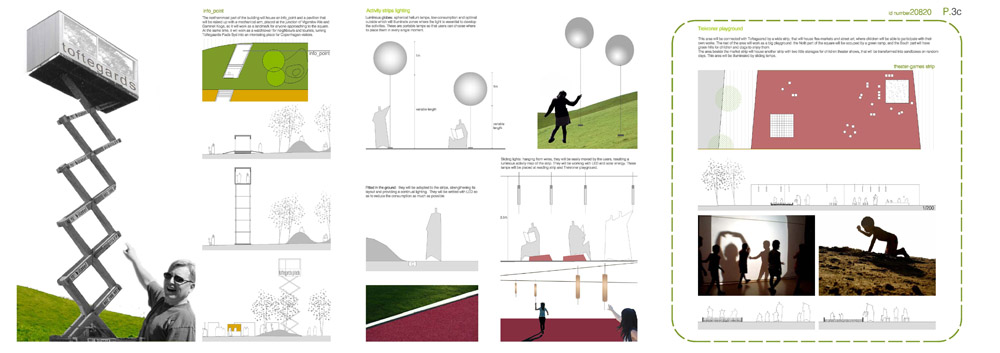
También en esta fase se construirá un edificio que coserá el conjunto en dirección Norte-Sur albergando desde áreas de almacenaje y kioscos hasta pérgolas. En su extremo Norte aparecerá un artefacto elevado con un brazo mecánico que servirá como hito a la plaza y como lugar de observación de Copenhague para usuarios y visitantes.

Fase 4: año 2010
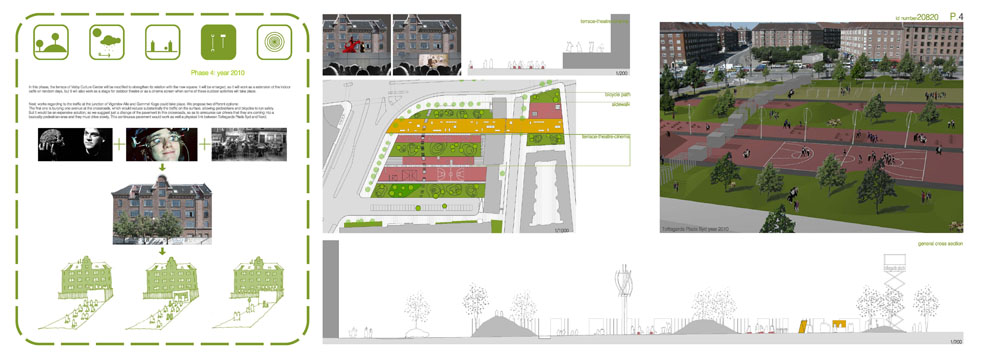
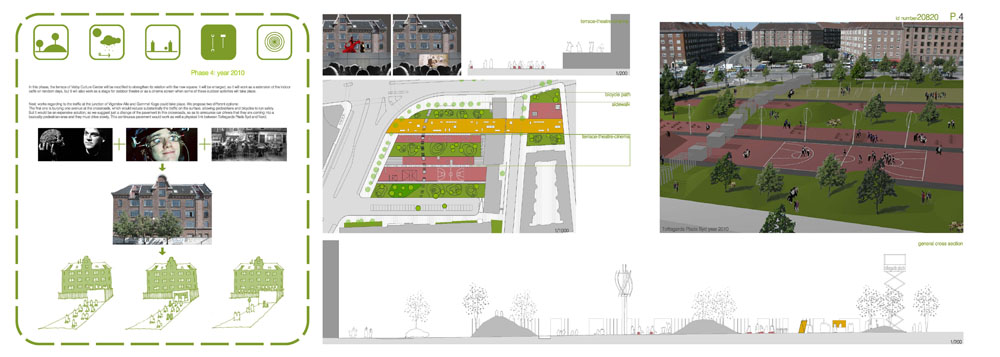
Se acometerán mejoras en los edificios en torno a la plaza y se reorganizará el tráfico del perímetro para reforzar el vínculo de la nueva plaza pública con el área circundante, especialmente con la plaza de Toftegards Plads Nord.
Fase 5: año 2015-2020
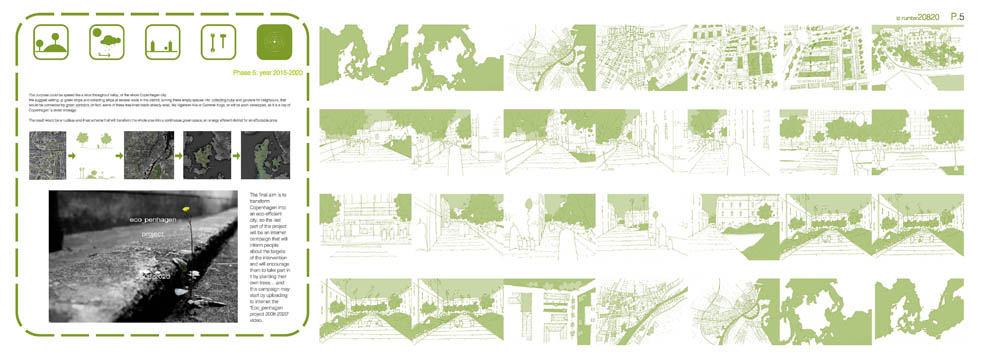
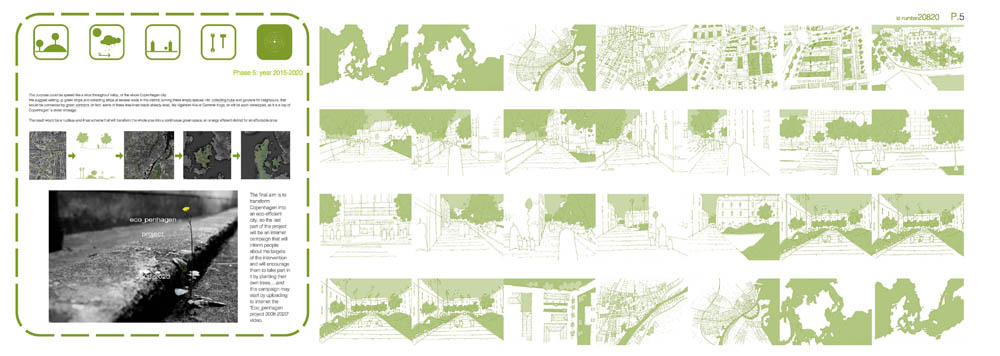
La propuesta podría extenderse como un virus por los numerosos vacíos sin uso diseminados por el distrito de Valby y la ciudad de Copenhague en su conjunto.
Entre estos nuevos vacíos verdes y de captación de energía, proponemos el establecimiento de corredores arbolados, algunos de los cuales ya existen en las avenidas próximas a Toftegaards.
Esta estructura de núcleos y líneas verdes transformará el área en un espacio verde continuo y eficiente desde el punto de vista energético a bajo pecio.

Obra: Reforma y construccion de equipamientos en una plaza del distrito Valby
Autores: Maria Olmo Bejar-Borja Lopez Cotelo
Año: 2008
Emplazamiento: Toftegaards Plads Syd, Copenhague. Dinamarca
Memoria: Maria Olmo Bejar-Borja Lopez Cotelo
+ lasonceymedia.com
premios
+ www.arkitektforeningen.dk
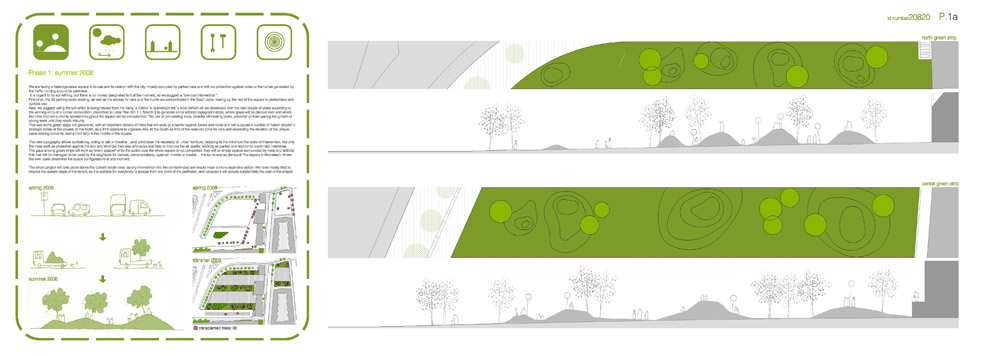
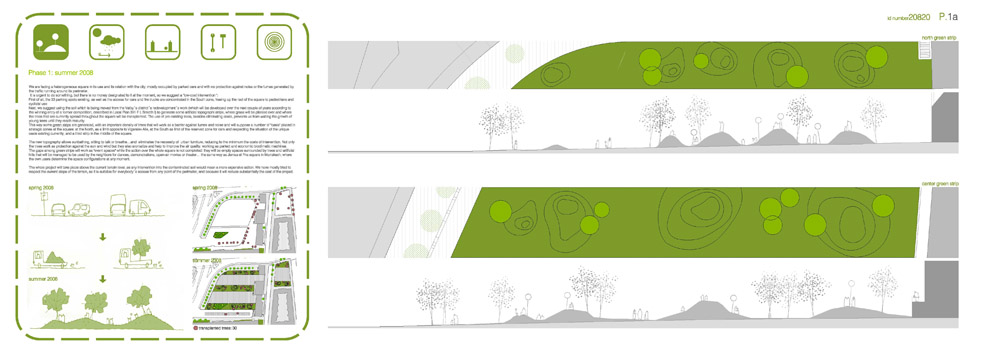
Phase 1: summer 2008
We are facing a heterogeneous square in its use and its relation with the city, mostly occupied by parked cars and with no protection against noise or the fumes generated by the traffic running around its perimeter.
It is urgent to do something, but there is no money designated to it at the moment, so we suggest a “low-cost intervention “:
First of all, the 33 parking spots existing, as well as the access for cars and fire trucks are concentrated in the South zone, freeing up the rest of the square to pedestrians and cyclists’ use. Next, we suggest using the soil which is being moved from the Valby´s district´s redevelopment´s work (which will be developed over the next couple of years according to the winning entry of a former competition, described in Local Plan 391 F L Smidth I) to generate some artificial topography strips, where grass will be planted over and where the trees that are currently spread throughout the square will be transplanted. The use of pre-existing trees, besides eliminating costs, prevents us from waiting the growth of young trees until they reach maturity.
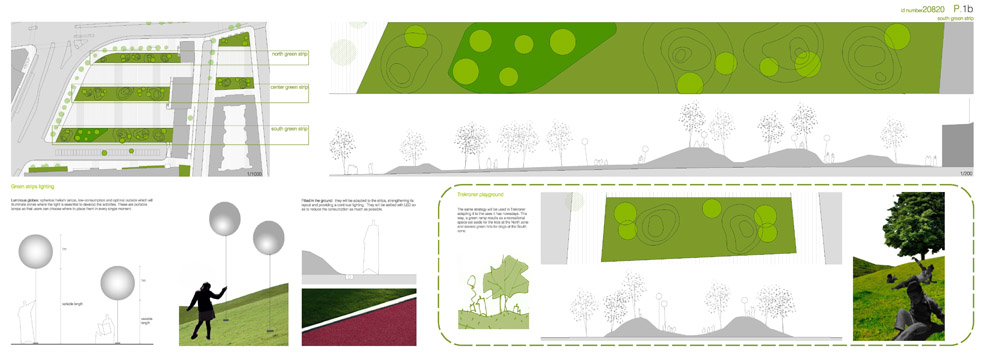
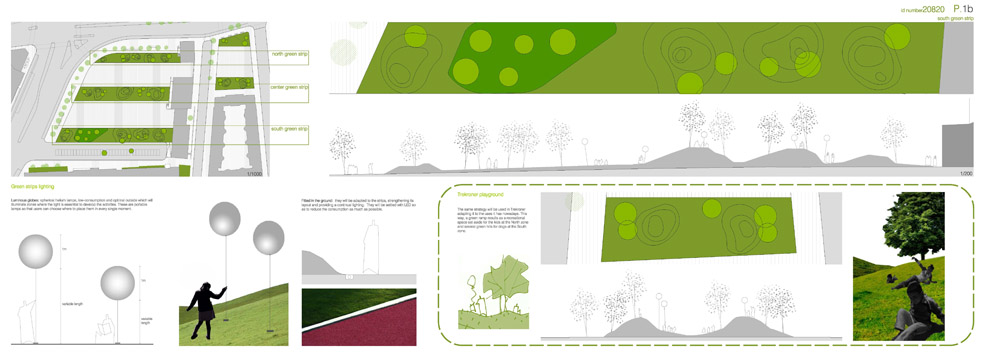
This way some green strips are generated, with an important density of trees that will work as a barrier against fumes and noise and will suppose a number of “oasis” placed in strategic zones at the square: at the North, as a limit opposite to Vigerslev Alle, at the South as limit of the reserved zone for cars and respecting the situation of the unique oasis existing currently, and a third strip in the middle of the square.
The same strategy will be used in Trekoner adapting it to the uses it has nowadays. This way, a green ramp results as a recreational space set aside for the kids at the North zone and several green hills for dogs at the South zone.
The new topography allows sunbathing, sitting to talk or breathe…and eliminates the necessity of urban furniture, reducing to the minimum the costs of intervention. Not only the trees work as protection against the sun and wind but they also aromatize and help to improve the air quality, working as perfect and economic bioclimatic machines.
The gaps among green strips will work as “event spaces” while the action over the whole square is not completed: they will be empty spaces surrounded by trees and artificial hills that will be managed to be used by the neighbors for dances, demonstrations, open-air movies or theater… the same way as Jamaa el Fna, where the own users determine the space configurations at any moment.
The whole project will take place above the current terrain level, as any intervention into the contaminated soil would mean a more expensive action. We have mostly tried to respect the current slope of the terrain, as it is suitable for everybody´s access from any point of the perimeter, and because it will reduce substantially the cost of the project.
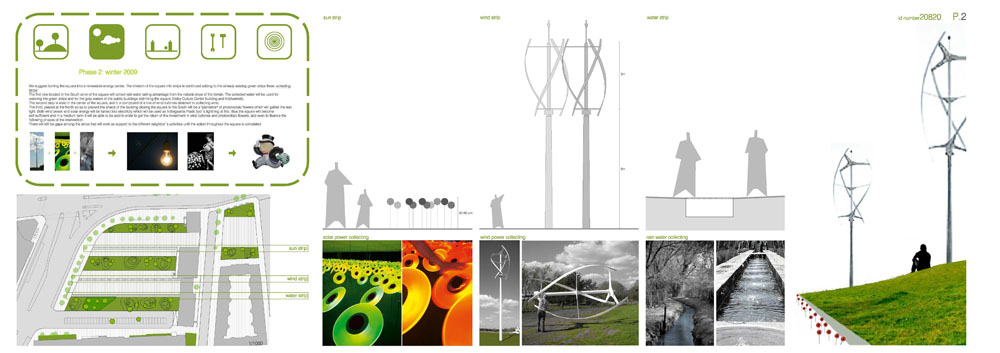
Phase 2: winter 2009
We suggest turning the square into a renewable energy center. The division of the square into strips is continued adding to the already existing green strips three collecting strips:
The first one located in the South zone of the square will collect rain water taking advantage from the natural slope of the terrain. The collected water will be used for watering the green strips and for the gray waters of the public buildings delimiting the square (Valby Culture Center building and Kraftwerket).
The second strip is sited in the center of the square, and it is composed of a line of wind turbines destined to collecting wind.
The third, placed at the North so as to prevent the shade of the building closing the square to the South will be a “plantation” of photovoltaic flowers which will gather the sun light. Both wind power and solar energy will be turned into electricity which will be used as Toftegaards Plads Syd´s lightning at first, thus the square will become self-sufficient and in a medium term it will be able to be sold in order to get the return of the investment in wind turbines and photovoltaic flowers, and even to finance the following phases of the intervention.
There will still be gaps among the strips that will work as support to the different neighbor´s activities until the action throughout the square is completed.
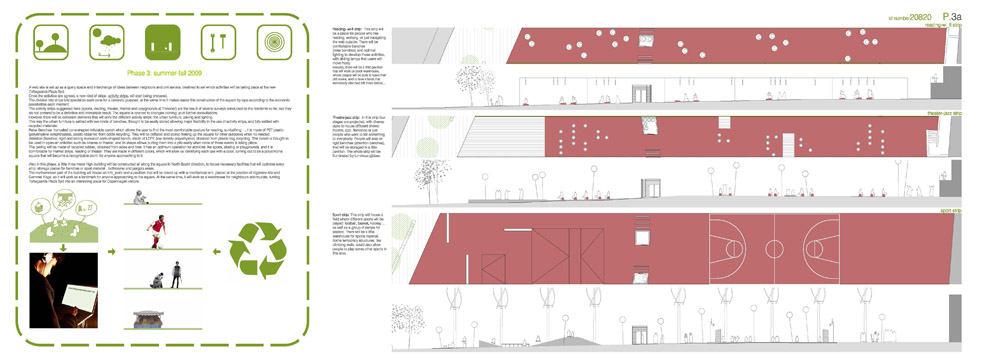
Phase 3: summer-fall 2009
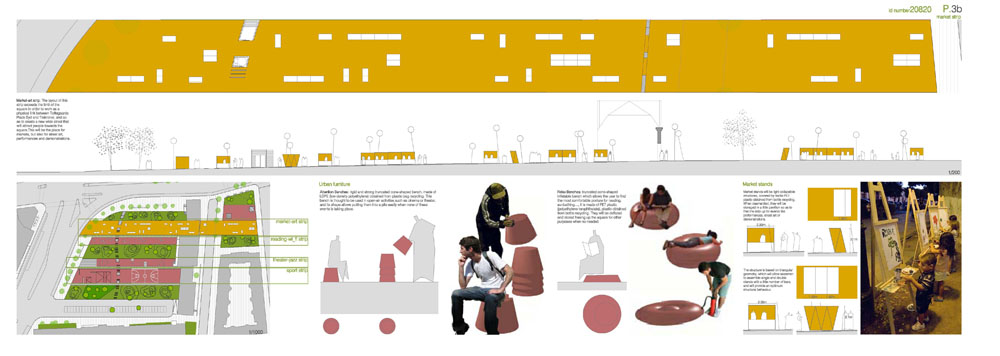
A web site is set up as a query space and interchange of ideas between neighbors and civil service, destined to set which activities will be taking place at the new Toftegaards Plads Syd. Once the activities are agreed, a new kind of strips, activity strips, will start being prepared. The division into strips lets specialize each zone for a concrete purpose, at the same time it makes easier the construction of the square by laps according to the economic possibilities each moment.
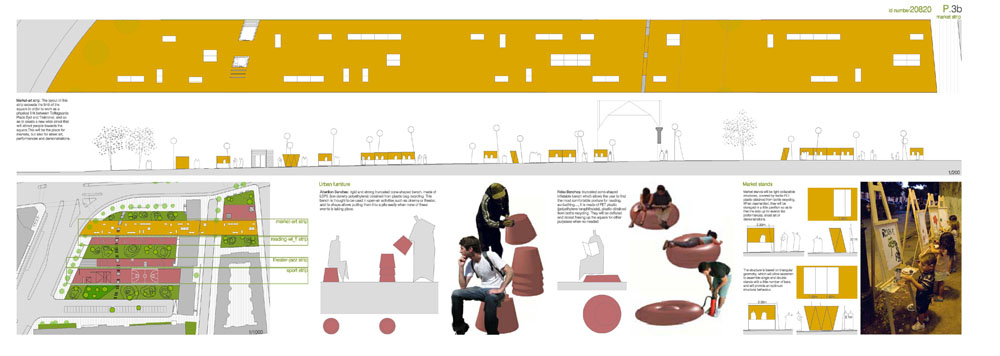
The activity strips suggested here (sports, reading, theater, market and playgrounds at Trekoner) are the result of several surveys conducted to the residents so far, but they do not pretend to be a definitive and immutable result. The square is opened to changes coming up in further consultations. However there will be cohesion elements that will unify the different activity strips: the urban furniture, paving and lighting.
This way the urban furniture is settled with two kinds of benches, thought to be easily stored allowing major flexibility in the use of activity strips, and fully settled with recycled materials:
Relax Benches: truncated cone-shaped inflatable bench which allows the user to find the most comfortable posture for reading, sunbathing…, it is made of PET plastic (polyethylene terephthalate), plastic obtained from bottle recycling. They will be deflated and stored freeing up the square for other purposes when no needed. Attention Benches: rigid and strong truncated cone-shaped bench, made of LDPE (low density polyethylene) obtained from plastic bag recycling. This bench is thought to be used in open-air activities such as cinema or theater, and its shape allows putting them into a pile easily when none of these events is taking place.
The paving will be made of recycled rubber, obtained from soles and tires. It has an optimum operation for activities like sports, skating or playgrounds, and it is comfortable for market strips, reading or theater. They are made in different colors, which will allow us identifying each use with a color, turning out to be a polychrome square that will become a recognizable point for anyone approaching to it.
Also in this phase,, a little three meter high building will be constructed all along the square in North-Souht direction, to house necessary facilities that will optimize every strip: storage places for benches or sport material , bathrooms and pergola areas.
The northernmost part of the building will be a pavillion that will be raised up with a mechanical arm, placed at the junction of Vigerslev Alle and Gammel Koge, so it will work as a landmark for anyone approaching to the square. At the same time, it will work as a watchtower for neighbours and tourists, turning Toftegaards Plads Syd into an interesting place for Copenhaguen visitors.
Phase 4: year 2010
In this phase, the terrace of Valby Culture Center will be modified to strengthen its relation with the new square: it will be enlarged, so it will work as a extension of the indoor caffe on random days, but it will also work as a stage for outdoor theatre or as a cinema screen when some of these outdoor activities will take place.
Next, works regarding to the traffic at the junction of Vigerslev Alle and Gammel Koge could take place. We propose two different options:
The first one will be burying one avenue at the crossroads, which would reduce substantially the traffic on the surface, allowing pedestrians and bicycles to run safely. But it would be an expensive solution, so we suggest just a change of the pavement in this crossroads, so as to announce car drivers that they ar coming into a basically-pedestrian-area and thay must drive slowly. This continuous pavement would allow as well a physical link between Toftegards Plads Syd and Nord.
Fase 5: year 2015-2020
The purpose could be spread like a virus throughout Valby, or the whole Copenhaguen city:
We suggest setting up green strips and collecting strips at several voids in the district, turning these empty spaces into collecting hubs and gardens for neighbours, that would be connected by green corridors (in fact, some of these tree-lined roads already exist, like Vigerslev Alle or Gammel Koge, or will be soon developed, as it is a key of Copenhaguen´s street strategy). The result would be a nucleus-and-lines scheme that will transform the whole area into a continuous green space, an energy efficient district for an affordable price.
Work: Equipament reform and construction in a square of district of Valby
Authors: Maria Olmo Bejar-Borja Lopez Cotelo
Year: 2008
Location: Toftegaards Plads Syd, Copenhague. Dinamarca
Report: Maria Olmo Bejar-Borja Lopez Cotelo
+ first award
+ www.arkitektforeningen.dk
Fase 1: verano 2008
Nos enfrentamos a una plaza heterogénea en su uso y en su relación con la ciudad. Hoy está ocupada por coches aparcados en superficie y rodeada por vías con una elevada densidad de tráfico. Es urgente hacer algo, pero la escasez de recursos nos obliga a proponer una intervención low-cost:
Con la tierra resultante de las excavaciones llevadas a cabo actualmente en las manzanas cercanas, proponemos crear unas franjas verdes de topografía artificial sobre las que se reubicarán los árboles existentes en Toftegaards.
Estas franjas funcionarán como barrera para la plaza, y serán unos oasis que posibilitarán un uso más flexible del espacio público: sobre ellos se podrá leer, tomar el sol, dejarse caer…y eliminarán la necesidad de mobiliario urbano, reduciendo al mínimo el coste de la intervención.
Se reordenarán las plazas de aparcamiento necesarias y el acceso a los edificios perimetrales.
Los intersticios entre las franjas verdes serán vacíos donde podrán tener lugar los eventos que los vecinos consideren necesarios: bailes, teatro al aire libre, manifestaciones…
Fase 2: invierno 2009
La plaza seguirá dividiéndose en franjas. Esta vez, se proyectan tres franjas de captación de energía: una recogerá el agua de lluvia para ser utilizada en las aguas grises de los edificios que conforman la plaza, otra franja captará energía eólica gracias a pequeños aerogeneradores y una tercera captará energía solar por medio de pequeñas flores fotovoltáicas.
La energía generada hará en un primer momento que la plaza de Toftegaards sea autosuficiente, y más tarde la venta del excedente permitirá la financiación de las siguientes fases del proyecto.
Fase 3: verano-otoño 2009
Se lanzará una página web donde los vecinos, según las posibilidades económicas de cada momento, sugerirán nuevas franjas de uso. Así, los vacíos entre las franjas de las dos primeras fases de la intervención se irán ocupando paulatinamente.
Se define un mobiliario urbano hinchable común a las distintas franjas para dar unidad a la intervención, basado en el uso de plásticos obtenidos del reciclaje de botellas y bolsas (PET y LDPE respectivamente). Los pavimentos, también de plástico reciclado, tendrán colores para diferenciar cada franja de actividad.
También en esta fase se construirá un edificio que coserá el conjunto en dirección Norte-Sur albergando desde áreas de almacenaje y kioscos hasta pérgolas. En su extremo Norte aparecerá un artefacto elevado con un brazo mecánico que servirá como hito a la plaza y como lugar de observación de Copenhague para usuarios y visitantes.
Fase 4: año 2010
Se acometerán mejoras en los edificios en torno a la plaza y se reorganizará el tráfico del perímetro para reforzar el vínculo de la nueva plaza pública con el área circundante, especialmente con la plaza de Toftegards Plads Nord.
Fase 5: año 2015-2020
La propuesta podría extenderse como un virus por los numerosos vacíos sin uso diseminados por el distrito de Valby y la ciudad de Copenhague en su conjunto.
Entre estos nuevos vacíos verdes y de captación de energía, proponemos el establecimiento de corredores arbolados, algunos de los cuales ya existen en las avenidas próximas a Toftegaards.
Esta estructura de núcleos y líneas verdes transformará el área en un espacio verde continuo y eficiente desde el punto de vista energético a bajo pecio.
Obra: Reforma y construccion de equipamientos en una plaza del distrito Valby
Autores: Maria Olmo Bejar-Borja Lopez Cotelo
Año: 2008
Emplazamiento: Toftegaards Plads Syd, Copenhague. Dinamarca
Memoria: Maria Olmo Bejar-Borja Lopez Cotelo
+ lasonceymedia.com
premios
+ www.arkitektforeningen.dk