



Inicioderivafetsac 17: Trashumancias

fetsac 17: Trashumancias

[:es]

fetsac-call-for-papers-2017

We drove 22 miles into the country around Farmington. There were meadows and apple orchards. White fences trailed through the rolling fields. Soon the sign started appearing. THE MOST PHOTOGRAPHED BARN IN AMERICA. We counted five signs before we reached the site. There were 40 cars and a tour bus in the makeshift lot. We walked along a cowpath to the slightly elevated spot set aside for viewing and photographing. All the people had cameras; some had tripods, telephoto lenses, filter kits. A man in a booth sold postcards and slides — pictures of the barn taken from the elevated spot. We stood near a grove of trees and watched the photographers. Murray maintained a prolonged silence, occasionally scrawling some notes in a little book.

“No one sees the barn,” he said finally.

A long silence followed.

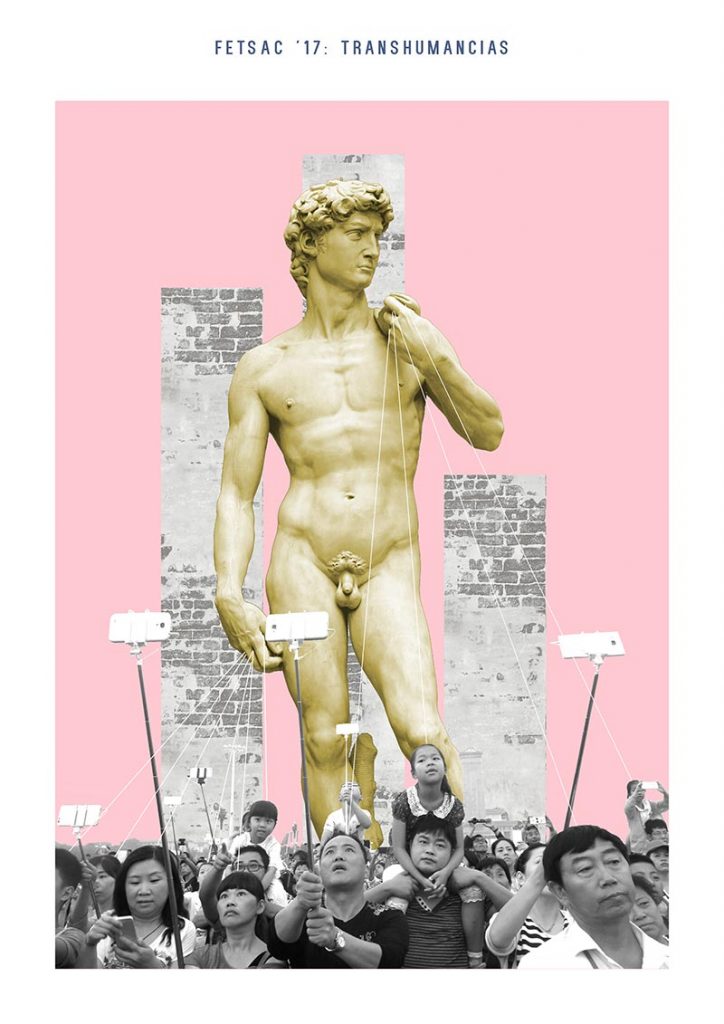
Día tras día, semana tras semana, nuevos cruceros, aviones, trenes y autobuses llegan a nuestros puertos, aeropuertos y estaciones cargados de viajeros, de turistas, de gente. Con ellos nace y se desarrolla una nueva ciudad. La de los vecinos muta en una nueva fachada que se percibe ajena a los que la habitan, ajena a la realidad de la vida y las rutinas diarias. ¿Cuál es la ciudad nueva que se construye? ¿Qué ciudad conocen realmente estos humanos trashumantes durante su breve aunque intensa estancia? ¿Es la versión de folleto turístico de nuestras ciudades una distorsión intencionada de la realidad cotidiana? ¿Cuál es el propósito de la repetición automática de la foto tipo? ¿Nos encontramos inmersos en una sociedad que viaja por el placer de conocer o por el ansia de aumentar su presencia en las redes sociales? ¿Se han convertido el like en el medidor actual de la popularidad y el palo de selfie en una extensión de nuestra vanidad?

Día tras día, semana tras semana, micronaciones soterran bajo sus pies a las ciudades con el pretexto de inmortalizar sus iconos, sólo interrumpiendo su marcha en un breve lapso para consumir, prefabricados, preparados y preanunciados, los productos autóctonos; buscando un local en el que se encuentren como en casa. Un local genérico donde la calidez de la madera y lo desenfadado de una estética industrial se mezclen, creando una imagen aséptica y contaminante que se ha contagiado por todas las esquinas del globo.

La FETSAC17 tiene como propósito analizar la ciudad a través del impacto de las masas de trashumantes sobre ella. La transformación de los espacios en cuestión de minutos por la invasión, o la preparación y estandarización de esos lugares, listos para absorber a los grandes grupos de turistas. El turismo de masas está modificando las ciudades en las que habitamos, llegando en ocasiones a convertirlas en grandes centros de ocio y haciéndolas perder su significado primitivo. Las plataformas de economía compartida han convertido lo hogareño en un bien productivo que hace disponer a cada viajero de la oportunidad de sentirse como en su propia casa. Para ello disponen de un sistema de artificio asesorado por departamentos de diseño, asegurando que la misma estética se reproduce en todas las latitudes. Este contexto de globalización creciente se impone a todo lo discordante, estableciendo unas reglas de juego que están peligrosamente cerca de asumirse como las únicas válidas. La repetición en masa es contagiosa y margina a quien pretende desviarse del, subliminalmente, canon establecido.

Ante esta situación, donde la identidad de la ciudad se diluye en cada una de sus escalas, desde la FETSAC abrimos esta llamada no sólo a participar sino también a reflexionar, con el fin de convertir nuestra escuela en un crucero que a través de sus diferentes escalas nos permita conocer otros puntos de vista acerca del turismo, la psicogeografía, la ciudad genérica y sus consecuencias en la transformación a corto o largo plazo de las ciudades. Queremos forzarnos a que cada uno se pregunte qué consecuencias puede llegar a tener la explosión de la burbuja turística y el low cost.

Un año más dejamos, entonces, abierto un periodo de recepción de propuestas de conferencia y/o actividad puntual, del 14 de noviembre al 31 de diciembre de 2016. El festival tendrá lugar en A Coruña, ciudad escala de trasatlánticos, del 3 al 6 de abril de 2017.

Bases completas y más información en: fetsac.tumblr.com o fetsac@gmail.com

«Once you’ve seen the signs about the barn, it becomes impossible to see the barn.»

He fell silent once more. People with cameras left the elevated site, replaced at once by others.

«We’re not here to capture an image, we’re here to maintain one. Every photograph reinforces the aura. Can you feel it, Jack? An accumulation of nameless energies.»

 There was an extended silence. The man in the booth sold postcards and slides.

«Being here is a kind of spiritual surrender. We see only what the others see. The thousands who were here in the past, those who will come in the future. We’ve agreed to be part of a collective perception. This literally colors our vision. A religious experience in a way, like all tourism.»

Another silence ensued.

«They are taking pictures of taking pictures,» he said.

He did not speak for a while. We listened to the incessant clicking of shutter release buttons, the rustling crank of levers that advanced the film

«What was the barn like before it was photographed?» he said. «What did it look like, how was it different from other barns, how was it similar to other barns?

Don DeLillo, White Noise

[:gl]

fetsac-call-for-papers-2017

We drove 22 miles into the country around Farmington. There were meadows and apple orchards. White fences trailed through the rolling fields. Soon the sign started appearing. THE MOST PHOTOGRAPHED BARN IN AMERICA. We counted five signs before we reached the site. There were 40 cars and a tour bus in the makeshift lot. We walked along a cowpath to the slightly elevated spot set aside for viewing and photographing. All the people had cameras; some had tripods, telephoto lenses, filter kits. A man in a booth sold postcards and slides — pictures of the barn taken from the elevated spot. We stood near a grove of trees and watched the photographers. Murray maintained a prolonged silence, occasionally scrawling some notes in a little book.

“No one sees the barn,” he said finally.

A long silence followed.

Día tras día, semana tras semana, novos cruceiros, avións, trens e autobuses chegan aos nosos portos, aeroportos e estacións cheos de viaxeiros, de turistas, de xente. Con eles nace e desenvólvese unha nova cidade. A dos veciños muda nunha nova fachada que se percibe allea aos que a habitan, allea á realidade da vida e ás rutinas diarias. Cal é a cidade nova que se constrúe? Que cidade coñecen realmente estes humanos transhumantes durante a súa breve, malia que intensa, estancia? É a versión de folleto turístico das nosas cidades unha distorsión intencionada da realidade cotiá? Cal é o propósito da repetición automática da foto tipo? Atopámonos inmersos nunha sociedade que viaxa polo pracer de coñecer ou pola ansia de aumentar a súa presenza nas redes sociais? Convertéronse o like en medidor actual da popularidade e o pau selfie nunha extensión da nosa vaidade?

Día tras día, semana tras semana, micronacións soterran baixo os seus pés ás cidades co pretexto de inmortalizar as súas iconas, só interrompendo a súa marcha nun breve lapso para consumir, prefabricados, preparados e preanunciados, os produtos autóctonos; buscando un local no que se atopen coma na casa. Un local xenérico onde o cálido da madeira e o desenfadado dunha estética industrial se mesturen, creando unha imaxe aséptica e contaminante que se contaxiou por todas as esquinas do globo.

A FETSAC17 ten como propósito analizar a cidade a través do impacto das masas de transhumantes sobre ela. A transformación dos espazos en cuestión de minutos pola invasión, ou a preparación e estandarización deses lugares, listos para absorber aos grandes grupos de turistas. O turismo de masas está modificando as cidades nas que habitamos, chegando en ocasións a convertelas en grandes centros de ocio e facéndolles perder o seu significado primitivo. As plataformas de economía compartida converteron o propio do fogar nun ben produtivo que fai dispor a cada viaxeiro da oportunidade de se sentir coma na súa propia casa. Para isto dispoñen dun sistema de artificio asesorado por departamentos de deseño, asegurando que a mesma estética se reproduce en tódalas latitudes. Este contexto de globalización crecente imponse a todo o discordante, establecendo unhas regras de xogo que están perigosamente preto de asumirse como as únicas válidas. A repetición en masa é contaxiosa e marxina a quen pretenda desviarse do, subliminarmente, canon establecido.

Ante esta situación, onde a identidade da cidade se dilúe en cada unha das súas escalas, dende a FETSAC abrimos esta chamada non só a participar senón tamén a reflexionar, co fin de converter a nosa escola nun cruceiro que a través das súas diferentes escalas nos permita coñecer outros puntos de vista acerca do turismo, a psicoxeografía, a cidade xenérica e as súas consecuencias na transformación a curto e longo prazo das cidades. Querémonos forzar a que cada un se pregunte que consecuencias pode chegar a ter a explosión da burbulla turística e o low cost.

Un ano máis deixamos, entón, aberto un período de recepción de propostas de conferencia e /ou actividade puntual, do 14 de novembro ao 31 de decembro de 2016. O festival terá lugar na Coruña, cidade escala de transatlánticos, do 3 ao 6 de abril de 2017.

Bases completas e máis información en: fetsac.tumblr.com ou fetsac@gmail.com

«Once you’ve seen the signs about the barn, it becomes impossible to see the barn.»

He fell silent once more. People with cameras left the elevated site, replaced at once by others.

«We’re not here to capture an image, we’re here to maintain one. Every photograph reinforces the aura. Can you feel it, Jack? An accumulation of nameless energies.»

 There was an extended silence. The man in the booth sold postcards and slides.

«Being here is a kind of spiritual surrender. We see only what the others see. The thousands who were here in the past, those who will come in the future. We’ve agreed to be part of a collective perception. This literally colors our vision. A religious experience in a way, like all tourism.»

Another silence ensued.

«They are taking pictures of taking pictures,» he said.

He did not speak for a while. We listened to the incessant clicking of shutter release buttons, the rustling crank of levers that advanced the film

«What was the barn like before it was photographed?» he said. «What did it look like, how was it different from other barns, how was it similar to other barns?

Don DeLillo, White Noise

 [:en]

fetsac-call-for-papers-2017

We drove 22 miles into the country around Farmington. There were meadows and apple orchards. White fences trailed through the rolling fields. Soon the sign started appearing. THE MOST PHOTOGRAPHED BARN IN AMERICA. We counted five signs before we reached the site. There were 40 cars and a tour bus in the makeshift lot. We walked along a cowpath to the slightly elevated spot set aside for viewing and photographing. All the people had cameras; some had tripods, telephoto lenses, filter kits. A man in a booth sold postcards and slides — pictures of the barn taken from the elevated spot. We stood near a grove of trees and watched the photographers. Murray maintained a prolonged silence, occasionally scrawling some notes in a little book.

“No one sees the barn,” he said finally.

A long silence followed.

Day after day, week after week, new cruisers, planes, trains and buses arrive to our ports, airports and stations loaded with travelers, tourists, people. With them a new city is born and developed. The neighbours one mutates into a new façade which is perceived outward from those who inhabit it, from the reality of life and daily routines. Which is the new city that is being built? What city do those transhumant humans actually get to know during their brief but intense stay? Is the leaflet version of our cities an intentional distortion of everyday reality? What is the purpose of the automatic repetition of the type photo? Are we immersed into a society that travels for the pleasure of knowing or for the eagerness to increase their presence into social networks? Have likes turned into the current meter of popularity and selfie sticks into an extension of our own vanity?

Day after day, week after week, micronations bury cities beneath their feet, under the pretext of immortalizing their icons, only interrupting their march for a short period of time to consume pre-manufactured, prepared and pre-announced native products; looking for a place where they can feel like home. A generic place where the warmth of the wood and the carefree look of an industrial aesthetic are mixed, creating an aseptic and contaminating image that has already infected every corner of the globe.

FETSAC17 aims to analyze the city through the impact of transhumant masses on it. The transformation of spaces in a matter of minutes by the invasion, or the preparation and standardization of those places, ready to absorb huge groups of tourists. Mass tourism is modifying the cities we live in, sometimes coming to turn them into large leisure centers, making them lose their primitive meaning. Shared economy platforms are turning the homelike into a productive good that gives each traveler the opportunity to feel as at home. In order to do this they have a whole system of artifice advised by design departments, ensuring the same aesthetics is reproduced in all latitudes. This context of increasing globalization is imposed on everything discordant, establishing game rules dangerously close to being assumed as the only valid ones. Mass repetition is contagious and it marginalizes all those who intend to deviate from the, subliminally, established canon.

Facing this situation, where the identity of the city is diluted in each and every one of its scales, FETSAC opens this call, not only for papers but also to reflect, in order to turn our school into a cruiser that through its different stops allows us to know different points of view on tourism, psychogeography, the generic city and its consequences in the short or long term transformation of the cities. We want to force each of us to ask ourselves what consequences the explosion of the tourist bubble and low cost can bring.

One more year then, we open a period for proposals reception for lectures and/or specific activities, from November the 14th to December the 31st 2016. The festival is going to take place in A Coruña (Spain), a stop for transatlantic cruisers, from April the 3rd to the 6th 2017.

More info and rules on: fetsac.tumblr.com or fetsac@gmail.com

More info and rules on: fetsac.tumblr.com or fetsac@gmail.com

«Once you’ve seen the signs about the barn, it becomes impossible to see the barn.»

He fell silent once more. People with cameras left the elevated site, replaced at once by others.

«We’re not here to capture an image, we’re here to maintain one. Every photograph reinforces the aura. Can you feel it, Jack? An accumulation of nameless energies.»

 There was an extended silence. The man in the booth sold postcards and slides.

«Being here is a kind of spiritual surrender. We see only what the others see. The thousands who were here in the past, those who will come in the future. We’ve agreed to be part of a collective perception. This literally colors our vision. A religious experience in a way, like all tourism.»

Another silence ensued.

«They are taking pictures of taking pictures,» he said.

He did not speak for a while. We listened to the incessant clicking of shutter release buttons, the rustling crank of levers that advanced the film

«What was the barn like before it was photographed?» he said. «What did it look like, how was it different from other barns, how was it similar to other barns?

Don DeLillo, White Noise

 [:]

veredes
veredeshttps://veredes.es/
Surge enero de 2009 como búsqueda de satisfacer el conocimiento de la actividad arquitectónica y tangentes que se generan. La idea es crear un espacio para divulgar los diversos proyectos en busca de nueva inspiración y de intercambio.
ARTÍCULOS RELACIONADOS
ARTÍCULOS DEL AUTOR
0 0 votos
Article Rating
Suscribirse
Notificarme
guest
0 Comments
Los más recientes
Los más viejos Los más votados

Espónsor

Síguenos

23,683FansMe gusta
5,321SeguidoresSeguir
1,844SeguidoresSeguir
23,782SeguidoresSeguir

Promoción

También:

feedly

Columnistas destacados

Íñigo García Odiaga
87 Publicaciones0 COMENTARIOS
Antonio S. Río Vázquez
57 Publicaciones0 COMENTARIOS
José del Carmen Palacios Aguilar
54 Publicaciones0 COMENTARIOS
Aldo G. Facho Dede
50 Publicaciones0 COMENTARIOS