



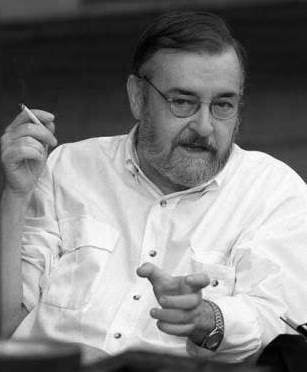
En un serie de entradas que he denominado Arquitectos y cineastas he ido recogiendo opiniones sobre arquitectura de diversos directores como Woody Allen, Ingmar Bergman, Valerian Borowczyk, Luigi Comencini, René Clair, Dziga Vertov, John Ford, Amos Gitai, Peter Greenaway, Abbas Kiarostami, Raúl Ruiz, La actriz Viola Dana, y el ensayista Sigfried Giedion.
Repasando la lista se puede comprobar que no hay cineastas españoles, aunque evidentemente, tampoco sea esencial que los hubiera.
Hace poco he encontrado en un viejo número de la estupenda revista vasca Nosferatu, una entrevista que le hizo Jesús Angulo a José Luis García Sánchez sobre Rafael Azcona, en ella este último declaraba:
«El esquema de trabajo de Rafael parte siempre de saber qué tipo de historia quiere contar el director, o sea, saber qué tipo de poética debe servir. Como un arquitecto o un maestro de obra que tiene que hacer una casa, primero ve las necesidades del cliente. Si el cliente tiene un mundo poético que es ajeno a Rafael, él no escribe. Dicho de una manera descarnada, si el planteamiento es reaccionario, Rafael no lo hace. Se excusa muy educadamente, pero no lo hace».
Son curiosas estas dos comparaciones entre el guionista y el arquitecto, y entre el director y el cliente del arquitecto, cuando siempre se había comparado al director con el arquitecto y al productor con su cliente. Como se puede observar, las relaciones entre cine , arquitectura y ciudad son variadas e inagotables.
Jorge Gorostiza, arquitecto. Autor del blog Arquitectura+Cine+Ciudad
Santa Cruz de Tenerife, noviembre 2014

In a serie of income that I have named Architects and filmmakers I have been gathering opinions about architecture of the diverse directors like Woody Allen, Ingmar Bergman, Valerian Borowczyk, Luigi Comencini, René Clair, Dziga Vertov, John Ford, Amos Gitai, Peter Greenaway, Abbas Kiarostami, Raúl Ruiz, The actress Viola Dana, and the essayist Sigfried Giedion.
Revising the list it is possible to verify that there are no Spanish filmmakers, though evidently, it is essential either that they were.
It does little I have found in an old number of the marvellous basque magazine Nosferatu, an interview that Jesus Angulo did to José Luis García Sánchez about Rafael Azcona, in her the latter was declaring:
«The scheme of work of Rafael divides always of knowing what type of history the director wants to count, or, to know what type of poetics it must serve. As an architect or a teacher of work who has to do a house, first it sees the needs of the client. If the client has a poetical world that belongs foreign to Rafael, he does not write. Saying of an emaciated way, if the exposition is reactionary, Rafael does not do it. He apologizes very educadamente, but it does not do it».
Two comparisons are curious these between the scriptwriter and the architect, and between the director and the client of the architect, when always the director had been compared by the architect and to the producer by his client. Since it is possible to observe, the relations between cinema, architecture and city are changed and inexhaustible.
Jorge Gorostiza, architect. Author of the blog Arquitectura+Cine+Ciudad
Santa Cruz de Tenerife, november 2014
Nunha serie de entradas que denominei Arquitectos y cineastas fun recollendo opinións sobre arquitectura de diversos directores como Woody Allen, Ingmar Bergman, Valerian Borowczyk, Luigi Comencini, René Clair, Dziga Vertov, John Ford, Amos Gitai, Peter Greenaway, Abbas Kiarostami, Raúl Ruiz, La actriz Viola Dana, e o ensaísta Sigfried Giedion.
Repasando a lista pódese comprobar que non hai cineastas españois, aínda que evidentemente, tampouco sexa esencial que os houbese.
Hai pouco encontrei nun vello número da estupenda revista vasca Nosferatu, unha entrevista que lle fixo Jesús Angulo a José Luis García Sánchez sobre Rafael Azcona, ela este último declaraba:
«O esquema de traballo de Rafael parte sempre de saber que tipo de historia quere contar o director, ou sexa, saber que tipo de poética debe servir. Como un arquitecto ou un mestre de obra que ten que facer unha casa, primeiro ve as necesidades do cliente. Se o cliente ten un mundo poético que é alleo a Rafael, el non escribe. Dito dun xeito descarnado, se a formulación é reaccionaria, Rafael non o fai. Escúsase moi educadamente, pero non o fai».
Son curiosas estas dúas comparacións entre o guionista e o arquitecto, e entre o director e o cliente do arquitecto, cando sempre se comparara ao director co arquitecto e ao produtor co seu cliente. Como se pode observar, as relacións entre cine, arquitectura e cidade son variadas e inesgotables.
Jorge Gorostiza, arquitecto. Autor do blogue Arquitectura+Cine+Ciudad
Santa Cruz de Tenerife, novembro 2014