



[:es]

Manhattan es el escenario donde se representa el último acto de la civilización occidental.
Con la explosión demográfica y la invasión de las nuevas tecnologías, Manhattan se ha convertido, desde mediados del siglo XIX, en el laboratorio de una nueva cultura, la de la congestión; una isla mítica donde se hace realidad el inconsciente colectivo de un nuevo modo de vida metropolitano, una fábrica de lo artificial donde lo natural y lo real han dejado de existir.
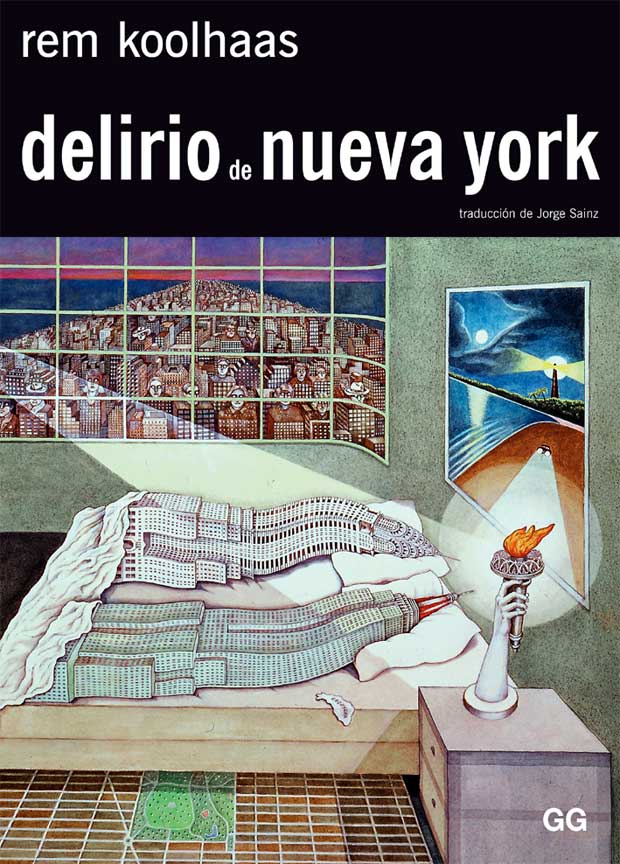
Delirio de Nueva York es un ‘manifiesto retroactivo’, una interpretación de la teoría no formulada que subyace en el desarrollo de Manhattan; es el relato de las intrigas de un urbanismo que, desde sus inicios en Coney Island hasta los teóricos del rascacielos, ha hecho explotar su retícula de origen.
Este libro, polémico y premonitorio (publicado originariamente en 1978), ilustra las relaciones entre un universo metropolitano mutante y la singular arquitectura que puede producir; y afirma también que, con frecuencia, la arquitectura genera la cultura.
Rem Koolhaas (Róterdam, 1944) es arquitecto por la Architectural Association de Londres. En 1975 fundó, junto a Elia y Zoe Zenghelis y Madelon Vriesendorp, Office for Metropolitan Architecture (OMA) y posteriormente AMO, la vertiente teórica y más propagandista de OMA. Es uno de los arquitectos contemporáneos cuyo trabajo profesional y obra teórica han ejercido mayor influencia en la arquitectura de las últimas décadas. Es autor de Delirio de Nueva York (Editorial Gustavo Gili, 2004, publicado originariamente en 1978) y de S, M, L, XL (1995, donde se incluye Sendas oníricas de Singapur, publicado por esta editorial), Mutaciones (2000), Content (2004), Post-Occupancy (2006), Al Manakh (2007) o Elements of Architecture (2014).
[:gl]
Manhattan é o escenario onde se representa o último acto da civilización occidental.
Coa explosión demográfica e a invasión das novas tecnoloxías, Manhattan converteuse, dende mediados do século XIX, no laboratorio dunha nova cultura, a da conxestión; unha illa mítica onde se fai realidade o inconsciente colectivo dun novo modo de vida metropolitano, unha fábrica do artificial onde o natural e o real deixaron de existir.
Delirio de Nova York é un ‘manifesto retroactivo’, unha interpretación da teoría non formulada que subxacer no desenvolvemento de Manhattan; é o relato das intrigas dun urbanismo que, dende os seus inicios en Coney Island ata os teóricos do rañaceos, fixo explotar a súa retícula de orixe.
Este libro, polémico e premonitorio (publicado orixinariamente en 1978), ilustra as relacións entre un universo metropolitano mutante e a singular arquitectura que pode producir; e afirma tamén que, con frecuencia, a arquitectura xera a cultura.
Rem Koolhaas (Róterdam, 1944) é arquitecto pola Architectural Association de Londres. En 1975 fundou, xunto a Elia e Zoe Zenghelis e Madelon Vriesendorp, Office for Metropolitan Architecture (OMA) e posteriormente AMO, a vertente teórica e máis propagandista de OMA. É un dos arquitectos contemporáneos cuxo traballo profesional e obra teórica exerceron maior influencia na arquitectura das últimas décadas. É autor de Delirio de Nova York (Editorial Gustavo Gili, 2004, publicado orixinariamente en 1978) e de S, M, L, XL (1995, onde se inclúe Sendas oníricas de Singapore, publicado por esta editorial), Mutacións (2000), Content (2004), post-Occupancy (2006), Al Manakh (2007) ou Elements of Architecture (2014).
[:en]
Manhattan is the scene where there is represented the last act of the western civilization.
With the population explosion and the invasion of the new technologies, Manhattan has turned, from the middle of the XIXth century, into the laboratory of a new culture, that of the congestion; a mythical island where real makes the unconscious group of a new metropolitan way of life, a factory of the artificial thing where the natural thing and the royal thing have stopped existing.
Delirious of New York is a ‘ retroactive manifest ‘, an interpretation of the not formulated theory that sublies in the development of Manhattan; it is the statement of the intrigues of an urbanism that, from his beginnings in Coney Island up to the theoretical ones of the skyscraper, has made exploit his retícula of origin.
This book, polemic and indicative (published originally in 1978), illustrates the relations between a metropolitan universe mutant and the singular architecture that can produce; and it affirms also that, often, the architecture generates the culture.
Rem Koolhaas (Róterdam, 1944) is an architect for the Architectural Association of London. In 1975 it founded, together with Elia and Zoe Zenghelis and Madelon Vriesendorp, Office for Metropolitan Architecture (OMA) and later I LOVE, the theoretical slope and more publicist of OMA. He is one of the contemporary architects whose professional work and theoretical work have exercised major influence in the architecture of last decades. He is an author of Delirium of New York (Publishing Gustavo Gili, 2004, published originally in 1978) and of S, M, L, the XL (1995, where there are included oneiric Paths of Singapore, published by this publishing house), Mutations (2000), Content (2004), Post-Occupancy (2006), Al Manakh (2007) or Elements of Architecture (2014).
[:]