



IniciocapturasWim Wenders. Si los edificios pudieran hablar | Jorge GorostizaWim Wenders. Se...

Wim Wenders. Si los edificios pudieran hablar | Jorge GorostizaWim Wenders. Se os edificios puidesen falar | Jorge GorostizaWim Wenders. If the buildings could speak | Jorge Gorostiza

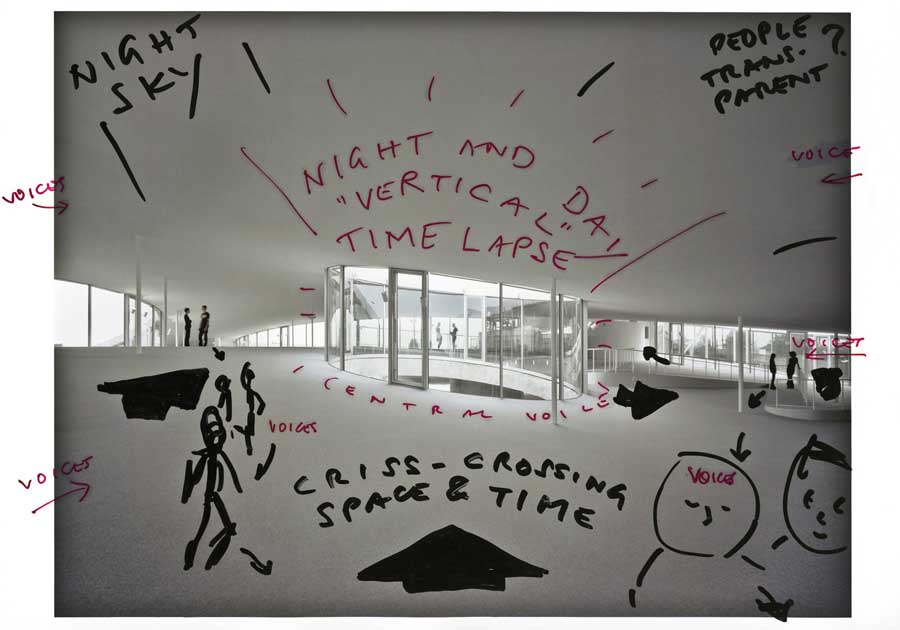
If Buildings Could Talk – visual investigation of the Rolex Learning Center
Film by Wim Wenders
Photo © Hisao Suzuki, sketch by © Wim Wenders

Wim Wenders es un director que en los años ochenta nos fascinó a los arquitectos gracias a películas como El cielo sobre Berlín y París, Texas, pero aunque no sé muy bien cuáles han sido las causas, parece haber caído en desgracia en los últimos años, a pesar de películas notables, como El final de la violencia, The Million Dollar Hotel, Tierra de abundancia y Llamando a las puertas del cielo, que diseccionan y analizan el paisaje estadounidense, como pocos cineastas lo han hecho hasta ahora.

Precisamente, por un artículo que estoy escribiendo sobre la relación de las películas dirigidas por Wenders con el paisaje urbano americano, he encontrado en su página web oficial datos sobre su último trabajo, un documental de veinte minutos de duración, en tres dimensiones, que se exhibirá en el Arsenale de Venecia, hasta finales de noviembre, incluido dentro de la 12 Mostra Internazionale di Architettura. Esta película la ha rodado en el edificio del Rolex Learning Center, proyectado por los arquitectos Kazuyo Sejima y Ryue Nishizawa, o sea SANAA -por cierto, su página web es increíblemente escueta-, siendo la primera mencionada la directora de la Bienal de este año. De este edificio el cineasta ha dicho que «es más paisaje que edificio».

La imagen que acompaña a este comentario está sacada de la página web oficial de Wenders antes mencionada y son dibujos del propio director, en esa página también hay unas estupendas fotografías de Donata Wenders y el texto, escrito por Wim, que he copiado a continuación:

«If Buildings Could Talk…
… some of them would sound like Shakespeare.
Others would speak like the Financial Times,
yet others would praise God, or Allah.
Some would just whisper,
some would loudly sing their own praises,
while others would modestly mumble a few words
and really have nothing to say.
Some are plain dead and don’t speak anymore…

Buildings are like people, in fact.
Old and young, male and female,
ugly and beautiful, fat and skinny,
ambitious and lazy, rich and poor,
clinging to the past
or reaching out to the future.

Don’t get me wrong: this is not a metaphor.
Buildings DO speak to us!
They have messages. Of course.
Some really WANT a constant dialogue with us.
Some rather listen carefully first.
And you have probably noticed:
Some of them like us a lot, some less
and some not at all.

Buildings, like people, are subject to time
and exist in a three-dimensional world.
That’s why our film is in 3D.
It’s an invitation to wander around,
to experience and to listen, for once.

The building you will encounter
is a particularly gentle and friendly one,
made for learning, reading and communicating.
Its hills and valleys (yes, they exist in there)
are eager to welcome you,
to help, to be of service,
and to be, in the best sense of the word,
a meeting place.»

Jorge Gorostiza, arquitecto. Autor del blog Arquitectura+Cine+Ciudad
Santa Cruz de Tenerife, septiembre 2010


If Buildings Could Talk – visual investigation of the Rolex Learning Center
Film by Wim Wenders
Photo © Hisao Suzuki, sketch by © Wim Wenders

Wim Wenders is the director who in the eighties us fascinated to the architects thanks to movies as The sky on Berlin and Paris, Texas, but though I do not know very well which have been the reasons, seems to have fallen down in misfortune in the last years, in spite of notable movies, as The end of the violence, The Million Dollar Hotel, Earth of abundance and Calling on the verge of the sky, that diseccionan and they analyze the American landscape, since few filmmakers have done it till now.

Precisely, for an article that I am writing on the relation of the movies directed by Wenders with the urban American landscape, I have found in his official web page information on his last work, a documentary of twenty minutes of duration, in three dimensions, which one will exhibit in the Arsenale of Venice, until ends of November, included inside 12 Mostra Internazionale di Architettura. This movie has rolled it in the building of the Rolex Learning Center, projected by the architects Kazuyo Sejima and Ryue Nishizawa, or SANAA – certainly certain, his web page is incredibly succinct-, being the first mentioned one the director of the Biennial show of this year. Of this building the filmmaker has said that «it is more landscape than building».

The image that he accompanies on this comment is extracted of Wenders’s official web page before mentioned and they are drawings of the own director, in this page also there is a few Donata Wenders‘s marvellous photographies and the text written by Wim, which I have copied later:

«If Buildings Could Talk…

… some of them would sound like Shakespeare.

Others would speak like the Financial Times,

yet others would praise God, or Allah.

Some would just whisper,

some would loudly sing their own praises,

while others would modestly mumble a few words

and really have nothing to say.

Some are plain dead and don’t speak anymore…

Buildings are like people, in fact.

Old and young, male and female,

ugly and beautiful, fat and skinny,

ambitious and lazy, rich and poor,

clinging to the past

or reaching out to the future.

Don’t get me wrong: this is not a metaphor.

Buildings DO speak to us!

They have messages. Of course.

Some really WANT a constant dialogue with us.

Some rather listen carefully first.

And you have probably noticed:

Some of them like us a lot, some less

and some not at all.

Buildings, like people, are subject to time

and exist in a three-dimensional world.

That’s why our film is in 3D.

It’s an invitation to wander around,

to experience and to listen, for once.

The building you will encounter

is a particularly gentle and friendly one,

made for learning, reading and communicating.

Its hills and valleys (yes, they exist in there)

are eager to welcome you,

to help, to be of service,

and to be, in the best sense of the word,

a meeting place.»

Jorge Gorostiza, architect. Author of the blog Arquitectura+Cine+Ciudad

Santa Cruz de Tenerife, september 2010

If Buildings Could Talk – visual investigation of the Rolex Learning Center
Film by Wim Wenders
Photo © Hisao Suzuki, sketch by © Wim Wenders

Wim Wenders é un director que nos anos oitenta fascinounos aos arquitectos grazas a películas como O ceo sobre Berlín e París, Texas, pero aínda que non sei moi ben cales foron as causas, parece caer en desgraza nos últimos anos, a pesar de películas notables, como O final da violencia, The Million Dollar Hotel, Terra de abundancia e Chamando as portas do ceo, que diseccionan e analizan a paisaxe estadounidense, como poucos cineastas fixérono até agora.

Precisamente, por un artigo que estou a escribir sobre a relación das películas dirixidas por Wenders coa paisaxe urbana americano, atopei na súa páxina web oficial datos sobre o seu último traballo, un documental de vinte minutos de duración, en tres dimensións, que se exhibirá no Arsenale de Venecia, até finais de novembro, incluído dentro da 12 Mostra Internazionale di Architettura. Esta película rodouna no edificio do Rolex Learning Center, proxectado polos arquitectos Kazuyo Sejima e Ryue Nishizawa, ou sexa SANAA -por certo, a súa páxina web é incriblemente concisa-, sendo a primeira mencionada a directora da Bienal deste ano. Deste edificio o cineasta dixo que «é máis paisaxe que edificio».

A imaxe que acompaña a este comentario está sacada da páxina web oficial de Wenders antes mencionada e son debuxos do propio director, nesa páxina tamén hai unhas estupendas fotografías de Donata Wenders e o texto, escrito por Wim, que copiei a continuación:

«If Buildings Could Talk…

… some of them would sound like Shakespeare.

Others would speak like the Financial Times,

yet others would praise God, or Allah.

Some would just whisper,

some would loudly sing their own praises,

while others would modestly mumble a few words

and really have nothing to say.

Some are plain dead and don’t speak anymore…

Buildings are like people, in fact.

Old and young, male and female,

ugly and beautiful, fat and skinny,

ambitious and lazy, rich and poor,

clinging to the past

or reaching out to the future.

Don’t get me wrong: this is not a metaphor.

Buildings DO speak to us!

They have messages. Of course.

Some really WANT a constant dialogue with us.

Some rather listen carefully first.

And you have probably noticed:

Some of them like us a lot, some less

and some not at all.

Buildings, like people, are subject to time

and exist in a three-dimensional world.

That’s why our film is in 3D.

It’s an invitation to wander around,

to experience and to listen, for once.

The building you will encounter

is a particularly gentle and friendly one,

made for learning, reading and communicating.

Its hills and valleys (yes, they exist in there)

are eager to welcome you,

to help, to be of service,

and to be, in the best sense of the word,

a meeting place.»

Jorge Gorostiza, arquitecto. Autor do blogue Arquitectura+Cine+Ciudad

Santa Cruz de Tenerife, setembro 2010

Jorge Gorostiza
Jorge Gorostizahttp://cinearquitecturaciudad.blogspot.com.es/
Doctor arquitecto por la UPM, 2015. He publicado bastantes libros y muchos artículos, he impartido conferencias, he sido comisario de exposiciones y jurado en muchísmos festivales. Si quieren saber más no duden en consultar mi blog ARQUITECTURA + CINE + CIUDAD. En este blog se irán recogiendo artículos y textos dispersos por la Web, así como otros publicados y libres de derechos, que traten sobre Cine, Arquitectura y Ciudad. Así quienes estén interesados por las relaciones entre la ficción y la realidad, podrán tener más argumentos para profundizar en esas relaciones. No es un blog en el que se vayan a hacer comentarios sobre las vivencias personales de su responsable, que además a nadie interesan. Por supuesto que está abierto a cualquiera que le gusten estos temas, sirviendo como foro de debate y como lugar donde todos podamos aprender con las ideas de los demás.
ARTÍCULOS RELACIONADOS
ARTÍCULOS DEL AUTOR

1 COMENTARIO

0 0 votos
Article Rating
Suscribirse
Notificarme
guest
1 Comment
Los más recientes
Los más viejos Los más votados
Alberto Alonso Oro
Alberto Alonso Oro
11 years ago

Architecture Biennale – Wim Wenders (NOW Interviews)
https://www.youtube.com/watch?v=YdITysi6DHE

Espónsor

Síguenos

23,683FansMe gusta
5,321SeguidoresSeguir
1,844SeguidoresSeguir
23,782SeguidoresSeguir

Promoción

También:

feedly

Columnistas destacados

Íñigo García Odiaga
87 Publicaciones0 COMENTARIOS
Antonio S. Río Vázquez
57 Publicaciones0 COMENTARIOS
José del Carmen Palacios Aguilar
54 Publicaciones0 COMENTARIOS
Aldo G. Facho Dede
50 Publicaciones0 COMENTARIOS