


InicioartículosHistoria Universal de la Infamia | José Ramón Hernández CorreaHistoria Universal...

[:es]Historia Universal de la Infamia [I] | José Ramón Hernández Correa[:gl]Historia Universal da Infamia [I] | José Ramón Hernández Correa[:en]Universal history of the Turpitude [I] | José Ramón Hernández Correa[:]

[:es]

The Arizona Biltmore

Creo que no hay duda (y escribo «creo») en celebrar a Frank Lloyd Wright, a Le Corbusier y a Mies van der Rohe como los tres más grandes arquitectos del siglo XX. Hay decenas de geniales arquitectos, y cientos de arquitectos extraordinarios, pero creo que estos tres son otra cosa. Al menos en mi opinión. Los he citado, además, en el orden que ocupan en mi afecto y en mi corazón: Frank Lloyd Wright, Le Corbusier y Mies van der Rohe. Es más, ya puestos, secundo la afirmación de Bruno Zevi:

«Frank Lloyd Wright es el más grande arquitecto desde las cavernas».

Sin embargo, estos tres brillantísimos arquitectos tienen también sus zonas oscuras, sus infamias monstruosas, y mi obligación autoimpuesta es contarlas aquí. Cada uno de ellos cometió más de una, pero voy a contar solo una de cada uno: No sé si la más vil. Tal vez sí. Tengo que alegar que a estos héroes o se les santifica o se les ataca sin piedad, motivo por el que sus puntos negros nunca están claramente contados: O se disimulan e incluso se niegan, o se amplifican desproporcionadamente. Yo intentaré ser objetivo, aunque tengo las fuentes que tengo.

Creo que lo que digo es verdad en su conjunto, aunque seguro que me fallan muchos detalles.

Hoy me dedicaré al primero, a quien siempre he venerado, a quien le dediqué mi tesis doctoral y hasta le escribí una novela (que os podéis descargar) para intentar exorcizármelo (quitármelo de encima) y apearle del altar en que le tenía. (Lo malo es que el canalla aguanta en el sillón presidencial de mi corazoncito a pesar de todo. Es como una lapa).

Vamos con la infamia

Albert Chase McArthur fue el mayor de los tres hijos de Warren McArthur, un exitoso hombre de negocios cuya casa construyó Frank Lloyd Wright en 1892, en Chicago. El muchacho creció admirando al genial arquitecto. Tanto que él mismo se hizo arquitecto, y llegó a trabajar a las órdenes de su ídolo entre 1907 y 1909.

En 1927, Charles y Warren McArthur, los dos hermanos de Albert, compraron un terreno al pie del Monte Camelback, cerca de Phoenix (Arizona), y le encargaron el proyecto de un hotel: El Arizona Biltmore. Albert se puso a trabajar en el diseño del edificio y decidió emplear el sistema de bloques de hormigón que había creado su maestro. Convenció a sus hermanos para que pagaran a Wright por los derechos de utilización de esos bloques. Wright les vendió los derechos por un dineral, olvidando el pequeño detalle de que en su desastrosa situación legal y financiera le habían embargado todo lo que fuera susceptible de ser embargado, incluyendo, por supuesto, esa patente. Pero es que, además de vender lo que no era suyo, como no tenía trabajo se presentó en Phoenix a ayudar a Albert, sin que él se lo hubiera pedido. Albert ya tenía el diseño del edificio terminado, y Wright se entusiasmó al verlo.

Wright caracoleaba por el estudio con Olgivanna, estorbando, reconsiderando cosas que ya estaban resueltas, mareando a todo el mundo hasta que Charles, el hermano de en medio de los McArthur, y jefe de la empresa Arizona Biltmore, le pidió con el mayor tacto que se volviera a su casa, pues su hermano se bastaba y se sobraba para terminar los detalles del proyecto.

Albert hizo el trabajo con toda su ilusión, con toda su alma, con tanto amor por sus hermanos como por su maestro Wright.
The Arizona Biltmore

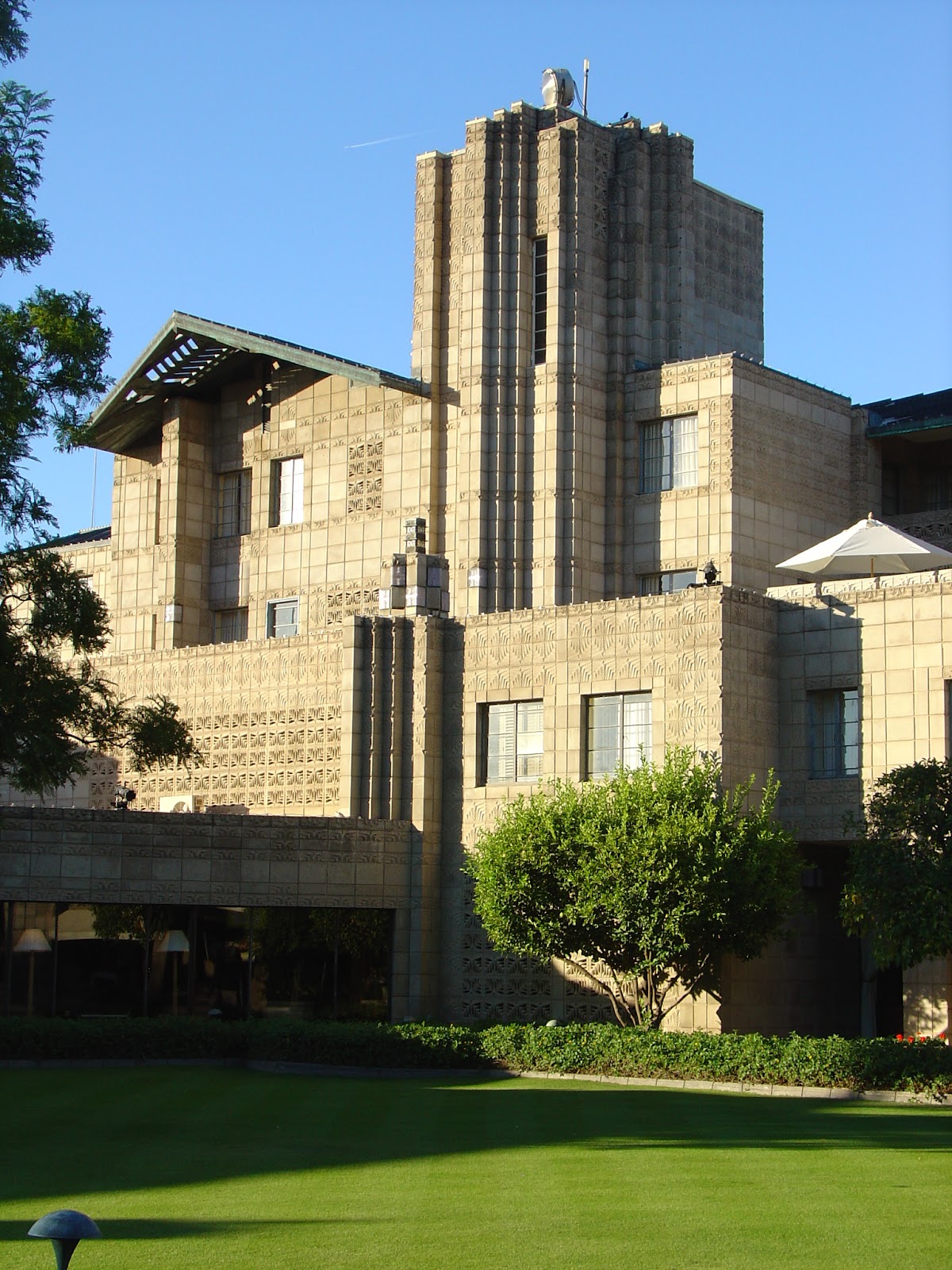
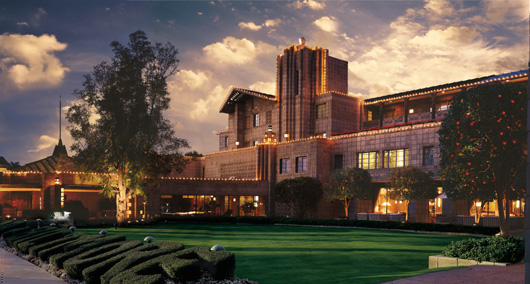
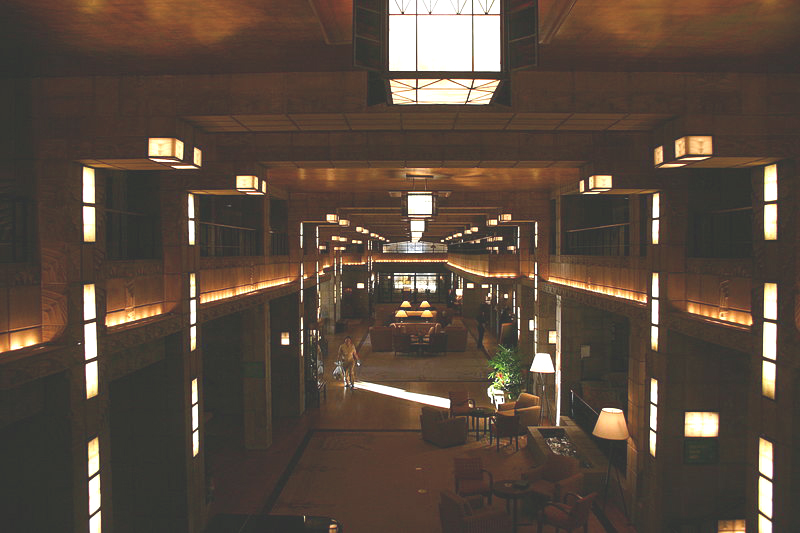
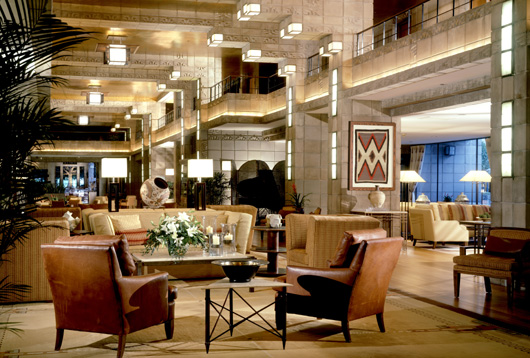
El resultado fue una obra muy atractiva, con un aire wrightiano inconfundible. Menos «inspirada» y menos «magistral» que las auténticas obras de Wright, pero, al fin y al cabo, una muy digna pariente de ellas.

La obra se inauguró el 23-F de 1929. En seguida apareció el abogado del auténtico dueño de la patente de los bloques y les metió una demanda de pronóstico a los hermanos, que tuvieron que volver a pagar por utilizar los bloques. (No sé si le pidieron a Wright que les devolviera el dinero, pero lo llevaban claro).

En todo caso, Wright no devolvió un dólar (no lo tenía), pero a cambio se mostró tan amable, tan cariñoso, tan solícito con su discípulo, que cuando vio la obra terminada dijo:

«Ha quedado tan mal como esperaba».
The Arizona Biltmore

¡Qué generoso! ¡Qué manera de devolver amor y cariño!

Albert le adoraba, y su esposa se había hecho muy amiga de Olgivanna. A cambio, Wright se burlaba de la mujer y del hijo de Albert siempre que podía.

Pero volvamos al hotel

Aunque hay que reconocer que el Arizona Biltmore es más romo que los edificios de Wright, se parece tanto que desde el primer momento causó confusión. En varias revistas, e incluso en dos libros, salió publicado como obra de Wright.

Incluso aunque Albert McArthur intentó demostrar la autoría del proyecto mostrando que llevaba su firma, la gente acabó diciendo que Wright estaba tan embargado y perseguido que no podía firmar legalmente, pero que el diseño era suyo en realidad.

Aunque sea una obra algo floja para ser de Wright, sería la obra maestra de cualquier arquitecto mediano (yo estaría más que hiperchulo si fuera su autor). Por eso, Albert le pidió a Wright que deshiciera definitivamente el malentendido y que dijera quién era el verdadero arquitecto del Biltmore.
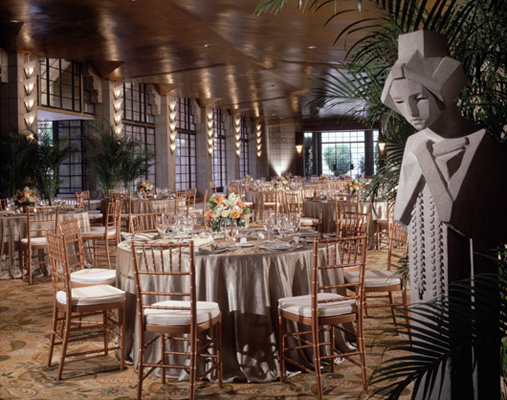
The Arizona Biltmore

Wright escribió a varias revistas, a varias asociaciones de arquitectos y a varios críticos y periodistas… para no aclarar nada. Al Architectural Record le escribió diciendo claramente que la obra era de Albert, pero en otros sitios no lo decía así, e insinuaba esto y lo otro…

¿Será canalla? ¡Si él mismo había dicho que la obra era muy mala! ¿Qué tipo de envidia tenía? No lo sé. No lo puedo entender.

Muchos años antes también le había negado a Alfonso Iannelli la autoría de las esculturas de los Midway Gardens. Siempre negaba todo mérito a sus colaboradores. En el caso de Iannelli, si bien es indiscutible que la autoría es del italiano, es cierto que trabajaba a las órdenes de Wright, siguiendo sus indicaciones y directrices.

En los Midway puedo incluso entender la postura de Wright, que es injusta y mentirosa, pero digo que puedo entenderla porque él inició el diseño de las esculturas, y dirigió el trabajo final. (En mi opinión los dibujos de Wright son mejores que las esculturas de Iannelli). Lo que no puedo entender es que en el Biltmore, en el que no había intervenido en absoluto y que es muy inferior a sus obras, Wright puteara de tal manera a su autor.

Wright no tenía encargos, atravesaba una situación económica y personal horrible, y pudo tener la debilidad de envidiar el dinero y el éxito de McArthur. Yo entendería que, a consecuencia de todo esto, pusiera esta obra a parir, dijera que era una adulteración de sus ideas, etc. Pero no puedo entender que dijera que era suya (y al mismo tiempo que era muy mala). Me parece una rabieta de niño chico.

Albert Chase McArthur se pasó la vida luchando por demostrar que el hotel era suyo. Sufrió un ataque cardíaco y quedó postrado durante los últimos diez años de su vida, consagrado al estudio de la metafísica, de las matemáticas y de la teoría del color.

Los hermanos McArthur disfrutaron de su hotel apenas tres años. La Gran Depresión los mandó a California. El hotel siguió en otras manos, se quemó, fue restaurado, etc. Hoy, curiosamente, está adornado con réplicas de las esculturas de Iannelli. Qué cosas.
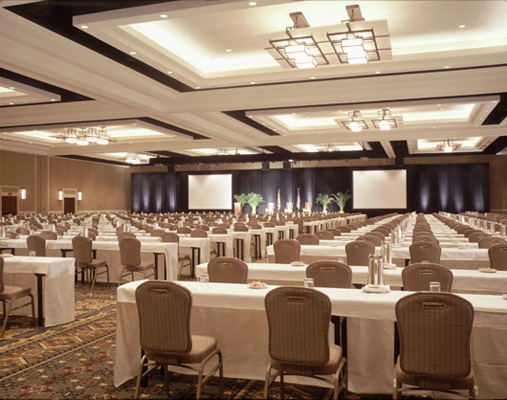
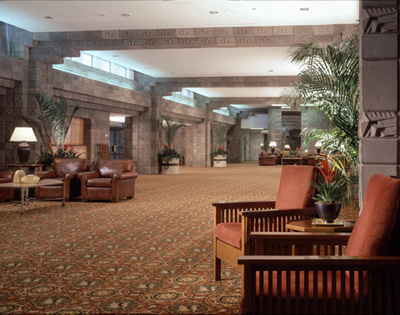
McArthur murió en 1951. Frank Lloyd Wright le mandó a su viuda una carta en la que decía:

«Yo siempre dije que Albert era el arquitecto del Biltmore. Pero él lo fue por mí, y yo fui más arquitecto que él, y usted debería saberlo».

Hizo este mismo tipo de observaciones simpáticas en el funeral de Albert, y Charles McArthur (el hermano de en medio) se acercó a él, le soltó un tremendo puñetazo en la cara y le tiró al suelo.

Como en las películas que veíamos de niños, a uno le dan ganas de ponerse en pie y aplaudir. Ya era hora de que alguien le sobara los morros a este chulo.
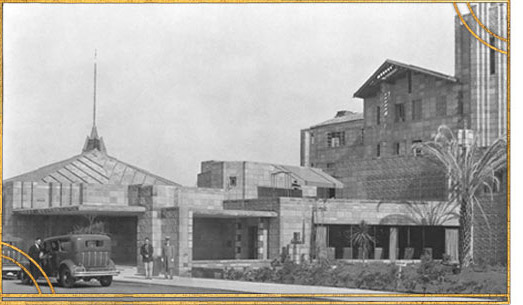
The Arizona Biltmore

José Ramón Hernández Correa
Doctor Arquitecto y autor de Arquitectamos locos?
Toledo · mayo 2012

(Si consultáis la página web del Biltmore, cuyo enlace he puesto antes, veréis que se les sigue cayendo la baba con que es un edificio influido por Wright. Muestran claramente la autoría de Albert McArthur, pero la sombra del maestro sigue siendo más pesada).

[:es]Historia Universal de la Infamia [II] | José Ramón Hernández Correa[:gl]Historia Universal da Infamia [II] | José Ramón Hernández Correa[:en]Universal history of the Turpitude [II] | José Ramón Hernández Correa[:]

[:gl]

The Arizona Biltmore

Creo que non hai dúbida (e escribo «creo») en celebrar a Frank Lloyd Wright, a Le Corbusier e a Mies van der Rohe como os tres máis grandes arquitectos do século XX. Hai decenas de xeniais arquitectos, e centos de arquitectos extraordinarios, pero creo que estes tres son outra cousa. Polo menos na miña opinión. Citeinos, ademais, na orde que ocupan no meu afecto e no meu corazón: Frank Lloyd Wright, Le Corbusier e Mies van der Rohe. É máis, xa postos, secundo a afirmación de Bruno Zevi:

«Frank Lloyd Wright é o máis grande arquitecto desde as cavernas».

Con todo, estes tres brillantísimos arquitectos teñen tamén as súas zonas escuras, as súas infamias monstruosas, e a miña obrigación autoimpuesta é contalas aquí. Cada un deles cometeu máis dunha, pero vou contar só una de cada un: Non sei si a máis vil. Talvez si. Teño que alegar que a estes heroes ou se lles santifica ou se lles ataca sen piedade, motivo polo que os seus puntos negros nunca están claramente contados: Ou se disimulan e ata se negan, ou se amplifican desproporcionadamente. Eu intentarei ser obxectivo, aínda que teño as fontes que teño.

Creo que o que digo é verdade no seu conxunto, aínda que seguro que me fallan moitos detalles.

Hoxe dedicareime ao primeiro, a quen sempre venerei, a quen lle dediquei a miña tese doutoral e ata lle escribín unha novela (que vos podedes descargar) para tentar exorcizármelo (quitarmo de encima) e apearlle do altar en que lle tiña. (O malo é que o canalla aguanta na cadeira de brazos presidencial da miña corazoncito a pesar de todo. É como a cotra).

Imos coa infamia.

Albert Chase McArthur foi o maior dos tres fillos de Warren McArthur, un exitoso home de negocios cuxa casa construíu Frank Lloyd Wright en 1892, en Chicago. O raparigo creceu admirando ao xenial arquitecto. Tanto que el mesmo fíxose arquitecto, e chegou a traballar ás ordes do seu ídolo entre 1907 e 1909.

En 1927, Charles e Warren McArthur, os dous irmáns de Albert, compraron un terreo ao pé do Monte Camelback, preto de Phoenix (Arizona), e encargáronlle o proxecto dun hotel: O Arizona Biltmore. Albert púxose a traballar no deseño do edificio e decidiu empregar o sistema de bloques de formigón que creara o seu mestre. Convenceu aos seus irmáns para que pagasen a Wright polos dereitos de utilización deses bloques. Wright vendeulles os dereitos por un dineral, esquecendo o pequeno detalle de que na súa desastrosa situación legal e financeira embargáranlle todo o que fose susceptible de ser embargado, incluíndo, por suposto, esa patente. Pero é que, ademais de vender o que non era seu, como non tiña traballo presentouse en Phoenix a axudar a Albert, sen que el pediullo. Albert xa tiña o deseño do edificio terminado, e Wright entusiasmouse ao velo.

Wright caracoleaba polo estudo con Olgivanna, estorbando, reconsiderando cousas que xa estaban resoltas, mareando a todo o mundo ata que Charles, o irmán de no medio dos McArthur, e xefe da empresa Arizona Biltmore, pediulle co maior tacto que se volvese á súa casa, pois o seu irmán bastábase e sobrábase para terminar os detalles do proxecto.

Albert fixo o traballo con toda a súa ilusión, con toda a súa alma, con tanto amor polos seus irmáns como polo seu mestre Wright.

The Arizona Biltmore

O resultado foi unha obra moi atractiva, cun aire wrightiano inconfundible. Menos «inspirada» e menos «maxistral» que as auténticas obras de Wright, pero, á fin e ao cabo, unha moi digna parente delas.

A obra inaugurouse o 23-F de 1929. Deseguido apareceu o avogado do auténtico dono da patente dos bloques e meteulles unha demanda de prognóstico aos irmáns, que tiveron que volver pagar por utilizar os bloques. (Non se se lle pediron a Wright que lles devolvese o diñeiro, pero levábano claro).

En todo caso, Wright non devolveu un dólar (non o tiña), pero a cambio mostrouse tan amable, tan cariñoso, tan solícito co seu discípulo, que cando viu a obra terminada dixo:

«Quedou tan mal como esperaba».

The Arizona Biltmore

Que xeneroso! Que maneira de devolver amor e agarimo!

Albert adoráballe, e a súa esposa fíxose moi amiga de Olgivanna. A cambio, Wright burlábase da muller e do fillo de Albert sempre que podía.

Pero volvamos ao hotel.

Aínda que hai que recoñecer que o Arizona Biltmore é máis romo que os edificios de Wright, parécese tanto que desde o primeiro momento causou confusión. En varias revistas, e mesmo en dous libros, saíu publicado como obra de Wright.

Mesmo aínda que Albert McArthur tentou demostrar a autoría do proxecto mostrando que levaba a súa firma, a xente acabou dicindo que Wright estaba tan embargado e perseguido que non podía asinar legalmente, pero que o deseño era seu en realidade.

Aínda que sexa unha obra algo frouxa para ser de Wright, sería a obra mestra de calquera arquitecto mediano (eu estaría máis que hiperchulo se fose o seu autor). Por iso, Albert pediulle a Wright que desfixese definitivamente o malentendido e que dixese quen era o verdadeiro arquitecto do Biltmore.

The Arizona Biltmore

Wright escribiu a varias revistas, a varias asociacións de arquitectos e a varios críticos e xornalistas… para non aclarar nada. Ao Architectural Record escribiulle dicindo claramente que a obra era de Albert, pero noutros sitios non o dicía así, e insinuaba isto e o outro…

Será canalla? Se el mesmo dixera que a obra era moi mala! Que tipo de envexa tiña? Non o sei. Non o podo entender.

Moitos anos antes tamén lle negaba a Alfonso Iannelli a autoría das esculturas dos Midway Gardens. Sempre negaba todo mérito aos seus colaboradores. No caso de Iannelli, aínda que é indiscutible que a autoría é do italiano, é certo que traballaba ás ordes de Wright, seguindo as súas indicacións e directrices.

Nos Midway podo mesmo entender a postura de Wright, que é inxusta e mentireira, pero digo que podo entendela porque el iniciou o deseño das esculturas, e dirixiu o traballo final. (Na miña opinión os debuxos de Wright son mellores que as esculturas de Iannelli). O que non podo entender é que no Biltmore, no que non interviñera en absoluto e que é moi inferior ás súas obras, Wright puteara de tal maneira ao seu autor.

Albert Chase McArthur pasouse a vida loitando por demostrar que o hotel era seu. Sufriu un ataque cardíaco e quedou prostrado durante o últimos dez anos da súa vida, consagrado ao estudo da metafísica, das matemáticas e da teoría da cor.

Os irmáns McArthur gozaron do seu hotel apenas tres anos. A Gran Depresión mandounos a California. O hotel seguiu noutras mans, queimouse, foi restaurado, etc. Hoxe, curiosamente, está adornado con réplicas das esculturas de Iannelli. Que cousas.

McArthur morreu en 1951. Frank Lloyd Wright mandoulle á súa viúva unha carta na que dicía:

«Eu sempre dixen que Albert era o arquitecto do Biltmore. Pero el foino por min, e eu fun máis arquitecto que el, e vostede debería sabelo».

Fixo leste mesmo tipo de observacións simpáticas no funeral de Albert, e Charles McArthur (o irmán de no medio) achegouse a el, soltoulle unha tremenda puñada na cara e tiroulle ao chan.

Como nas películas que viamos de nenos, a un danlle ganas de poñerse en pé e aplaudir. Xa era hora de que alguén lle sobara os morros a este chulo.

The Arizona Biltmore

José Ramón Hernández Correa
Doutor Arquitecto e autor de Arquitectamos locos?
Toledo · maio 2012

(Se consultades a páxina web do Biltmore, cuxo ligazón puxen antes, veredes que se lles segue caendo a baba con que é un edificio influído por Wright. Mostran claramente a autoría de Albert McArthur, pero a sombra do mestre segue sendo máis pesada).

Historia Universal da Infamia [II] | José Ramón Hernández Correa

[:en]

The Arizona Biltmore

I believe that there is no doubt (and I write «believe») in celebrating Frank Lloyd Wright, Le Corbusier and Mies van der Rohe as three more big architects of the 20th century. There are dozens of brilliant architects, and hundreds of extraordinary architects, but I believe that these three are another thing. At least in my opinion. I have mentioned them, in addition, in the order that they occupy in my affection and in my heart: Frank Lloyd Wright, Le Corbusier and Mies van der Rohe. It is more, already put, I help Bruno Zevi:’s affirmation:

«Frank Lloyd Wright is the biggest architect from the caverns».

Nevertheless, these three most brilliant architects have also his dark zones, his monstrous turpitudes, and my autowell versed obligation is to count them here. Each of them committed more of one, but I am going to count only one of each one: do not be if the most vile. Maybe yes. I have to invoke that these heroes or are sanctified by it or one attacks them mercilessly, motivate for that his black points are never clearly few: Or they are hidden and even they refuse, or are amplified disproportionately. I will try to be an aim, though I have the sources that I have.

I believe that what I say is true in his set, though there is sure that many details trump me.

Today I will devote myself to the first one, whom always I have venerated, to whom I dedicated my doctoral thesis and wrote to him a novel (that you can unload) me to try to exorcize it (to take it from me of above) and to dismount him of the altar in which it had. (The bad thing is that the canalla lasts in the presidential armchair of my corazoncito regardless. It is like a limpet).

We go with the turpitude.

Albert Chase McArthur was the major one of three children of Warren McArthur, a successful businessman whose house Frank Lloyd Wright constructed in 1892, in Chicago. The boy grew admiring the brilliant architect. So much that he itself made to himself an architect, and it managed to work to the orders of his idol between 1907 and 1909.

In 1927, Chat and Warren McArthur, both brothers of Albert, bought an area at the foot of the Monte Camelback, near Phoenix (Arizona), and entrusted him the project of a hotel: The Arizona Biltmore. Albert put to work in the design of the building and decided to use the system of blocks of concrete that his teacher had created. It convinced his brothers in order that they were paying Wright for the rights of utilization of these blocks. Wright sold the rights for a wad, forgetting the small detail of which in his disastrous legal and financial situation they him had impeded everything what was capable of being impeded, including, certainly, this patent. But he is that, beside selling what was not his, since it did not have work appeared in Phoenix to helping Albert, without he had asked for it him. Albert already had the design of the finished building, and Wright got enthusiastic on having seen it.

Wright caracoleaba for the study with Olgivanna, hindering, reconsidering things that already were solved, annoying to the whole world until tht Charles, the brother of in the middle of the McArthur, and chief of the company Arizona Biltmore, asked him with the major tact to turn to his house, since his brother was been enough and one was exceeding to finish the details of the project.

Albert did the work with all his illusion, with all his soul, with so much love for his brothers as for his teacher Wright.

The Arizona Biltmore

The result was a very attractive work, with an air wrightiano unmistakably. «Less «inspired» and «less «magisterial» than Wright’s authentic works, but, in the end, the very worthy one relative of them.

The work was inaugurated 23-F of 1929. Immediately there appeared the attorney of the authentic owner of the patent of the blocks and a demand of forecast put them to the brothers, who had to return to pay for using the blocks. (I do not know if they asked Wright to return the money to them, but they were taking it clearly).

In any case, Wright did not return a dollar (it did not have it), but in exchange it proved to be so nice, so affectionate, so solicitous with his disciple, who when it saw the finished work said:

«It has stayed so badly as it was waiting».

The Arizona Biltmore

Generous what! What a way of returning love and fondness!

Albert was adoring him, and his wife had become very a friend of Olgivanna. In exchange, Wright was joking of the woman and of the son of Albert providing that it could.

But let’s return to the hotel.

Though it is necessary to admit that the Arizona Biltmore is blunter than Wright’s buildings, it seems so much that from the first moment it caused confusion. In several magazines, and even in two books, it worked out published as Wright’s work.

Even though Albert McArthur tried to demonstrate the authorship of the project showing that it was taking his signature, the people ended up by saying that Wright was so impeded and chased that it could not sign legally, but that the design was his actually.

Though it is a slightly sluggish work to be of Wright, it would be the masterpiece of any medium architect (I would be more than hyperlovely if I was his author). Because of it, Albert asked Wright to undo definitively the misunderstanding and that was saying the one who was the real architect of the Biltmore.

The Arizona Biltmore

Wright wrote to several magazines, to several architects’ associations and to several critics and journalists … not to clarify anything. He wrote to the Architectural Record saying clearly that the work belong to Albert, but in other sites he was not saying it this way, and was insinuating this and the different thing…

Will he be a rabble? If he itself had said that the work was very bad! What type of envy had it? I don’t know. I cannot understand it.

Many years before also he had denied to Alfonso Iannelli the authorship of the sculptures of the Midway Gardens.. Always he was denying any merit to his collaborators. In case of Iannelli, though it is indisputable that the authorship belongs to the Italian, it is true that was working to Wright’s orders, following his indications and directives.

With the Midway I can deal even Wright’s position, which is unjust and lying, but I say that I can understand it because he initiated the design of the sculptures, and it directed the final work. (In my opinion Wright’s drawings are better than Iannelli’s sculptures). What I cannot understand is that in the Biltmore, in which it had not intervened by no means and which is very lower than his works, Wright puteara of such a way than his author.

Wright did not have orders, was crossing an economic situation and horrible personnel, and it could have the weakness of envying the money and McArthur’s success. I entendería to that, as a result of all that, I was setting this work to give birth, he was saying that it was an adulteration of his ideas, etc. But I cannot understand that he was saying that it was his (and at the same time as it was very bad). Boy looks like to me a child’s tantrum.

Albert Chase McArthur spent the life to himself fighting to demonstrate that the hotel was his. It suffered a heart attack and remained humbled during the last ten years of his life, dedicated to the study of the metaphysics, of the mathematics and of the theory of the color.

The brothers McArthur enjoyed his hotel only three years. The Great Depression ordered them to California. The hotel continued in other hands, burned, was restored, etc. Today, curiously, it is adorned by replies of Iannelli’s sculptures. What things.

McArthur died in 1951. Frank Lloyd Wright ordered a letter his widow in the one that was saying:

«I always said that Albert was the architect of the Biltmore. But he it was for me, and I was more architect than he, and you should know it».

It did the same type of nice observations in Albert’s funeral, and Charles McArthur (the brother of in way) approached him, gave up a tremendous punch in the face and it him threw at the soil.

Since in the movies that we saw of children, desire give one of putting in foot and applauding. Already it was time of that someone him was handling the knobs to this rascal.

The Arizona Biltmore

José Ramón Hernández Correa
PhD Architect and author of Arquitectamos locos?
Toledo · mayo 2012

(If you consult the web page of the Biltmore, which link I have put before, you will see that they there continues being fallen the slobber with which it is a building influenced by Wright. They show clearly Albert McArthur’s authorship, but the shade of the teacher continues being heavier).

Universal history of the Turpitude [II] | José Ramón Hernández Correa

[:]

José Ramón Hernández Correa
José Ramón Hernández Correahttp://arquitectamoslocos.blogspot.com.es/
Nací en 1960. Arquitecto por la ETSAM, 1985. Doctor Arquitecto por la Universidad Politécnica de Madrid, 1992. Soy, en el buen sentido de la palabra, bueno. Ahora estoy algo cansado, pero sigo atento y curioso. Arquitecto, bloguero, saxofonero, escritor... pero todo mal.
ARTÍCULOS RELACIONADOS
ARTÍCULOS DEL AUTOR

2 COMENTARIOS

0 0 votos
Article Rating
Suscribirse
Notificarme
guest
2 Comments
Los más recientes
Los más viejos Los más votados

Espónsor

Síguenos

23,683FansMe gusta
5,321SeguidoresSeguir
1,844SeguidoresSeguir
23,782SeguidoresSeguir

Promoción

También:

feedly

Columnistas destacados

Íñigo García Odiaga
87 Publicaciones0 COMENTARIOS
Antonio S. Río Vázquez
57 Publicaciones0 COMENTARIOS
José del Carmen Palacios Aguilar
54 Publicaciones0 COMENTARIOS
Aldo G. Facho Dede
50 Publicaciones0 COMENTARIOS