
No. 6, The precursors, December 2021
Architectural criticism
Women behind Women. The First Step to Contemporary Questioning
Mujeres detrás de mujeres. El primer paso para el recuestionamiento contemporáneo
Two interviews conducted in 2019 with two Latin American women architects of influence in the academic sphere, Zaida Muxí Martínez and Lilliane Ponce Gutiérrez, give rise to a series of reflections on gender-inclusive urban planning (Figs. 1 and 2).
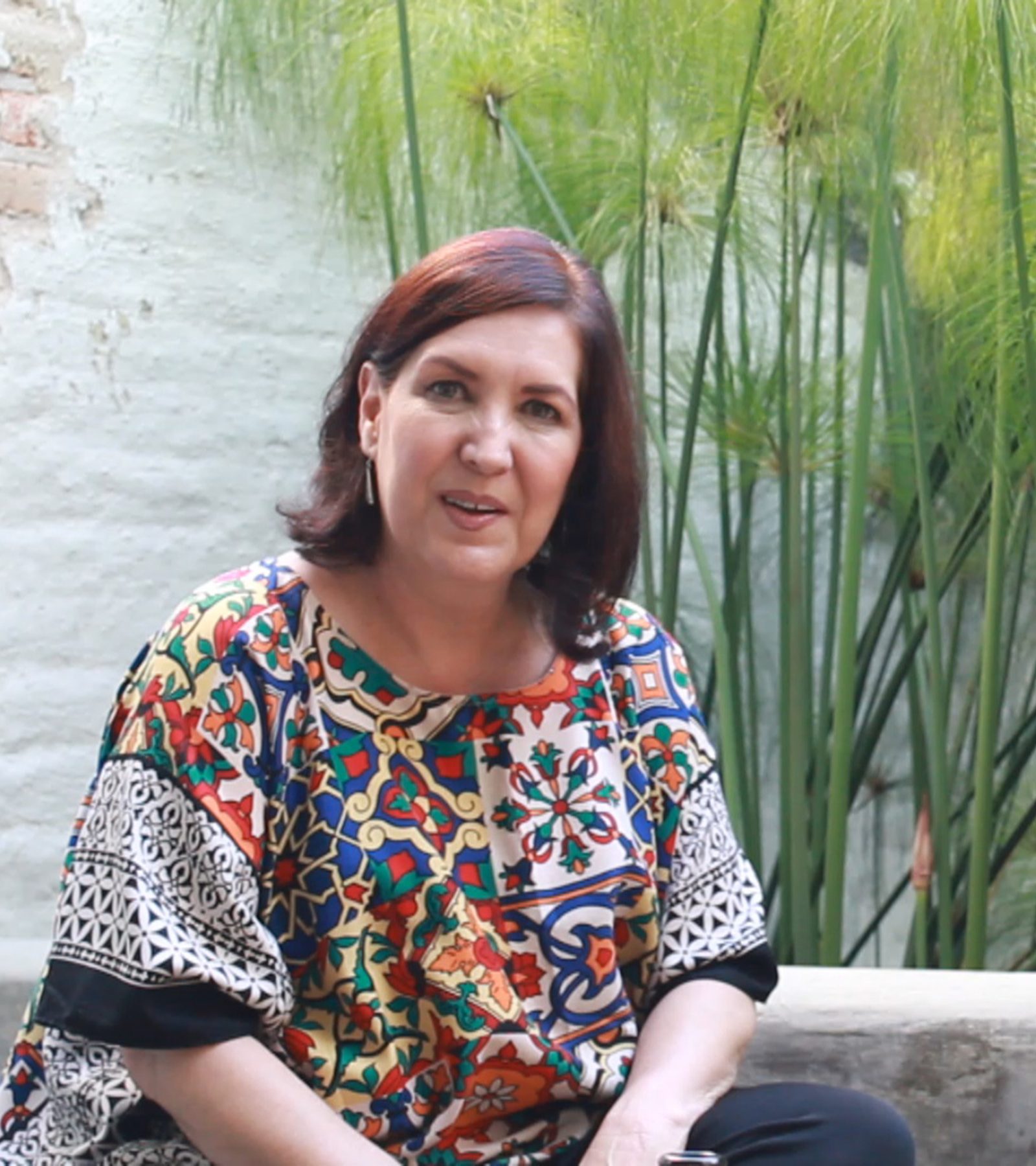

After the interview, two strong parallels can be observed in the way they have conceived, on the one hand, the female role – their own and that of others – and, on the other, the way in which this perspective changes the starting point of the approach to habitat and to cities.
Zaida Muxí states that
we have been brought up to erase women, not to listen to ourselves, not to listen to them,
as she recalls Odilia Suárez, an urban planner who was academic secretary of the Universidad de Buenos Aires during Muxí’s years as a student in Argentina. Despite living in a very male environment, Suárez achieved a prominent position:
unfortunately, those pioneers did not win their place with a smile.
Women like Odilia, despite being competent in their work, were singled out by the professional community, which thereby undermined their personal credibility and that of their professional abilities.
For Zaida Muxí, female influence over time has given strength to her work and professional commitment. Margarete Schütte-Lihotzky, the Austrian architect, is another pioneer whom she still cites in her publications today as a point of reference.
Lilliane Ponce acknowledges that, although on a personal level, within the family nest, both her family and especially her mother were the ones who instilled professional confidence in her, she has witnessed how other women around her have succumbed after fighting personal, family and professional battles assigned to their gender role:
at very important moments, when it is their moment, they step aside.
In that sense, and with due respect for all women’s decisions, Lilliane has taken on the role of a voice for women as a collective in an academic world dominated by men,
if I am the one who can hold the microphone at this moment, it has to be used, because I am not going alone; we are all going.
For Muxí (Fig. 3), constant experimentation with the realities kept secret that female voices have endured leads her to rethink the place from which one asks, the perspective, the assigned roles and reality, in order to give a response to architecture:
That changes the place from which you ask… taking into account what has not been taken into account until now; that is, if everyday experiences had been taken into account, cities would not be what they are, suburbia would not exist, sprawl would not exist, cities would be more walkable, nature would be more present, the world would be different.

That is where the experience of being a woman, from a perspective stripped of social burdens, can make a significant contribution without seeking to hide it.
Lilliane Ponce, for her part, tells us about the questions to which her work in management and citizen participation has led her,
how can the role of professionals be reversed so that collective voices have the strength to make themselves heard? How do we manage to convey to architecture students the joy and the responsibility of the humane task of architecture?
During the interview she mentions, as Muxí does, a reconsideration based on the fact that
we keep teaching how to solve the same problems, in the order that we see fit
as a critique aimed at halting teaching-learning processes vitiated by orthodox constructions of collective thought.
In answer to the question “What would your manifesto be on the influence of women in architectural practice?”, both offer reflections very close to one another.
For Lilliane Ponce (Fig. 4) what matters is
focusing on the person, on the act of inhabiting and the life of each person, first understanding that microworld and then extending it to the family and then to public space.

And she emphasises that women’s capacities are fundamental for nurturing and revaluing the development of human life at different scales.
Zaida Muxí’s answer, a very forceful one, concerns
being aware of the everyday, of the diversity of realities, forgetting completely about neutrality, making all differences visible in order to tackle inequality.
In short, she considers it essential to incorporate into cities the knowledge that arises from the differences in tasks and roles, as well as from information about women’s bodies.
How to cite
Herrera Piñuelas, Isamar Anicia, Alfred Esteller Agustí, and Adolfo Vigil de Insausti. “Mujeres detrás de mujeres. El primer paso para el recuestionamiento contemporáneo” [Women behind Women. The First Step to Contemporary Questioning]. VAD. Veredes, arquitectura y divulgación, no. 6 (2021): 127–129.
© 2021 Isamar Anicia Herrera Piñuelas, Alfred Esteller Agustí and Adolfo Vigil de Insausti. CC BY-NC-SA 4.0.