
No. 15, Memory, June 2026
Research articles
Memory Materialised in the Territory: Gender Perspective and Citizen Participation in Asturian Urban Legislation
La memoria materializada en el territorio: Perspectiva de género y participación ciudadana en la legislación urbanística asturiana
Abstract
Collective memory materialises in the territory, sometimes perpetuating structural inequalities that need to be deconstructed through new regulatory frameworks. This article analyses the integration of the gender perspective into territorial legislation through the case study of the draft Comprehensive Territorial Planning Law of Asturias (LOITA). Using a mixed methodology that includes a gender-disaggregated questionnaire (N=161, corresponding to valid and complete questionnaires) in the rural municipality of Grado, five indicators are evaluated: population, mobility, care, housing and safety. The results reveal significant gaps, notably in access to public transport (+19 % in favour of men) and the modification of routes out of fear (+14 % among women). A “Gender Gap Matrix” is proposed as a methodological tool to translate these sociological diagnoses into prescriptive planning guidelines. It is concluded that territorial legislation, nourished by citizen participation, is a key instrument for overcoming androcentric urbanism and designing more equitable territories.
Keywords: territory; law-making process; social sustainability; gender; civic participation
Background
What will, or would, a city, a village or a neighbourhood based on ecofeminism, the commons and care be like? We probably do not yet have the answer or answers, but changing the paradigms on which we base our practices is the first step in seeking and exploring solutions.1
The integration of the gender perspective into Spanish urban planning has advanced unevenly. As Bermejo Lorenzo and Fernández García have recently pointed out, although pioneering laws such as Catalonia’s Neighbourhoods Law (2004) or the regulations of Extremadura and the Basque Country have opened the way, the transfer of the principles of equality to rural territorial planning remains a methodological challenge.2 In this context, the Government of the Principality of Asturias (2019-2023 legislative term) drew up the draft bill for the Comprehensive Territorial Planning Law of Asturias (LOITA), launching, among others, two pilot exercises in the municipality of Grado (Grau in the Asturian language). These experiences, conceived “as a testing ground and space for experimentation for what the real and legal implementation of the Comprehensive Territorial Planning Law of Asturias might come to entail”,3 sought to verify the feasibility of the legislative draft and to reduce uncertainties, allowing adjustments to be made before its implementation.
The first exercise addresses the relevance of trials in urban planning legislation.4 The second, developed in this article, evaluates “the design and determinations of the different instruments of comprehensive territorial and urban planning, and the analysis of the impact of gender roles on the territory and the urban environment”.5 The conclusions were intended to inform the draft bill.
The aim was to review the postulates of territorial and urban planning in rural areas through the deconstruction of pre-established memory. That is, a critical understanding of territorial organisation based on identifying the physical and social structure of the territory in order to renew it and change paradigms.
Collective Memory and the Deconstruction of the Androcentric Territory
Social sustainability, as defined by the 2030 Agenda, means placing people at the centre of decisions and “leaving no one behind”.6 Within this framework, gender equality stands out as a key element for the progress of a cohesive society. However, gender, as a social and cultural construct rooted in memory, defines expected behaviours that have an unequal impact on the territory, especially in rural areas. This is an environment that women have tended to abandon, using flight to urban centres as a strategy of emancipation from traditional patriarchal structures.7
The social situation of women in these environments encompasses two interconnected discriminatory realities: gender and rurality. Rurality, as a social construction, brings together a symbolic space that imbues collective memory with a certain stigma, being associated with the periphery in relation to the centres of power where normative knowledge is produced. Collective memory, as defined by Maurice Halbwachs, is not a sum of individual memories but a social construction that is updated from the present and that the territory materialises in its ways of dwelling.8
This collective memory perpetuates the idea of an opposition between rural and urban, anchored in Western binary thinking, which has divided the world into opposing spheres: masculine/feminine, private/public, productive/reproductive.9 Pierre Nora has noted that “sites of memory” arise precisely when living memory disappears, when communities no longer recognise themselves in their territories: the rural landscape in demographic decline is, in this sense, a site of memory in a state of emergency.10
History bears witness to this constant dichotomy, materialised in physical and intangible boundaries that reflect deeply rooted social divisions. Dolores Hayden has shown that the urban landscape —and by extension the rural one— is not a neutral setting but a palimpsest of power relations in which memories of gender and class are inscribed or erased according to dominant interests.11 Legislating on the territory therefore requires deconstructing this androcentric memory in order to make room for new rural identities, in which economic diversification is accompanied by a cultural and representational diversification of spaces.12
The Municipality of Grado
Grado is one of the 78 Asturian municipalities, with a dispersed settlement pattern characteristic of the north-west of the Iberian Peninsula (essentially Galicia and Asturias). This pattern is characterised by the fragmentation of settlement, with a very large number of population entities located very close to one another, which “breaks with the general pattern of the centre and south of the peninsula, where a single singular population entity (or a few) constitutes a municipality”.13
Grado is made up of 187 population entities grouped into 28 parishes14 and a town,15 located 24 km and 20 minutes by car from Oviedo (Fig. 1), which generates a relationship of dependence that limits its autonomy and conditions its demography.

The distribution by age and sex confirms that ageing is female from the age of 65 onwards, with men in the majority in the working-age bracket and among those under 24 (Fig. 2).16 It is also confirmed that the rural territory is predominantly male: 72.53 % of women live in the town or in the parishes best positioned in relation to it or to the communication infrastructure (Figs. 3 and 4).


| Parish | Men | Women |
|---|---|---|
| Ambás * | 10 | 11 |
| Báscones | 107 | 107 |
| Berció | 55 | 47 |
| Cabruñana | 27 | 20 |
| Castañéu | 116 | 103 |
| Cuaya | 57 | 56 |
| Freisnu, El | 54 | 48 |
| Grau / Grado * | 3,161 | 3,593 |
| Mata, La | 242 | 235 |
| Peñaflor | 128 | 102 |
| Pereda | 78 | 72 |
| Rañeces | 48 | 36 |
| Restiellu * | 14 | 15 |
| Rodiles * | 17 | 19 |
| Rubianu | 7 | 2 |
| Sama * | 71 | 72 |
| Samartín | 135 | 115 |
| San Adrianu | 0 | 0 |
| San Xuan | 86 | 78 |
| Santa María Grau * | 48 | 55 |
| Santa María Villandás | 40 | 26 |
| Santianes de Molenes | 59 | 43 |
| Sorribas * | 10 | 13 |
| Tolinas | 9 | 3 |
| Vayu | 68 | 60 |
| Vigaña | 8 | 8 |
| Villamarín | 17 | 9 |
| Villas, Las | 11 | 6 |
Source: SADEI. © Sonia Puente Landázuri, 2025.
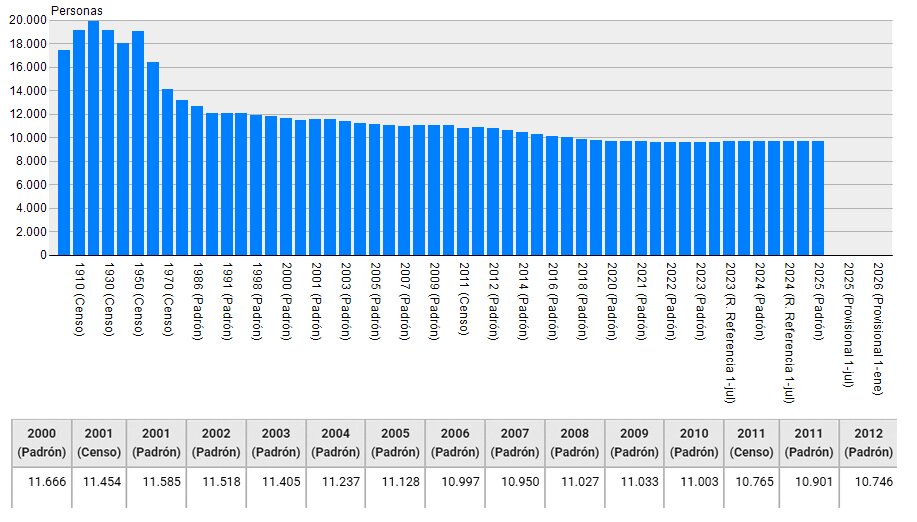
This is a municipality that has been steadily losing population over recent decades. It currently has less than half the population that the municipality came to have in the 1920s (19,878 inhabitants) (Fig. 5).
Citizen Participation. Process Design and Results
At the first International Women’s Congress on Housing and Urban Planning, held in Bonn in 1963,17 a series of demands were raised concerning the need for women’s participation, the language used and promotion through dissemination; issues that remain outstanding, since “none of the 3 matters has been resolved to this day”.18
In the light of these demands, the drafting of the LOITA set as its starting objective to give the process as much importance as the end, pursuing “citizen commitment”.19 To this end, active listening was put into practice as an essential procedure for building the territory collectively. It was addressed to qualified technical experts and to the citizens who live in the territory, develop their life project there and look after a valuable asset that provides us with resources.
A methodology was designed to make it possible to understand and measure this territorial reality, identifying shortcomings and problems. Although the overall participatory process included interviews, workshops and analytical observation, this article focuses exclusively on the quantitative and qualitative analysis of the questionnaire, as it is the instrument that allows a systematic disaggregation of gender gaps.
The questionnaire, addressed to the residents of the municipality, women and men alike, in clear language and with an accessible design, was distributed by email, social media and digital messaging. Short answers were sought, with the option of adding comments, in order to obtain valuable information. To disaggregate the results, gender identity was a mandatory question. Using this filter, 99 women, 60 men and 2 people with other identities were identified (N=161). These participants were disaggregated by age bracket and place of residence.
Five indicators guided all phases of the process, drawn up on the basis of a variety of documents:20 population, transport and mobility, everyday life and care, access to housing, and perception of safety in public space.
The quality of citizen participation in territorial planning processes cannot be assessed solely by the number of participants, but rather by the degree of real influence that citizens exert over decisions. Sherry Arnstein’s “ladder of participation” model remains the reference framework for distinguishing between tokenistic participation and effective participation.21 In this regard, the process designed for the LOITA aspired to go beyond the merely consultative rungs to reach forms of citizen co-decision. Recent analyses of the integration of the gender perspective into the urban plans of Spanish cities confirm that this aspiration is achievable but requires sustained political will and specific methodologies.22
Analytical Matrix of Results
The integrating matrix (Table 1) makes it possible to identify and rank the main spatial inequalities from a gender perspective. The results reveal three critical areas in which the gaps are greatest: transport, perception of safety and territorial accessibility.
Particularly notable are the difference in access to public transport (+19 % in favour of men) and the modification of routes out of fear (+14 % among women), revealing structural inequalities that condition the right to the territory. These gaps not only describe differences in use but also point to shortcomings in territorial planning that require specific regulatory responses.
| Indicator | Variable | Gap (%) W-M | Magnitude | Theoretical interpretation | Territorial implication / LOITA |
|---|---|---|---|---|---|
| Population | Dependants in care | +13 % W | High | Feminisation of care | Need for proximity of services |
| Paid work | +37 % W | Very high | Active participatory profile | Labour integration in rural areas | |
| Retirement | +53 % M | Very high | Male rural ageing | Adaptation of spaces for socialising | |
| Transport | Travel on foot | +10 % W | Medium | Proximity mobility | Improvement of pedestrian routes |
| Private vehicle use | +9 % M | Medium | Male motorised privilege | Public transport alternatives | |
| Access to bus station | +19 % M | Very high | Inequality in intermodality | Relocation of transport nodes | |
| Time to health services | +10 % W | High | Time burden of care | Decentralisation of basic services | |
| Care | Nearby facilities | +8 % M | Medium | Differential perception of space | Mapping of everyday needs |
| Needs met | +7 % W | Low | Relative satisfaction | Maintenance of current provision | |
| Housing | Right to decent housing | +8 % W | Low | Guaranteed basic access | Maintenance policies |
| Support from the administration | +10 % W | Medium | Institutional lack of protection | Aid for single-parent families | |
| Safety | Pedestrian insecurity | +7 % W | High | Vulnerability in public space | Lighting and safe urban design |
| Change of route | +14 % W | Very high | Restriction of the right to the city | Safe and continuous routes | |
| Insufficient accessibility | +15 % W | Very high | Physical barriers to care | Widening of pavements and dropped kerbs |
Methodological note: the magnitude of the gap is classified as Low (<5 %), Medium (5-10 %), High (10-15 %) and Very high (>15 %). N=161.
Taken as a whole, the matrix not only synthesises the results of the questionnaire but also acts as an operational tool for decision-making within the framework of the LOITA. The identification of structural gaps makes it possible to translate the data into planning criteria, incorporating the gender perspective as a cross-cutting variable in territorial planning.
Population
The participant profile corresponds to 65 % of women living in the town, compared with 75 % of men. The most participative age group is between 26 and 65: 72 % of women and 63 % of men.
The results of the questionnaire confirm that 46 % of women have dependants in their care, compared with 33 % of men. This difference of 13 percentage points is consistent with the literature on the feminisation of care and its impact on mobility and the use of public space.23
The results concerning employment are striking. The number of women of working age (between 26 and 65) is 9 % higher among the participants. More women than men are in paid work, with a difference of 37 %. Conversely, 53 % more men are retired. As regards autonomy in getting about, a minimal percentage report needing assistance, which suggests a good general state of health in both sexes among the participating sample.
These results suggest that women of a certain profile —economically independent— are those who participate most and/or show greater commitment and a stronger demand to change what does not satisfy them. This is also related to their place of residence, mostly in the town.
Transport and Mobility
The study examined the time24 and the means of reaching the services needed in daily life: education, health centre, shops, culture, miscellaneous services (such as Correos or the bank branch); or Oviedo, for other more specialised services used occasionally (Fig. 6).

According to the results, women walk more than men in their journeys (a difference of 10 %). The private car is the most common means of transport for men, exceeding female use by 9 %. For the vast majority, their reference centre is Grado, although 11 % more women have Oviedo as their reference centre. In other words, they travel further and spend more time doing so (a difference of 6 % compared with men in the band of more than 30 minutes).
With regard to the time spent travelling to school, nursery, day centre or social centre, women systematically take longer, with differences of between 9 % and 12 % in the bands above 15 minutes. A similar trend is observed for reaching health-related places (pharmacy or health centre), as well as banks or Correos. In the case of the hospital, 9 % more women than men take between 15 and 30 minutes, whereas men outnumber women in the band of less than 15 minutes.
As regards access to shops, the figures are more even, although differences persist: 6 % more men take less than 15 minutes. Access to culture (cinema, theatre, library) shows a more dispersed distribution, which could be related to the type of culture that each gender mainly consumes (local culture as opposed to more distant events).
Finally, in access to public transport (train and bus), the result is significant and appears to be related to the location of the infrastructure. With the stations situated at opposite ends of the town (Fig. 7), access to the railway —in a more central position— is relatively similar for both genders (between 6 % and 2 % apart depending on the time band). However, in access to the bus station, the difference soars: 19 % more men than women state that it takes them less than 15 minutes to reach the station. This gap is not accidental but the materialisation in the territory of what Hayden (1995) calls the inscription of power relations: infrastructure designed from the memory of a male, motorised and productive subject, which penalises proximity mobility and care.
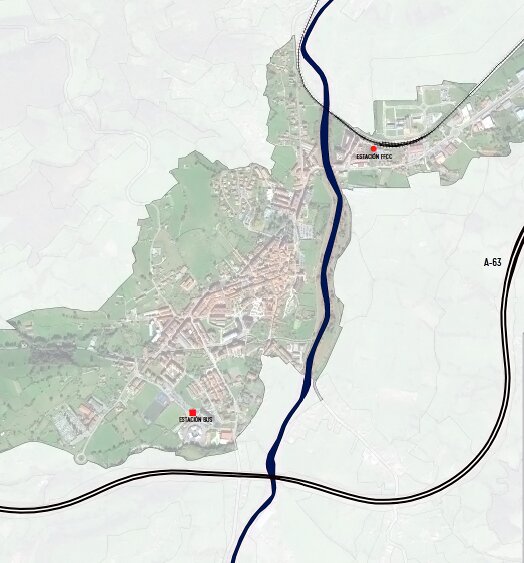
This finding suggests a correlation with the means of transport used (walking as opposed to the private car), highlighting the need to locate public transport stations in central positions and to facilitate intermodality in order to deconstruct this bias.
For journeys to the airport, the band above half an hour is the most common, with 14 % more men taking between 30 minutes and an hour. However, 9 % more women respond that it takes them more than an hour.
Everyday Life and Care
This indicator was used to gather information on the time spent on journeys related to the care of children and dependent persons. Time operates as a variable with a major impact on the burden of care and on work-life balance. As recent literature points out:
A new approach to the organisation of life can help to take the temporal dimension into account in order to better synchronise the notions of place, travel and time: chrono-urbanism.25
Incorporating chrono-urbanism into territorial legislation would mean moving from zoning based exclusively on land uses (residential, commercial) to planning based on isochrones of access to basic services, guaranteeing the “15-minute city” adapted to the rural scale.
The data indicate that 8 % more men consider that facilities for the care of older people are close by. However, 3 % more women answer affirmatively that the location of these facilities enables them to balance work and family life. The proportion of women who are satisfied that their needs in this respect are met is 7 % higher. The responses are even with regard to street furniture suitable for socialising.
With regard to facilities for children, 4 % more women consider that they are not close enough to home. The results are even regarding the perception that there are sufficient facilities and that needs are met.
The data reveal no very marked differences in this area between men and women in the general sample. The territorial and urban scale factor has a significant bearing on these results, both in the distance/time relationship and in the ratio of services per inhabitant. Blanca Valdivia has pointed out that the caring city —one that incorporates care as a structuring axis of urban planning— requires precisely this kind of gender-differentiated diagnosis in order to transform the design of facilities and everyday routes.26 In the Spanish context, the experience of the “precursors of proximity” has shown that incorporating the gender perspective into urban planning can produce measurable results in women’s quality of life.27
Access to Housing
This indicator seeks to evaluate the exercise of a constitutional right through the filter of the gender perspective. The right to the territory is conceived as a key concept in which to develop a life project in rural areas, for which access to housing is an indispensable requirement.
The results indicate that 8 % more women consider that their right to decent housing is fulfilled. However, when asked whether the administration helps in this regard, the answer is mostly negative in both groups (68 % of women, 78 % of men). The data suggest that meeting this need falls mainly on individual means, revealing an area for improvement in public policies to promote this right, especially given the absence of specific support for women heads of household (single parents), victims of gender-based violence or people in vulnerable situations. Leslie Kern has argued that the “man-made” city produces housing structures that do not respond to women’s needs, especially those of women who bear sole responsibility for care.28
Perception of Safety and Accessibility
This indicator evaluates the right to the city and to the territory on equal terms, from the perception of safety that people feel in the built environment.
The results show that 7 % more women perceive insecurity on their usual pedestrian journeys. The gap widens to 14 % when they are asked whether they change their route along the street out of fear. Likewise, 11 % more women consider that areas at night are insufficiently lit.
As regards accessibility, 15 % more women consider that the width of the pavements is insufficient and that the way is not accessible when they are pushing items such as shopping trolleys, pushchairs or wheelchairs. The results are more even with regard to the proper maintenance of roads and walkways, with 5 % more men approving of it.
This section reveals a gender bias in matters of both safety and care. The greater female perception of the insufficient dimensions of routes correlates with the fact that it is mostly women who take on the tasks that involve moving around with trolleys or wheelchairs, which in turn is linked to their usual means of transport: walking. This finding confirms that rural public space continues to operate according to logics of exclusionary binarism,29 in which the collective memory of fear restricts women’s right to the city. Tovi Fenster has shown that the “right to the gendered city” includes the right to safe and autonomous mobility, and that its violation disproportionately affects women in environments with a lower density of services.30 Leonie Sandercock, for her part, has pointed out that inclusive cities and territories require planning that recognises the diversity of experiences and needs, incorporating the voices of those who have historically been excluded from decision-making processes.31
Conclusions
The results of this questionnaire, cross-referenced with the statistical data for the municipality of Grado, lead us to a series of conclusions that may be of interest for the drafting of the LOITA and that can also be extrapolated to any territorial and urban planning law.
Scale. In small settlements such as the town of Grado, the scale factor is very favourable to citizens’ quality of life in terms of the ratio of services per inhabitant. Services are accessible for meeting everyday and care needs. Territorial laws in general, and the LOITA in particular (given the singularity of the Asturian territory), must draw a clear distinction according to the scale of the urban environments being planned: large cities, intermediate cities or towns that act as hubs for rural areas, such as the seats of municipalities or districts. They must also encourage or limit growth in favour of interaction and the design of connected territorial networks, thereby avoiding large agglomerations in favour of settlements that are accessible at a human scale and within proximity.
Time. The use and perception of time have a great deal to do with gender roles. Awareness of time is therefore directly related to the moment and the dedication in a person’s daily life (whether care is provided during the working day or during rest time, such as weekends). Hence the importance of including the time variable, not only distance, in planning, by means of geolocated indicators that make it possible to take decisions according to parameters that minimise uncertainty.
Indicators. Territories must be diagnosed and planned according to indicators adapted to each territorial model. A shift is needed from the standardisation used until now, inherited from the 1976 Regulation,32 to the dynamic design of the territory made possible by current geolocation technology. This makes it possible to measure access to public services in terms of the variables of quantity and distance, which, if properly implemented, could help to preserve the demographic balance in rural areas.
Public space. It is the most democratic social space par excellence. For this reason, it is essential that its design take into account the integration of social diversity and its role in facilitating coexistence. Attention must be paid not only to standards of quantity but also to those of quality and maintenance, for which a series of indicators should serve as a guide: location, sunlight, shade, comfort, accessibility, acoustic and environmental comfort, lighting, perception of safety, cleanliness and state of repair; all of them components linked to the good design of space and to the perception of safety.
Sustainable mobility. The omnipresence of the private car in rural areas, all the more so in complex terrain, greatly limits those who do not have one: children or older people. It is necessary to work on improving pedestrian and cycle routes. Such routes should take into account the entire life cycle, especially its most dependent stages (childhood and old age), and would foster a degree of autonomy and have a positive impact on the mental health of carers and those cared for.
Participation and representation. A qualitative leap is needed in the way citizens are involved in the processes of thinking about and transforming the built environment in which life unfolds. This requires legal tools that systematise and introduce methodologies of active listening to the people who inhabit the territory, making it possible to understand certain dynamics. Broad, diverse and heterogeneous processes should be established, accommodating all kinds of sensibilities, experiences and situations, and not depending solely on the political will of the moment. Hence the importance of sample selection in citizen participation processes, so that the sample is sufficiently representative of the various realities.
Specific training and expert knowledge. In the course of the study, an absence of the application of the gender perspective in data collection was detected, as well as a lack of awareness of its necessity and of how to implement it. For municipalities to be able to incorporate the social and equality perspective, the staff who diagnose and implement policies must have training and sensitivity in this area. Memory materialised in inertia continues to wreak havoc among public administration staff.
Demographic challenge. It is necessary to promote a territorial balance that makes it possible to retain the population and sustain the development of life. Otherwise, life in the city will be compromised. The territory supplies food, energy, water, oxygen, raw materials and biodiversity; in short, all the ecosystem services for life. To this end, territorial laws must provide the citizens of rural areas with access to services on an equal footing, as well as guarantee access to employment as a means of livelihood, through the orderly planning of land uses.
Change of regulatory paradigm. It is necessary to remove acquired customs and ways of doing things from our memory; to adopt a disruptive approach to inherited conceptual frameworks when carrying out any process within the public administration. Particularly when legislating, because of the transformative capacity that these tools make available. Promoting dissemination and education through guides and manuals helps to obtain the maximum benefit from these tools. While being aware that this is not the only requirement, the will to change is necessary. Hence the importance of a thorough understanding of the origins of the construction of collective memory, which makes it possible to bring about a paradigm shift.
In short, the Grado experience shows that the memory materialised in the territory is not immutable. Urban planning legislation, when it draws on gender-disaggregated participatory processes, ceases to be a supposedly neutral technical instrument and becomes a tool for correcting historical inequalities, capable of rewriting the territorial palimpsest towards more equitable models.
Acknowledgements
My thanks to everyone who has collaborated to make this article a reality. In particular to the architect Isabel Martín Ruiz for the love and care she put into the fieldwork. To María Pellón Revuelta, civil servant of the Principality of Asturias, for being part of that team of public employees in this country who make us feel proud. To the supervisors Isabel Carrera Suárez, full professor at the Universidad de Oviedo, and Josenia Hervás y Heras, associate lecturer at the Universidad de Alcalá. Without their encouragement this would not have been possible. Finally, I would like to thank Alejandro Calvo Rodríguez and Jorge García López, minister and deputy minister of the Government of the Principality of Asturias, for the opportunity they placed in my hands.
Bibliography
- Arnstein, Sherry R. “A Ladder of Citizen Participation”. Journal of the American Institute of Planners 35, n.º 4 (1969): 216-224.
- Bermejo Lorenzo, Carmen, y Ana María Fernández García. “La perspectiva de género en la legislación autonómica sobre ordenación del territorio y urbanismo en España. Apuntes sobre sus ritmos y diferencias”. Cidades, Comunidades e Territórios, n.º Au22 (2022): 1-15. https://doi.org/10.15847/cct.27291.
- Brundtland, Gro Harlem. “Nuestro futuro común”. Naciones Unidas, 1987. https://web.archive.org/web/20111003074433/http://worldinbalance.net/intagreements/1987-brundtland.php.
- Canales, Fernanda. “Por un mundo divido en esferas”. En Acto de Protesta 2020-2024, 109-112. México: Instituto Tecnológico y de Estudios Superiores de Monterrey, 2025.
- Chinchilla Moreno, Izaskun. La ciudad de los cuidados. Madrid: Los Libros de la Catarata, 2020.
- Cruz Souza, Fátima. Perspectiva de género en el desarrollo rural. Programas y experiencias. Aguilar de Campoo, Palencia: Asociación País Románico, 2012.
- Fenster, Tovi. “The Right to the Gendered City: Different Formations of Belonging in Everyday Life”. Journal of Gender Studies 14, n.º 3 (2005): 217-231. https://doi.org/10.1080/09589230500264109.
- Halbwachs, Maurice. La mémoire collective. París: Presses Universitaires de France, 1950. Edición en español: La memoria colectiva. Traducido por Inés Sancho-Arroyo. Zaragoza: Prensas Universitarias de Zaragoza, 2004.
- Hayden, Dolores. The Power of Place: Urban Landscapes as Public History. Cambridge, MA: MIT Press, 1995.
- Hervás y Heras, Josenia. “Más allá de una nueva Bauhaus europea. La necesidad de mujeres en la toma de decisiones urbanas”. En 1er Congreso: Territorios corresponsables, igualdad y espacio público, 260-277. Oviedo: Colegio Oficial de Arquitectos de Asturias, 2022.
- Hervás, Macarena, y Mar Loren-Méndez. “La perspectiva de género en el urbanismo. El caso de Viena”. Revista de Urbanismo, n.º 46 (2022): 1-18.
- Innerarity Grau, Carmen, Beatriz Acha Ugarte y Ana Sancho Martínez. “Género y Urbanismo: ¿hacia ciudades más sensibles e inclusivas?”. RIPS: Revista de Investigaciones Políticas y Sociológicas 19, n.º 2 (2020): 45-66. https://doi.org/10.15304/rips.19.2.6473.
- Junta de Extremadura. Orden de 17 de mayo de 2019, “Normas Técnicas para la integración de la dimensión de género en la ordenación territorial y urbanística de Extremadura”. https://doe.juntaex.es/pdfs/doe/2019/960o/19050329.pdf.
- Kern, Leslie. Feminist City: Claiming Space in a Man-Made World. Londres: Verso Books, 2020.
- Moreno, Carlos. La revolución de la proximidad. De la ciudad mundo a la ciudad de los quince minutos. Madrid: Alianza Editorial, 2020.
- Muxí Martínez, Zaida, y Josep Maria Montaner Martorell. “Repensar la ciudad desde el ecofeminismo”. Astrágalo. Cultura de la Arquitectura y la Ciudad, n.º 33-34 (2023): 13-32. https://doi.org/10.12795/astragalo.2023.i33-34.01.
- Naciones Unidas. Agenda 2030 para el desarrollo sostenible. 2015. https://unsdg.un.org/es/2030-agenda/universal-values/leave-no-one-behind.
- Nogué i Font, Joan. “El paisaje en la ordenación del territorio. La experiencia del Observatorio del Paisaje de Cataluña”. Estudios Geográficos 71, n.º 269 (2010): 415-448. https://doi.org/10.3989/estgeogr.201014.
- Nora, Pierre. “Between Memory and History: Les Lieux de Mémoire”. Representations, n.º 26 (1989): 7-24.
- Pérez del Hoyo, Raquel. “Integración de la perspectiva de género en el estudio de la ciudad y su patrimonio: aprendiendo de la experiencia de Benalúa hacia un futuro más sostenible”. Feminismo/s, n.º 32 (2018): 231-257. https://doi.org/10.14198/fem.2018.32.09.
- Puente Landázuri, Sonia. “Cómo enfrentarse al reto de hacer una ley del territorio: el caso del Principado de Asturias, Ley de Ordenación Integral del Territorio de Asturias (LOITA)”. Ciudad y Territorio Estudios Territoriales 55, n.º 217 (2023): 883-896. https://doi.org/10.37230/cytet.2023.217.17.
- ———. “La incorporación de mecanismos de ensayo vinculados a la renovación del planeamiento urbanístico y territorial. Parte I”. Revista ABACO 2/3, n.º 120-121 (2024): 182-201.
- Puleo García, Alicia H. Ecofeminismo para otro mundo posible. Madrid: Ediciones Cátedra, 2011.
- SADEI (Sociedad Asturiana de Estudios Económicos e Industriales). “Aproximación a las tipologías de las zonas rurales de Asturias”. 2021. https://www.sadei.es/aproximacion-a-las-tipologias-de-las-zonas-rurales-de-asturias/aproximacion-a-las-tipologias-de-las-zonas-rurales-de-asturias/aproximacion-a-las-tipologias-de-las-zonas-rurales-de-asturias_503_436_963_0_1_publi.html.
- Sánchez de Madariaga, Inés, Javier García López y Raffaele Sisto. Los Objetivos de Desarrollo Sostenible en 100 ciudades españolas. Informe urbano. Red Española para el Desarrollo Sostenible, 2018. https://reds-sdsn.es.
- Sánchez de Madariaga, Inés, e Inés Novella Abril. Proyectando con perspectiva de género. Guía para planificar ciudades y pueblos inteligentes y sostenibles. Junta de Extremadura, 2021.
- Sandercock, Leonie. Cosmopolis II: Mongrel Cities of the 21st Century. Londres: Continuum, 2003.
- Schumacher, E. F. Lo pequeño es hermoso. Madrid: Ediciones Akal, 2011.
- Valdivia Gutiérrez, Blanca. “Del urbanismo androcéntrico a la ciudad cuidadora”. Hábitat y Sociedad, n.º 11 (2018): 65-84. https://doi.org/10.12795/HabitatySociedad.2018.i11.05.
- Valdivia Gutiérrez, Blanca, Adriana Ciocoletto y Marta Fonseca. “Las precursoras de la proximidad”. VAD. Veredes, arquitectura y divulgación, n.º 6 (2021): 130-132.
- Whatmore, Sarah. Farming Women: Gender, Work and Family Enterprise. Londres: Macmillan, 1991.
Notes
- 1↩
Zaida Muxí Martínez y Josep Maria Montaner Martorell, “Repensar la ciudad desde el ecofeminismo”, Astrágalo. Cultura de la Arquitectura y la Ciudad, n.º 33-34 (2023): 13-32, https://doi.org/10.12795/astragalo.2023.i33-34.01.
- 2↩
Carmen Bermejo Lorenzo y Ana María Fernández García, “La perspectiva de género en la legislación autonómica sobre ordenación del territorio y urbanismo en España. Apuntes sobre sus ritmos y diferencias”, Cidades, Comunidades e Territórios, n.º Au22 (2022): 1-15, https://doi.org/10.15847/cct.27291.
- 3↩
Sonia Puente Landázuri, “La incorporación de mecanismos de ensayo vinculados a la renovación del planeamiento urbanístico y territorial. Parte I”, Revista ABACO 2/3, n.º 120-121 (2024): 182-201.
- 4↩
Puente Landázuri, “La incorporación de mecanismos de ensayo”, 182-201.
- 5↩
Sonia Puente Landázuri, “Cómo enfrentarse al reto de hacer una ley del territorio: el caso del Principado de Asturias, Ley de Ordenación Integral del Territorio de Asturias (LOITA)”, Ciudad y Territorio Estudios Territoriales 55, n.º 217 (2023): 883-896, https://doi.org/10.37230/cytet.2023.217.17.
- 6↩
Naciones Unidas, Agenda 2030 para el desarrollo sostenible (2015).
- 7↩
Fátima Cruz Souza, Perspectiva de género en el desarrollo rural. Programas y experiencias (Aguilar de Campoo, Palencia: Asociación País Románico, 2012).
- 8↩
Maurice Halbwachs, La mémoire collective (París: Presses Universitaires de France, 1950). Edición en español: La memoria colectiva, trad. Inés Sancho-Arroyo (Zaragoza: Prensas Universitarias de Zaragoza, 2004).
- 9↩
Fernanda Canales, “Por un mundo divido en esferas”, en Acto de Protesta 2020-2024 (México: Instituto Tecnológico y de Estudios Superiores de Monterrey, 2025), 109-112.
- 10↩
Pierre Nora, “Between Memory and History: Les Lieux de Mémoire”, Representations, n.º 26 (1989): 7-24.
- 11↩
Dolores Hayden, The Power of Place: Urban Landscapes as Public History (Cambridge, MA: MIT Press, 1995).
- 12↩
Cruz Souza, Perspectiva de género en el desarrollo rural.
- 13↩
SADEI (Sociedad Asturiana de Estudios Económicos e Industriales), “Aproximación a las tipologías de las zonas rurales de Asturias” (2021).
- 14↩
Parish: “An intermediate unit between the singular population entity and the municipality, which together form a collective population entity with its own legal personality and a markedly historical origin”. Instituto Nacional de Estadística, Metodología del padrón municipal.
- 15↩
Towns: spaces that fulfil urban functions, where services are concentrated. They act as a point of exchange between the primary and the tertiary sector.
- 16↩
SADEI, “Aproximación a las tipologías de las zonas rurales de Asturias”.
- 17↩
Macarena Hervás y Mar Loren-Méndez, “La perspectiva de género en el urbanismo. El caso de Viena”, Revista de Urbanismo, n.º 46 (2022): 1-18.
- 18↩
Josenia Hervás y Heras, “Más allá de una nueva Bauhaus europea. La necesidad de mujeres en la toma de decisiones urbanas”, en 1er Congreso: Territorios corresponsables, igualdad y espacio público (Oviedo: Colegio Oficial de Arquitectos de Asturias, 2022), 260-277.
- 19↩
Izaskun Chinchilla Moreno, La ciudad de los cuidados (Madrid: Los Libros de la Catarata, 2020).
- 20↩
Inés Sánchez de Madariaga e Inés Novella Abril, Proyectando con perspectiva de género. Guía para planificar ciudades y pueblos inteligentes y sostenibles (Junta de Extremadura, 2021); Inés Sánchez de Madariaga, Javier García López y Raffaele Sisto, Los Objetivos de Desarrollo Sostenible en 100 ciudades españolas. Informe urbano (Red Española para el Desarrollo Sostenible, 2018); Junta de Extremadura, Orden de 17 de mayo de 2019, “Normas Técnicas para la integración de la dimensión de género en la ordenación territorial y urbanística de Extremadura”.
- 21↩
Sherry R. Arnstein, “A Ladder of Citizen Participation”, Journal of the American Institute of Planners 35, n.º 4 (1969): 216-224.
- 22↩
Carmen Innerarity Grau, Beatriz Acha Ugarte y Ana Sancho Martínez, “Género y Urbanismo: ¿hacia ciudades más sensibles e inclusivas?”, RIPS: Revista de Investigaciones Políticas y Sociológicas 19, n.º 2 (2020): 45-66, https://doi.org/10.15304/rips.19.2.6473.
- 23↩
Raquel Pérez del Hoyo, “Integración de la perspectiva de género en el estudio de la ciudad y su patrimonio: aprendiendo de la experiencia de Benalúa hacia un futuro más sostenible”, Feminismo/s, n.º 32 (2018): 231-257, https://doi.org/10.14198/fem.2018.32.09.
- 24↩
Time bands established: less than 15 minutes; between 15 and 30 minutes; more than 30 minutes and more than 1 hour.
- 25↩
Carlos Moreno, La revolución de la proximidad. De la ciudad mundo a la ciudad de los quince minutos (Madrid: Alianza Editorial, 2020).
- 26↩
Blanca Valdivia Gutiérrez, “Del urbanismo androcéntrico a la ciudad cuidadora”, Hábitat y Sociedad, n.º 11 (2018): 65-84, https://doi.org/10.12795/HabitatySociedad.2018.i11.05.
- 27↩
Blanca Valdivia Gutiérrez, Adriana Ciocoletto y Marta Fonseca, “Las precursoras de la proximidad”, VAD. Veredes, arquitectura y divulgación, n.º 6 (2021): 130-132.
- 28↩
Leslie Kern, Feminist City: Claiming Space in a Man-Made World (Londres: Verso Books, 2020).
- 29↩
Canales, “Por un mundo divido en esferas”.
- 30↩
Tovi Fenster, “The Right to the Gendered City: Different Formations of Belonging in Everyday Life”, Journal of Gender Studies 14, n.º 3 (2005): 217-231, https://doi.org/10.1080/09589230500264109.
- 31↩
Leonie Sandercock, Cosmopolis II: Mongrel Cities of the 21st Century (Londres: Continuum, 2003).
- 32↩
Reglamento de Gestión de la Ley del Suelo de 1976 (RD 3288/1978, de 25 de agosto).
How to cite
Puente Landázuri, Sonia. “La memoria materializada en el territorio: Perspectiva de género y participación ciudadana en la legislación urbanística asturiana” [Memory Materialised in the Territory: Gender Perspective and Citizen Participation in Asturian Urban Legislation]. VAD. Veredes, arquitectura y divulgación, no. 15 (2026): 124–136.
© 2026 Sonia Puente Landázuri. CC BY-NC-SA 4.0.