
No. 15, Memory, June 2026
Architectural criticism
Joints. What Are Women Architects Talking About in the United States?
Coyunturas. ¿De qué estamos hablando las arquitectas en Estados Unidos?
This brief essayistic note suggests that women architects in the US are collectively rethinking some of the foundations of the profession, moving it away from the heroic tradition, centred on the object and its author and historically associated with male professional identity, and steering it towards relational, ecological, pedagogical, infrastructural and affective paradigms of practice. It could be said that women are increasingly approaching architecture through relational epistemologies, which replace the object as autonomous production.
I venture to state that these new generations show an assimilation of several epistemological premises of feminism, albeit implicitly and probably often unconsciously. To support this claim, I shall briefly list the main themes that emerge from the public discourse of women architects in this country, a phenomenon of disciplinary rethinking that resonates with the concerns expressed by women professionals in other geographical contexts.1
A first theme is the expansion of architecture beyond buildings. Women architects are disproportionately represented in hybrid and interdisciplinary modes of practice: research collectives, communication platforms, exhibition design, public policy work, community engagement, publishing, climate advocacy, spatial justice initiatives, digital communication and urban governance (Fig. 1).
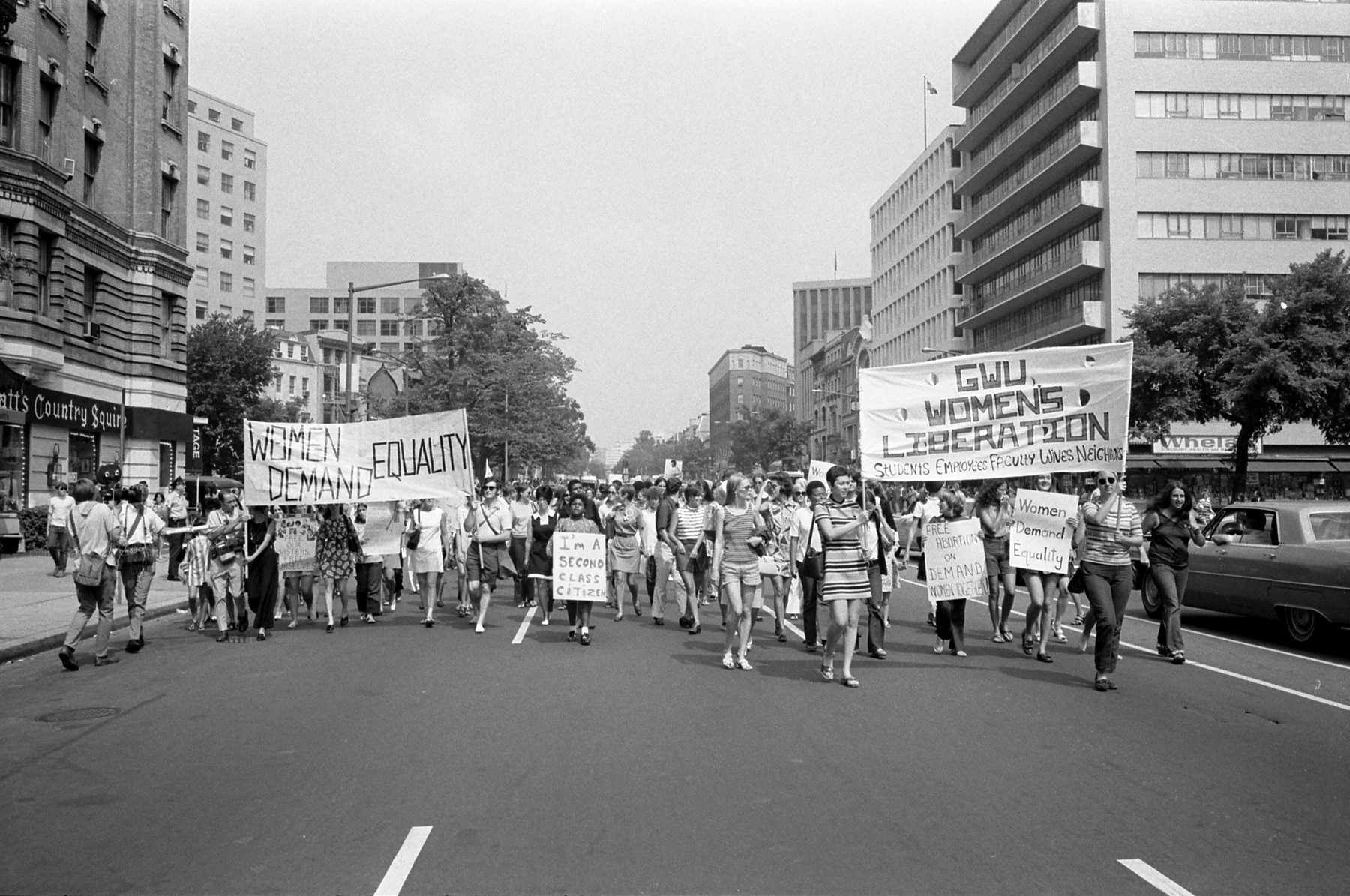
This is not merely a consequence of exclusion from traditional commissions – although that remains structurally relevant – but also reflects a broader redefinition of what it means to be an architectural professional. A good number of women architects reject the narrow professional hierarchy that privileges large-scale iconic buildings over other forms of spatial production. Consequently, writing, pedagogy, activism, curatorial practice, community organising and media production are increasingly presented as legitimate architectural acts.
Furthermore, their modes of criticism and dissemination often diverge substantially from canonical architectural criticism. Rather than reproducing a detached formal analysis, many women critics foreground accessibility, everyday urbanism, domesticity, labour, race, infrastructure or digital culture. They also frequently adopt situated, embodied and reflexive modes of writing. Their work tends to acknowledge subjectivity explicitly rather than assume claims to universal authority.
Secondly, many of these women professionals who speak publicly tend to describe architecture as a relational social practice, embedded in systems of mutual support, public health, collective memory and environmental justice. Terms such as empathy, community, collective action, solidarity, hospitality and care appear with notable frequency in the discourse of women architects, especially since the pandemic. This language should not be read reductively as mere feminine rhetoric. Rather, it reflects a broader epistemological shift within architecture itself, influenced by feminist theory, African American studies, postcolonial theory, the environmental humanities, disability justice and intersectionality. Women architects often reframe architecture not as the autonomous production of objects but as the negotiation of systems: climate systems, social systems, housing systems, educational systems and labour systems.
Discourse on climate and resilience constitutes a third major thematic area. Women architects participate disproportionately in climate-oriented research and in interdisciplinary environmental practice. However, their approach to sustainability tends to differ from the more technologically or technocratically oriented environmentalism that emphasises certification systems or isolated technological innovation. By contrast, women architects tend to approach climate from the perspective of ethics, governance, resilience, public participation, ecological interdependence and social vulnerability (Fig. 2).

Those working in academia intertwine climate discourse with questions of race, migration, extractivism, labour and geopolitical inequality. Some situate environmental transformation within a speculative, experimental narrative framework rather than in the mere solving of technical problems. This kind of work reflects a broader tendency among women academics who seek to approach architecture as a project rooted more in the humanities and in criticism than as a professional or technical discipline.
A fourth theme concerns institutional critique and professional restructuring. Many women architects speak less about individual advancement than about transforming the organisational culture of the profession itself. This includes debates on mentoring, alternative leadership structures, transparency, equal pay, work–life balance, collaborative authorship and new models of practice.
Some groups and networks of women that we may call feminist function as support platforms, mentoring systems, data-gathering efforts, publishing spaces and platforms for a public voice. The recurring language of visibility, representation, support networks and collective practice indicates that many women architects understand exclusion not only as individual discrimination but as a structural problem rooted in architectural culture itself.2
There are generational, regional, professional and racial differences that cannot be addressed in this brief article. Women who entered architecture between the 1970s and the 1990s tend to emphasise legitimacy, survival and access to leadership positions within male-dominated professional cultures, with accounts of credibility and visibility in a field in which they had to make their way. Women architects currently in mid-career focus more on institutional change through mentoring, collaborative leadership and alternative models of practice, often occupying hybrid roles that span academia, non-profit organisations, public bodies and professional practice. Younger generations adopt more intersectional and transdisciplinary approaches, connecting architecture with environmental justice, decolonisation, queer spatiality, disability justice and anti-racist urbanism.
Finally, race and ethnicity profoundly shape these discourses in a country as racially and ethnically diverse as the United States. African American, Asian American, Latina, Middle Eastern and North African, immigrant and transnational women architects highlight distinct concerns relating to spatial justice, migration, identity, colonialism, memory, extractivism, displacement and conflict, and culturally hybrid conceptions of space.
A more extensive forthcoming article will offer a deeper analysis of all these changes and new modes of professional practice, as well as an exploration of the underlying influence of feminist thought on all of this. It will also address the paradoxes that this apparent success of feminism brings with it (Fig. 3).

Notes
How to cite
Sánchez de Madariaga, Inés. “Coyunturas. ¿De qué estamos hablando las arquitectas en Estados Unidos?” [Joints. What Are Women Architects Talking About in the United States?]. VAD. Veredes, arquitectura y divulgación, no. 15 (2026): 138–140.
© 2026 Inés Sánchez de Madariaga. CC BY-NC-SA 4.0.