
No. 13, The heritage, June 2025
Research articles
What Time Is This Place From? Chronotopia, Diachronic Reading of Heritage and Its Social Use
¿De qué tiempo es este lugar? Cronotopía, lectura diacrónica del patrimonio y su uso social
Abstract
The following article addresses the relationship between heritage and chronotopia, a concept that unites time (chronos) and place (topos). Chronotopia can be intertwined with the use of Information and Communication Technologies (ICTs) to reinterpret the relationship between urban environments and cultural heritage sites, as it is essential to understanding how heritage elements evolve and are preserved over time and in different contexts, such as architecture and heritage management. ICTs have transformed our relationship with time and space, allowing us to explore heritage assets without travelling. Integrating the chronotope into urban planning and heritage preservation is crucial to ensuring that future generations can enjoy and learn from the cultural treasures we inherit.
Keywords: heritage; chronotopia; social use; architecture; place
This article addresses, in an interconnected manner, the relationship between the urban and heritage from the standpoint of chronotopia, that is, the so-called chronotope, considered on the basis of the union of the indissoluble pair in which chronos stands for time and topos for place, together with ICTs —Information and Communication Technologies— in order to achieve a meaningful experience for users. It is timely to consider it, since it is within this relationship of time and place that all our activity in the field of heritage unfolds. Consequently, ICTs are called upon as a way of making this pair visible over time, so as to make it manifest to the non-specialist public (Fig. 1).

The objectives are:
To establish the concept of the urban as the space of most heritage assets.
To relate heritage to the time and space of its conception and to its evolution since then.
To include ICTs as possible sources for establishing that link.
As an essential resource for the development of peoples, cultural heritage is not only a source of identity and pride of belonging, but can also be an economic and social driver. UNESCO, in its Universal Declaration on Cultural Diversity (2005), stresses that development must be understood not only in economic terms, but also as a means of achieving a more satisfactory intellectual, emotional and spiritual existence. This brings us forcefully to the social use of heritage assets in their various possibilities of practices and doings in a territory in which tangible and intangible heritage assets possess a series of values in the light of the assumption that Miró expressed in his reflections in 1996:
Interpretation applied to the territory appears as a response to a social demand for the use of heritage and to the need of each territory to position itself in relation to its competitors. Understood in this way, interpretation becomes a planning instrument within strategies of territorial development and reaches its highest level of complexity.1
He highlights three basic aspects to be considered in planning the use of heritage:
Identity value, on the understanding that, because the heritage asset is an element of strong attraction, it therefore generates image and territorial identity.
Economic value, as a generator of employment and a new source of wealth for the territory, in a virtuous spiral that also sustains the maintenance of the asset.
Social value, in becoming a new educational resource and contributing to raising awareness of respect for the environment and cultural tradition.
The role of advanced technology is to relate these three aspects and bring us rapidly closer to chronotopia, since ICTs considerably smooth the way in which assets are shown to the public on the basis of their planning. In the words of Nicholas Negroponte,2 who as early as 1995 anticipated that applied technology “transforms the world around us, social organisations and ourselves”.3 His prominent position at that time, in the place where the future was being incubated, made him one of the first to warn of this destiny of the urban; yet, contrary to the forecasts of the time, according to which the strength and permanence of ICTs would contribute to the deconcentration of large population centres, so that a world dominated by teleworking and dispersal was foreseeable in the not too distant future and, in some cases, an overwhelming present reality (Fig. 2).

None of this resulted in the disappearance of the territorial concentration of population and activities in favour of a life further removed from them. On the contrary, we are witnessing the largest wave of urbanisation in human history, according to the United Nations Population Fund:
Today, more than half of the world’s population lives in cities and towns, and by 2030 this number is expected to rise to approximately 5,000 million. Much of this urbanisation will take place in Africa and Asia, bringing about an enormous social, economic and environmental transformation.4
It also seems to be a new opportunity to define the “urban” in terms common to this new technological era, which undoubtedly involves heritage in an entirely new way owing to new trends in the location of economic and cultural activities. It is in this sense that we ask ourselves how to set limits to those premises that were previously considered in a static manner and took a long time to expand. Thus the UN Population Fund defines the question as follows:
Despite trends of rapid urbanisation in many countries, there has historically been no commonly accepted demographic definition of what “urban” really means. Countries define urban areas on the basis of local standards. This practice undermines the ability to compare and contrast the specific deficiencies of each place in a standardised way or to identify systematic problems based on the degree of urbanisation across multiple countries.5
Since it is not possible to establish concrete comparisons between urban areas in relentless growth, with the consequent danger to heritage assets, we turn to a construct that brings us closer to the relationship between cultural heritage, ICTs and their contribution to the economic and social growth of urban populations. We can include ICTs as reinforcement, through their insertion in the anchoring of instruments that operate in favour of heritage, as substantiated in this passage shared by González Escobar, 2022:
Left behind were the mythical architectures of the great libraries, from the ancient one of Alexandria to the contemporary Library of Congress in Washington, with the solemnity of their portals and entrances, the ritual flights of steps and enormous domes, the amplified echo of footsteps in the reading rooms, the concentrated silences of diligent readers, for now it was configured as a network, virtual, and with the possibility of access to all digital books. In fact, since 2009 the World Digital Library, or WDL, has been in operation, promoted by UNESCO and the Library of Congress of the United States.6
Let us now indeed include within this framework the term chronotope (chronos: time; topos: place), which seems appropriate for relating what has been set out above. It was created in the field of literary theory by Mikhail Bakhtin, who took it from Albert Einstein’s Theory of Relativity, asserting that it is a:
Essential connection of temporal and spatial relations artistically assimilated in literature. This term is used in the mathematical sciences and was introduced and grounded through Einstein’s theory of relativity. We are not interested in the special meaning the term has in the theory of relativity; we shall transfer it (…) to literary theory; what matters to us is the fact that it expresses the inseparability of space and time (time as the fourth dimension of space). We understand the chronotope as a category of form and content.7
We assume a complex imbrication of time and space, following Bakhtin, who in the preceding passage reveals what Ilya Prigogine would later propose,8 in his search for integration between different disciplines in favour of a dialogue embracing science and philosophy, particularly as regards their close links with art.
Like the former, we are not particularly interested in the use of chronotopia in other fields; rather, we refer it to the intrinsic relationship between time (chronos) and space (topos) for its use and praxis in the study of cultural heritage. This relationship, thus synthesised in a single term, would not suffice in itself merely by being stated; rather, it is fundamental for understanding how heritage elements become bound together, evolve and are preserved over time and in their different contexts, be it architecture, urban planning or cultural heritage management.
These Technologies, having transformed our relationship with time and space through, for example, academic events or films and series accessible at any time and in any place, or through immersive reality and augmented reality, which make it possible to explore heritage assets without travelling, as I myself stated in 2011:
And this is only just beginning, since when the urban is involved, the space that generates and enables exchanges par excellence, a colossal reconfiguration of urbanity is expected: of peri-urbanity, of conurbation, of large-scale association and of the great business centres, the headquarters of large companies.9
These are just examples of how ICTs are steadily redefining our access to and relationship with heritage. We might focus on the idea of “liquid chronotopia”, following Zygmunt Bauman’s concepts of liquid modernity, who warns us from the foreword that:
While solids have a clear spatial dimension but neutralise the impact —and diminish the significance— of time (they effectively resist its flow or render it irrelevant), fluids do not keep a shape for long and are constantly ready (and prone) to change it.10
This is in keeping with what we have been arguing regarding showing that chronotopic relationship over time as a way of deepening that spatio-temporal conjunction, when he goes on to explain that “solids cancel time; for liquids, on the contrary, what matters is time”.11 Liquid chronotopia would thus seem to make the interaction of time and place even more complex in tangible heritage such as architecture, since its solidity is made more complex by the liquidity of the passage of time, which, when presented through instruments such as virtual and/or augmented reality, becomes fluid experiences (Fig. 3).

Whereas in solid modernity architecture and heritage assets were symbols of permanence, authority and stability, in liquid modernity these assets can be constantly reinterpreted, adapting to different cultural and historical narratives. This contrast opens up new challenges by emphasising the capacity of immersive technologies to lend “fluidity” to elements that were historically perceived as “solid”.
This implies that the past is no longer perceived as a static event, but as something dynamic that interacts with the present and glimpses the future. This could be a contribution of our time, putting into action the richness of the term, which changes our emotional and cognitive relationship with heritage assets when we experience them in a digital and fluid chronotopia. A transformation of perception occurs when digital and immersive access allows ephemeral but intense connections, fostering experiences that, although they may be brief, have a significant impact on the perception and appreciation of heritage assets, since they allow users to travel in time, observing how a heritage space evolves while they are immersed in it, an experience that fluctuates between past and present and might even include projections of the future.
Applying the concept of liquid chronotopia to the urban sphere through augmented reality would make it possible to recreate what a city looked like in different periods, offering users the possibility of walking virtually through its streets and experiencing the changes that shaped its present identity. These new forms of communication not only reflect the complex interaction between time and space from our historical perspective, but also respond to the need to facilitate, virtually, a clearer understanding of what a heritage space was like and how it evolved over time. This is particularly relevant for including new generations, deeply familiar with the digital, in interaction with heritage.
In this context, immersive technologies become key tools for democratising access to cultural heritage, fostering the construction of ‘collective chronotopias’, in which communities from different parts of the world can interact with a heritage space and share diverse interpretations, thus enriching cultural dialogue. Similarly, in the case of intangible assets, such as a traditional dance, these technologies would allow users to experience its evolution over time, adding their own cultural context to the interpretation.
This is indispensable when it comes to contributing to a better understanding of and relationship with heritage assets when, in the same inclusive vein, their social role within this framework is ever broader and more intense and extends to other sectors not previously considered, opening access to work in the field of heritage to new disciplines that involve other ways of approaching it.
Also included in this is the way in which the restoration of assets is presented to the community. As an example, I take the treatment of the heritage of the medieval walled city of Carcassonne in France, where the workers, employees and administrative staff, so necessary when installing a heritage resource, are included, and in this too lies its social, cultural and labour importance, by generating new sources of work that bring new perspectives. Along these lines, I share below an image of the way in which materials and machinery are displayed, that is, the work of those who help to sustain the asset, which reinforces the heritage education of visitors (Fig. 4).

Continuing the effort in heritage education, the chronotope seen from an operational standpoint can help in understanding the importance of preserving assets; let us take as an example a castle in the province of A Coruña (Galicia), where there are many.
If we apply chronotopia to them, we shall see how their passage through time has turned out. In their liquid aspects, too, we can contribute to a view of these heritage assets, the medieval castles. The cancelling of time that we discussed in relation to Bauman is undeniable in them. But in the liquid aspect, that is, the passing of time, there is still much to be said.
Some castles have undergone numerous changes in their surroundings, with the most diverse implications. This type of study may lead us to conceptualise more effectively how the pressure of the surroundings can change the way we look at assets. At its most extreme, to the point of suffering the burden of the pressure of population growth and hence of the territorial development we mentioned, while other assets have remained suspended in time, more or less without pressure or with only minimal pressure, where they have incorporated their extensions or reductions, remaining almost intact and without many transformations other than their own deterioration, and which, for lack of an urban setting to signpost them, are sometimes even difficult to find. What I maintain is that work on heritage assets from the concept of liquid chronotopia, taking ICTs as instruments that can lead to a new way of understanding the urban, the surroundings and the pressure exerted on them.
I bring here as examples the Castles of Vimianzo and of the Andrade family, also known as the Castle of Noguerosa, near the delightful town of Pontedeume in Galicia. Their surroundings are very different. The former stands in the centre of the town, as can be seen from its battlements, and the latter is surrounded by woodland.
Below are two images provided by Google Earth in which we can consider the different situations of the two heritage sites, including a tool that allows us to go back in time. When it comes to showing chronotopia, this offers a new perspective, as we conceptualised above regarding the use of ICTs for the benefit of heritage.
By being able to take on board their temporal evolution and to understand questions of surroundings and how far urban agglomeration can advance without hindering the chronotopic immersion12 that these heritage assets provide, and if, informed by that principle, we plan them carefully, the result for visitors is magical and therefore indelible. But if, at the same time, there is no concern to address the sometimes pressing advances of property speculation, our heritage assets could be in imminent danger, since most of the time they are located in highly desirable urban areas and the pressure leads to their removal from the list of heritage assets. This happened in England with the Liverpool waterfront, once the archetype of the beginnings of the industrial city. As early as 2012 it was placed in the category of Heritage in Danger and less than ten years later it lost its status as World Heritage because the city preferred to be removed from the Lists (Fig. 5).
UNESCO considered that the construction of new, modern buildings was detrimental to the architectural value of the Victorian buildings for which Liverpool had obtained the status.13

Given the effort involved in classification as World Heritage with the UNESCO seal, as in obtaining a heritage designation at any of its levels, local, regional and of course global, we cannot allow the wealth of what has been preserved since ancient times to be lost through the pressure of a few.
After this necessary interlude, let us return to the matter of the Galician castles. In my selection we find two castles with very different degrees of presence of their surroundings: the first in the town of Vimianzo which, although of human scale in its dimensions and having grown up in the shadow of its Castle, lies very close to it, which sometimes also works to its advantage, as we shall see (Fig. 6).

By contrast, the following image shows us that the Castle of the Andrade family appears almost pristine, surrounded by that necessary topography, a hill dominating its surroundings, a panopticon that made its siting significant on a site that naturally presents defensive features, sought for that very reason, and which allowed the movements of enemies to be spied from on high and a defence to be prepared.
These surroundings now engage the visitor’s complicity in the game of the suspension of disbelief, allowing them to enter and enjoy the fictional world displayed in the work; that is, they slowly invite visitors to feel like a medieval lord or lady and to imagine much of life at that time. Here again chronotopia is our reference, since we can carry out a spatio-temporal review and see how that environment developed over the centuries, almost without human intervention (Fig. 7).

In this case, the castle of the Andrade family on the summit of Peña Leboreira, Pontedeume, is completely different, contributing notably to summoning the chronotopic suspension, since, being located surreptitiously in the midst of a thick, dense woodland and countryside, we can imagine the bridge that once spanned the moat, allowing or defensively denying access (Fig. 8).
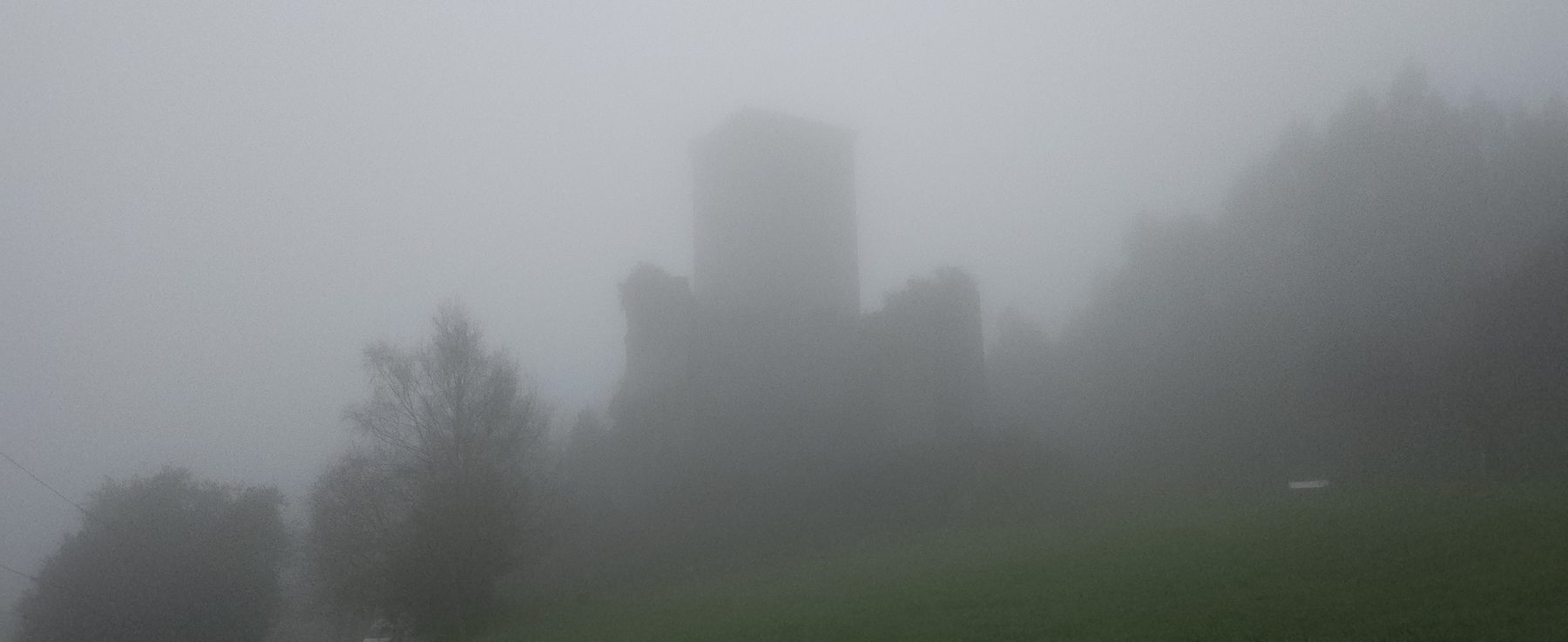
Its presentation through the passage of time, surrounded by an urban setting such as the town of Vimianzo, has probably helped the Castle to be visited and toured, generating intense social use.
For this reason, too, it generates new sensations along its route, as we can see below (Figs. 9 and 11), since as visitors turn through its inner defensive structure they obtain different views that help them understand the role of the Castle in relation to its immediate surroundings and to the more distant ones as well. The different rooms through which one moves increase the understanding of its importance over the course of time, when Castles were the dwelling places of families who could build them and maintain them over time, and also of the reason why they ceased to be defensively necessary.


Thus we see that, in order to be effective, urban and territorial plans require a deep understanding of these cherished heritage places, integrating chronotopia as an essential tool in their design. Let us now recall the words of the Brazilian architect and urban planner Jaime Lerner, mayor of Curitiba, Brazil, who reminds us of something that we can extend to heritage assets: “(…) the city I think of now will always be with me”,14 answering in some way the initial question.
Final Conclusions
At the beginning of this article we set ourselves three objectives that would structure it. They revolve around the concept of the urban as the space of most heritage assets; the inclusion of chronotopia as a way of understanding them; and ICTs as a tool for putting it into practice.
We can conclude that it is a virtuous relationship; thus the study of chronotopia and its application to cultural heritage offers an enriching perspective for the understanding and management of our cultural assets, so that they can withstand the onslaughts of those who seek out those privileged urban locations. Approached through virtual reality, they make it possible to reconstruct the chronotope throughout their life, establishing relationships that were until then sometimes forgotten and enriching the public’s understanding of them, so that people feel compelled to defend them when speculative attacks come.
If, in addition, through this simple operation we enable visitors to obtain, through chronotopic immersion, a meaningful and therefore memorable experience, we shall undoubtedly achieve something moving and lasting in their lives.
Another point, and not a minor one, is that we can see that the integration of the chronotope made visible by ICTs can be essential in urban planning and heritage preservation to ensure that future generations can continue to enjoy, learn from and enrich the cultural treasures that we inherit and that we undertake to pass on in equal or better condition.
Finally, the incorporation of digital technologies into liquid modernity poses an interesting challenge: to preserve digitally the memory of the ephemeral and to give shape to new ways of understanding and interacting with cultural heritage (Fig. 10).
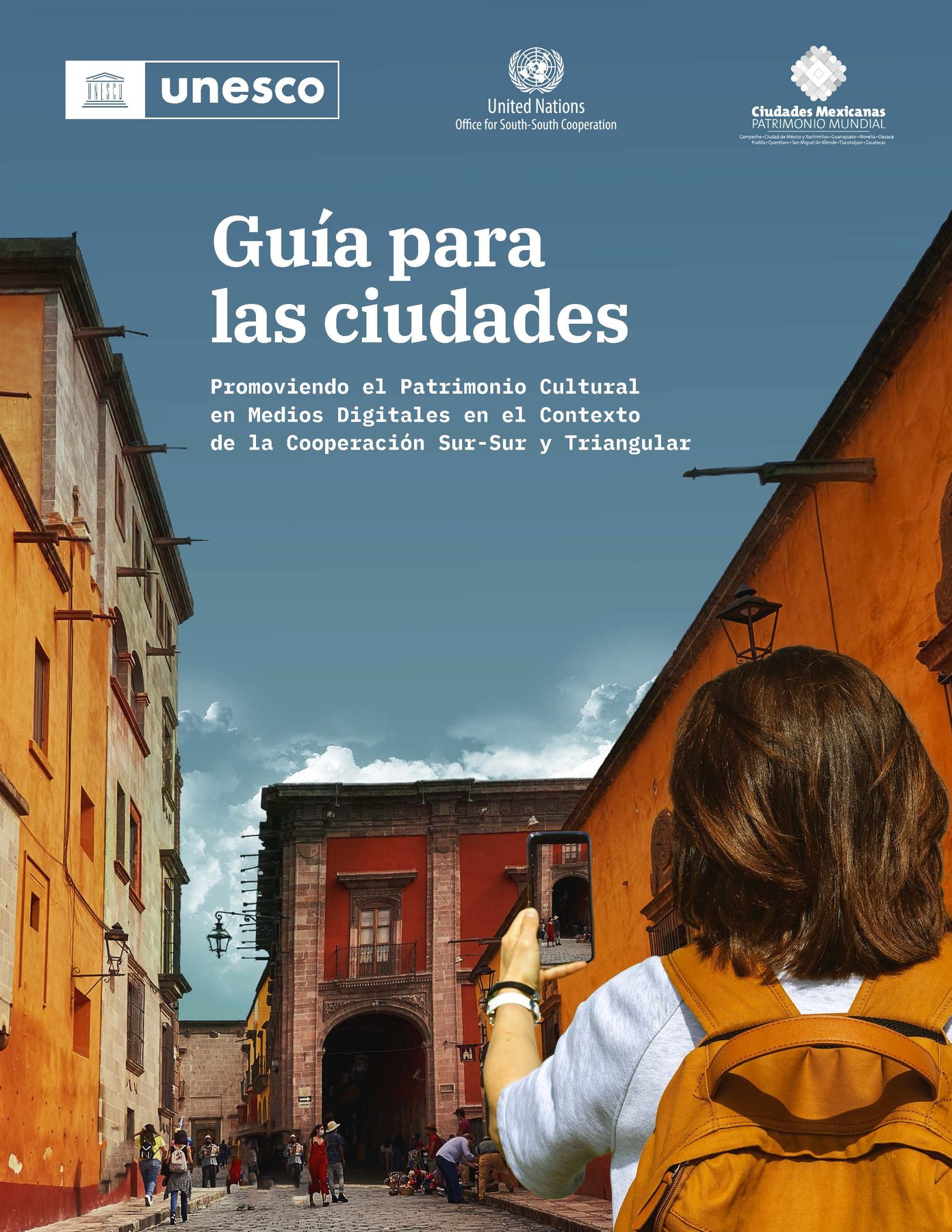
It is essential to distinguish between the multiple audiences that we can address with our content.
Bibliography
- Bajtin, Mijail. “Las formas del tiempo y del cronotopo en la novela. Ensayos sobre poética histórica”. En Teoría y estética de la novela, 237-409. Madrid: Taurus, 1989.
- Bauman, Zygmunt. Modernidad líquida. Buenos Aires: Fondo de Cultura Económica, 2004.
- González Escobar, Luis Fernando. “Cuando el átomo le ganó al bit”. Agenda Cultural Alma Máter, 2022.
- Kuna, Graciela de. “Ciudad conectada”. ARQ Clarín, 27 de mayo de 2011. Disponible en https://www.clarin.com/arquitectura/Ciudad-conectada_0_rJ1DNiGawQx.html (última consulta: junio de 2025).
- Kuna, Graciela de, Beatriz Rivero, Cristina Ferreyra y Malena Monferrer. Planificación interpretativa y activación patrimonial. Posadas: Editorial Universitaria de Misiones, 2012.
- Lerner, Jaime. Acupuntura urbana. Barcelona: Institut d’Arquitectura Avançada de Catalunya, 2005.
- Miró i Alaix, Manel. “Interpretación, identidad y territorio. Una reflexión sobre el uso social del patrimonio”. PH: Boletín del Instituto Andaluz del Patrimonio Histórico, n.º 18 (1997): 33-37. https://doi.org/10.33349/1997.18.454.
- Negroponte, Nicholas. Ser digital. Barcelona: Ediciones B, 1995.
- Prigogine, Ilya. “Loi, histoire… et désertion”. Le Débat, n.º 6 (1980): 122-130. https://doi.org/10.3917/deba.006.0122.
- UNESCO. Convención sobre la protección y la promoción de la diversidad de las expresiones culturales. París, 2005. Disponible en https://www.unesco.org/es/legal-affairs/convention-protection-and-promotion-diversity-cultural-expressions (última consulta: junio de 2025).
- UNFPA (Fondo de Población de las Naciones Unidas). “Urbanización”. Disponible en https://www.unfpa.org/es/urbanizaci%C3%B3n (última consulta: junio de 2025).
Notes
- 1↩
Manel Miró i Alaix, “Interpretación, identidad y territorio. Una reflexión sobre el uso social del patrimonio”, PH: Boletín del Instituto Andaluz del Patrimonio Histórico, n.º 18 (1997): 33, https://doi.org/10.33349/1997.18.454.
- 2↩
Architect and computer scientist, a pioneer in the field of computer-aided design, founder and director of the Media Lab at the Massachusetts Institute of Technology.
- 3↩
Nicholas Negroponte, Ser digital (Barcelona: Ediciones B, 1995), 5.
- 4↩
United Nations Population Fund, “Urbanización”. Available at https://www.unfpa.org/es/urbanizaci%C3%B3n (accessed June 2025).
- 5↩
Ibídem.
- 6↩
Luis Fernando González Escobar, “Cuando el átomo le ganó al bit”, Agenda Cultural Alma Máter, UdeA (2022): 5.
- 7↩
Mijail Bajtin, “Las formas del tiempo y del cronotopo en la novela. Ensayos sobre poética histórica”, en Teoría y estética de la novela (Madrid: Taurus, 1989), 237-409.
- 8↩
Ilya Prigogine, 1977 Nobel laureate, father of Chaos Theory. “Loi, histoire… et désertion”, Le Débat, no. 6 (1980): 122-130, https://doi.org/10.3917/deba.006.0122.
- 9↩
Graciela de Kuna, “Ciudad conectada”, ARQ Clarín, Diario de Arquitectura, 27 May 2011. Available at https://www.clarin.com/arquitectura/Ciudad-conectada_0_rJ1DNiGawQx.html (accessed June 2025).
- 10↩
Zygmunt Bauman, Modernidad líquida (Buenos Aires: Fondo de Cultura Económica, 2004), 8.
- 11↩
Ibídem.
- 12↩
Chronotopic immersion: we put this forward in the staging of the Printing Press at Santa María La Mayor, presented at the 17th General Assembly of ICOMOS held in Paris. Available at https://www.icomos.org/fr/126-articles-en-francais/a-propos-de-licomos/gouvernance/131-ouverture-de-la-17e-assemblee-generale-de-licomos-est-ouvertem (accessed June 2025). “It is the deliberate proposal to achieve in the visitor the immersion produced by the historically constructed space-time bond; that is, the staged printing press not only is in this place but also was in that time, and thereby to try to ensure that a meaningful experience is enjoyed, when the relationship between visitor and heritage becomes something that the visitor appropriates, striking and lasting in their memory, a complete, emotional experience”. In Graciela de Kuna, Beatriz Rivero, Cristina Ferreyra and Malena Monferrer Vigil, Planificación interpretativa y activación patrimonial. Escenificación de la imprenta misionera en Santa María La Mayor (Posadas: Editorial Universitaria de Misiones, 2012), 27. Available at https://editorial.unam.edu.ar/index.php/digitales/product/397-planificacion-interpretativa-y-activacion-patrimonial (accessed June 2025).
- 13↩
“Liverpool eligió renovarse antes que morir y la Unesco la retiró del Patrimonio Mundial”, Euronews, 29 July 2021. Available at https://es.euronews.com/2021/07/29/liverpool-eligio-renovarse-antes-que-morir-y-la-unesco-la-retiro-del-patrimonio-mundial (accessed June 2025).
- 14↩
Jaime Lerner, Acupuntura urbana (Barcelona: Institut d’Arquitectura Avançada de Catalunya, 2005), 111.
How to cite
Gayetzky de Kuna, Graciela Cecilia. “¿De qué tiempo es este lugar? Cronotopía, lectura diacrónica del patrimonio y su uso social” [What Time Is This Place From? Chronotopia, Diachronic Reading of Heritage and Its Social Use]. VAD. Veredes, arquitectura y divulgación, no. 13 (2025): 88–100.
© 2025 Graciela Cecilia Gayetzky de Kuna. CC BY-NC-SA 4.0.