
No. 3, The Order, June 2020
Research articles
Complexity, Chaos and Entropy: Or How to Understand the Evolutionary Order of Cities
Complejidad, Caos y Entropía: O cómo entender el orden evolutivo de las ciudades
Abstract
The city is a complex system of organisation and communication. A correct reading of its evolutionary mechanics necessarily requires an understanding of its particular structures of order, which naturally subvert the traditional ideas we hold on the matter or, at least, escape the strict notions of order that we observe in traditional urban planning and design tools. In this sense, the main objective of this paper is to establish an approach to the concepts of chaos, complexity and urban entropy as fundamental principles for elucidating the nature of the evolutionary order of our cities. The city is a dynamic system which, as such, does not configure a static order, so it is necessary to frame the discussion within principles that have been the subject of reflection and study in other disciplines, such as physics, biology and chemistry, but which naturally orbit the organisational workings of the city as a dynamic system of order.
Keywords: urban complexity; chaos; entropy; autopoiesis; order
Complexity and Evolution
When, in 1965, Christopher Alexander drew the distinction between those cities that have managed to progress —to evolve— spontaneously over the years, classifying them as “natural cities”, and those that had been created by the total or partial action of urban planners, which he referred to as “artificial cities”1, he was, indirectly, doing nothing other than speaking of complexity in the evolutionary process of cities; he thereby opened the discussion on the dynamic nature of our cities and brought their observation into the field of complex systems (Fig. 1).

In this sense, the intention is to delve into the broad field defined by the study of complexity, without in any way seeking to arrive at an absolute definition of a concept on whose definition there is still no consensus; but which, as the physicist Jorge Wagensberg pointed out, despite its indeterminacy, establishes a possible route for deciphering the structure and evolution of so-called complex systems.
A concept that modern science is trying to grasp without yet having managed to define it satisfactorily. It is complexity. There are two fundamental concerns: change and the relationship between wholes and their parts. The first refers to stability and evolution, the second to structure and function. 2
For the purposes of this paper, we shall rely on the consensus already reached by various scholars of complexity3, who have tried to clear the fog around what we refer to when we speak of complexity.
What is complexity? At first sight, complexity is a fabric (Complexus: what is woven together) of heterogeneous constituents inseparably associated: it presents the paradox of the one and the many. On closer inspection, complexity is, in effect, the fabric of events, actions, interactions, retroactions, determinations and chance occurrences that make up our phenomenal world. 4
Complexity is only possible through the accumulation of information that a system acquires over time, this variable being a fundamental component in enabling so-called complex systems —in this case, the city— to evolve. Complexity and evolution are concepts that inescapably go hand in hand, and we shall try to elucidate why.
Beyond the diversity of authors and positions on the subject, and in line with what the physicist Michel Baranger has pointed out, it is possible to distinguish a series of common characteristics that define the behaviour of complex systems. Many of these characteristics are equivalent to those found in various biological systems, and they may allow us to establish a direct relationship with the functioning of the urban system, as a complex system, and with the very production of social space5, as a complex setting of relations.
Some characteristics of complex systems are:
Complex systems contain many constituents interacting non-linearly.
The constituents of a complex system are interdependent.
A complex system possesses a structure spanning several scales.
A complex system is capable of emergent behaviour.
Complexity involves an interplay between chaos and non-chaos.
Complexity involves an interplay between cooperation and competition6.
Of all the characteristics listed, the one of vital importance for the structure of this research is the way in which a complex system is capable of emergent behaviour. This means that if the scale of observation of a component of the system changes, that component cannot be understood individually, since it is bound up with the global structure of the system.
The combination of structure and emergence leads to self-organisation, which is what happens when an emergent behaviour has the effect of changing the structure or creating a new structure. 7
Now, first of all, we must set out a number of premises and make a series of clarifications in order to enter into a subject —complexity— which, in our view, seeks to reveal a mechanics of evolutionary order inherent in dynamic systems8 —as is the case with cities— and which operates through concepts that might at first seem contradictory to the traditional definition of order, namely chaos and entropy; topics that we shall explore further on. Let us now return to complexity.
The first premise, then, will be that we shall understand the city as a complex system of communication and information exchange9, taking the idea of communication and information in its broadest sense and in direct relation to the information theory developed by Shannon (1949) and Wiener (1948); considering mainly Wiener’s precepts, in the idea of “separating a symbol from a background containing many signals”10.
This obliges us to make a first clarification, namely that, in order to speak of a system, we must necessarily consider an environment with which that communicative exchange can be established. A system-environment synergy is thus defined, which will be constant over time, both for the functioning and for the evolution of the system itself. It is traced from a particular distinction, expressed in the differentiated yet interdependent pair system-environment. The German sociologist Niklas Luhmann explored this relationship in depth, applied to social systems, proposing an interesting definition of system that reinforces the indissoluble interdependence of the pair in question.
A system is the form of a distinction, and therefore has two sides: the system (as the inside of the form) and the environment (as the outside of the form). Only the two sides together constitute the distinction, the form, the concept. 11
If we observe the systemic behaviour of the city, we can see that the process of differentiation, system-environment, mentioned by Luhmann, can be observed from its very origin, becoming manifest early on in the urban foundation rites, in which a clear distinction was drawn between what lay inside the city —the system— and what did not, the environment.
Rykwert, on the founding of Rome, notes: “the most important part of the whole foundation rite with which I am concerned was the opening of the sulcus primigenius, the initial furrow”12. This shows the Roman will to set limits and to differentiate; in short, to establish a first structure of order over and above the natural order of the territory. An exercise of foundational order which does nothing other than demarcate spatially the first difference between system and environment (Fig. 2).

This first principle of order derives from the study of the bodily geometry of the human being, and it directly influenced the architectural and urban practice of Rome, mainly through the principles of symmetry and balance. Vitruvius himself, in the third of the Ten Books on Architecture, refers to the way in which the proportions of the human body should “govern the architecture of a temple”13.
The most relevant example in this respect is the Roman Pantheon, which does indeed respond to these Vitruvian principles of order (Fig. 3).
Vitruvius imagined that the arms were related to the legs through the navel, and therefore to the umbilical cord, the source of life. The limbs can thus be extended in such a way that the arms and legs form lines: the two lines of the limbs will cross at the navel. The fingertips then establish the lines of the square. That is the Vitruvian body, as Leonardo and Serlio drew it, with the square inscribed within a circle, and this Vitruvian principle shapes the interior of the Pantheon. 14

Bodily order was thus connected with both Roman architecture and Roman urbanism. Sennett described how Roman planners, in the foundation rite of a city, established as their first action the location of the umbilicus as the centre of the city, in direct analogy with the navel of the body15. From there, the lines of the pomerium and the sulcus primigenius, mentioned above, were laid out. These two sacred boundaries, sometimes confused precisely because of their proximity16, had different functions and physical forms. The first (pomerium) demarcated a first sacred zone (urbs), functioning as a closed, virtual boundary that separated the inaugurated area (urbs) —the first system— from the suburbium —the first environment—. The sulcus primigenius, described above, took the form of a furrow in the ground, along which the city wall with its gates was later erected17 (Fig. 4).
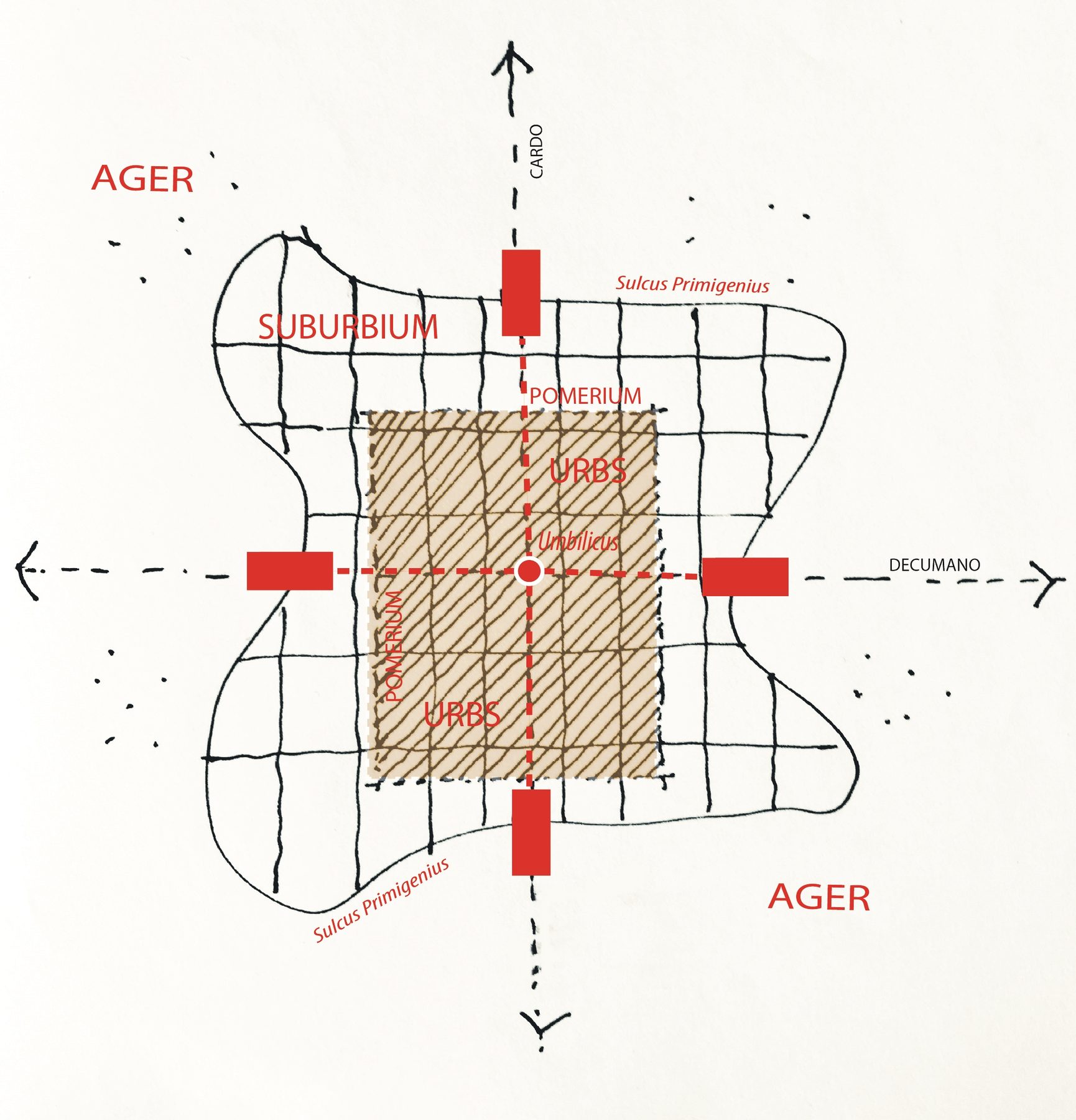
The Roman will to differentiate can be understood as a conscious action to construct an interior order differentiated from the exterior; an action that would make it possible to subvert the chance and uncertainty of the natural environment, thus giving material form to a system of known and determined relations.
But this very fact leads us to a second clarification, namely that we cannot speak of a single principle of order in the city —we must differentiate— in order at least to distinguish between a foundational order, laden with certainties, guidelines, determinism and control, and an evolutionary order, in which chance, chaos and uncertainty are some of the precepts that define its mechanics.
Chaos and Entropy: Another Structure of Order
We must make clear that complexity and chaos, despite sharing the principles of non-linearity18, are by no means the same thing. Making this clarification is essential to understanding the behaviour of a complex dynamic system such as the city.
If we observe the phenomenon from two fundamental dimensions, space and time, we can see that the city behaves in a similar way to the non-equilibrium or “dissipative”19 structures described by Ilya Prigogine, which can only exist by maintaining a constant relationship with their environment.
The simplest example of a dissipative structure that can be given, somewhat by analogy, is the city. A city is different from the countryside that surrounds it. The root of this individuation lies in the relations it establishes with the adjoining countryside. If those relations were suppressed, the city would disappear. 20
Applying the variable of time to the original structure of order in a system, we can state that the system may become chaotic, but not necessarily complex, since complexity requires a mechanics of interaction and interdependence among its parts.
This terminological distinction is key to avoiding recurrent clichés regarding the association of complexity with the intricate, or the other classic association of chaos with the absence of order.
Understanding chaos in relation to the complexity of a system requires understanding the phenomenon in a twofold dimension of observation: chaos-space and chaos-time. Chaos in space is a determinant that generates fractals.
A fractal is a geometric figure that does not become simpler when analysed into smaller and smaller parts. 21
Simple examples of fractals are the Cantor set and the Sierpinski triangle. These are self-similar fractals which, when observed at reduced scales, always present the same original structure, reproduced invariably; thus constituting a predictable evolutionary mechanics, characteristic of linear systems or of systems that tend towards equilibrium in their process of evolution.
By contrast, there are fractals of greater complexity, such as the Mandelbrot set, which becomes ever more complex when observed at higher magnification, always revealing the presence of an added factor of chance and uncertainty in its evolution (Fig. 5).
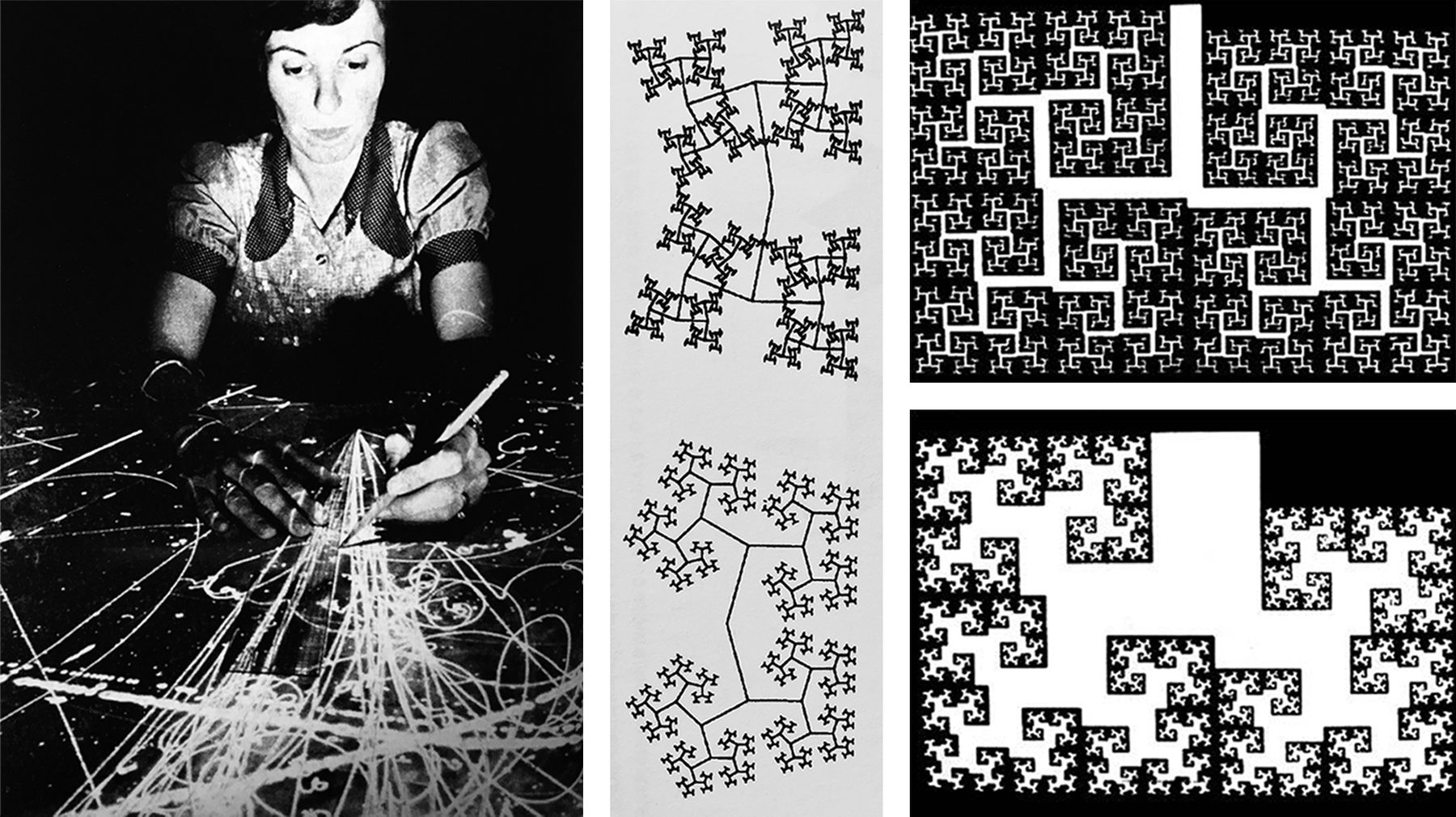
The city, as a complex dynamic system, resembles the latter more than the former since, in addition, its structure and evolution involve the second pair mentioned above, chaos-time.
Chaos in time is possibly the most familiar mechanics we know. A dynamic system whose initial conditions are subjected to the variable of time will invariably display sensitivity to initial conditions22. Let us understand it thus: the city is established at its origin with a first principle of foundational order, a determined and planned structure, with various elements in play, which ought to follow a structure equivalent in its evolution to the initial organisation with which they were designed. But the city does not function as a static system and, as such, its process of evolution, like that of any dynamic system, will tend towards chaos.
At this point in the text, I believe we can sense a third clarification in this regard, namely that chaos and order are not antagonistic concepts, as they are traditionally presented to us.
The chaotic behaviour of current urban phenomena is part of a global process of reformulation of orders rather than of their absence. 23
In this sense, chaos acts as a mechanics of order, inherent in the evolution of the original system and a product of the constant exchange of information and energy between the city and its environment.
This is where we can bring entropy into the discussion. When we speak of entropy, we tend to think that it may be yet another complex and somewhat indecipherable term, but it is no more than another word for “disorder”24.
Entropy is a quantitative measure, a fundamental principle of the second law of thermodynamics, which makes it possible to compare the amount of ordered and disordered energy present in a system. Hence, in a complex system such as the city, as in any complex system, entropy can do nothing but increase over the course of the evolutionary process.
Entropy is always increasing as the system evolves. If the system eventually reaches equilibrium and stops evolving, its entropy becomes constant. 25
We have seen so far how, from the very origin of the city, starting from the countryside-city differentiation, an active mechanics of exchange with the environment is established, an exchange which, in the terms described, translates into a transfer of positive entropy to the environment and the return of negative entropy, or negentropy, from it. Therefore, the evolutionary order of the city cannot be understood statically from its original structure of arrangement. As Alexander said, cities are not trees; trees form simple fractals, which grow in an order that is predictable from the origin of their structure.
The city is a dynamic system that evolves through phenomena of uncertainty and chance; these elements, which usually lie outside the traditional planning and design of cities, are the share of indeterminism necessary for the system to evolve; we shall refer to them hereafter as autopoietic urban systems.
Autopoietic Urban Systems
We mentioned at the beginning, with reference to the characteristics of complex systems, their capacity to allow emergent behaviour within the system itself. This condition corresponds to self-organisation or, more precisely, to the idea of Autopoiesis, a concept developed and coined by the Chilean biologists Humberto Maturana and Francisco Varela (1973)26, referring to the capacity of a biological system to produce itself. This idea was later taken up by other authors outside the field of biology, as in the case of the German sociologist Niklas Luhmann, who applied it to the study of the functioning and organisation of social systems, establishing a relationship between autopoiesis and self-referential systems. For the development of this work, a new application is proposed, bringing into our understanding all those spontaneous and informal (self-organised) urban processes that arise outside the structural determinism of the city, which can be understood as autopoietic urban systems from a systemic observation of the city. These are processes which, in our view, constitute a fundamental key to the evolutionary mechanics of cities.
Autopoiesis relates to the spontaneous dynamics of the constitution of systems, in which the new system is able to establish a new environment through its relations, concatenating a communication between system and environment that builds new mechanisms of communication. “Chaos is the medium from which a new system arises that has not been able to be produced”27 within the sphere of the structural determinism of the larger system.
Relations of order determine the dynamics of autopoietic organisation, determining the concatenation of constitutive relations, of specificity and of order, and consequently its effective relation. 28
We treat any situation that seems to us to violate structural determinism as an expression of error in our view, as a fraud, or as a miracle. 29
In this sense, autopoietic urban systems should be understood as a specific unit of order that operates by weaving new relations of communication and does not necessarily translate into a strict spatial order; it is rather a relational order in the city’s space of communication than an arrangement of formal elements in space.
Let us take as an example the mechanics of play, which is undoubtedly a celebration of chance within a structure of pre-established rules. Johan Huizinga, around 1938, described how cultural forms emerge from playful impulses30, expressions that may be considered eminently autopoietic from a social and spatial perspective. The manifestation of play, as a mechanism for appropriating space, reminds us precisely of the need for uncertainty that the city must have for these processes to appear (Fig. 6). In this regard, Aldo van Eyck said in 1962:
The architect is inclined to level everything out. People are afraid of the unforeseen, of the danger lurking around the corner, of spontaneity. Nobody wants to accept that the city is —and must be— chaotic. 31
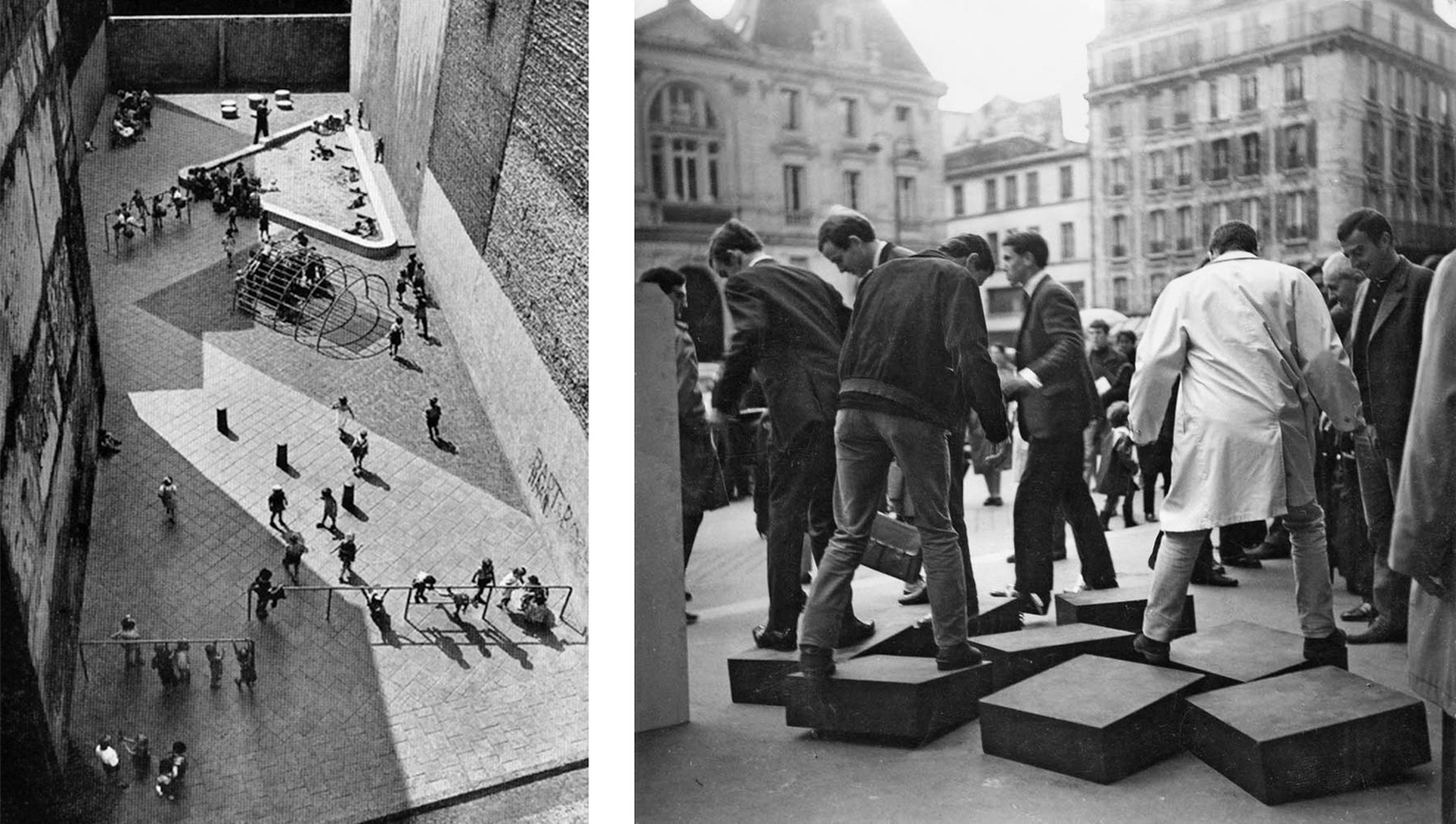
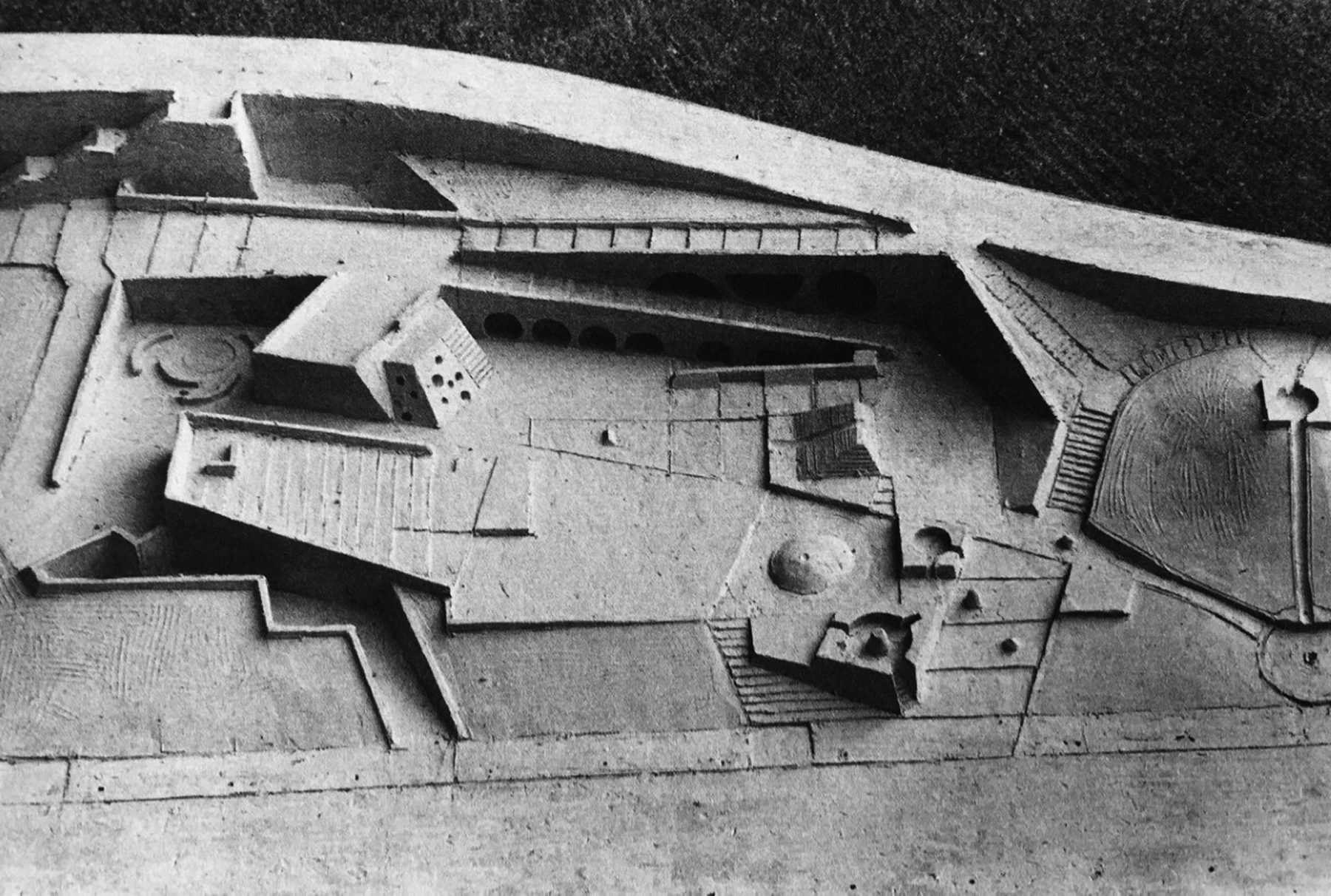
In the same vein, Louis Kahn stated that “play should be free and uninhibited; spaces for discovery, with forms that do not imitate nature and yet are limitless in their creation”32 (Fig. 7).
Autopoietic urban systems are self-produced systems that arise within the urban structure of order, just as in play the rule is subverted to make chance and uncertainty appear. For this reason, we cannot claim to design them from the structural determinism with which traditional design and planning operate, but we must leave room for them to emerge. In this way, we shall be opening the way to the evolutionary process of cities, on the basis of the principles of chaos and complexity, understood ultimately as what they are: an exercise of order.
The spontaneous dynamics of the formation of system and environment constitutes, for the observer who cannot see the structural coherences from which it arises, the emergence of order out of chaos. 33
Less Determinism, More Uncertainty
By way of conclusion, we can state that the city is constituted as a complex system, arising from a first differentiation, which is also a first operation of order and of control over the space of uncertainty that constitutes the natural environment.
This foundational order also opens up that first communicative setting between system and environment, which with the passage of time will not become simpler but, on the contrary, will acquire new degrees of complexity.
Thus, naturally, and like any complex system, it will tend towards chaos, increase its levels of entropy and exchange entropy with the environment constantly, establishing a new mechanics of order for the system.
The city thus functions as a complex dynamic system; complex inasmuch as its original structure of order does not follow a linear pattern of evolution; on the contrary, time acts as a measure of the rupture of determinism, giving dynamism to the ontogeny of the system34 and opening up new settings of communication within it.
It is worth asking, then, why we continue to design the future of the city as if we were Roman planners, founding Rome again and again in each new urban operation. The evolutionary order of cities is driven by chance and uncertainty; we must therefore try to grasp the mechanisms that guide it —complexity, chaos and entropy—; this will make it possible to refresh a debate which, in our view, is more relevant than ever in Alexander’s words: we cannot go on pretending that cities are trees.
Future processes of urban transformation must try to unfold far from the deterministic shelter under which most of them have been carried out, granting space for autopoietic urban systems to emerge within the system (the city).
In this way, and allowing ourselves to paraphrase Mies van der Rohe’s famous phrase less is more, so fruitful for architecture, we must do so with less determinism and more uncertainty.
Bibliography
- Alexander, Christopher. “A City is not a tree”. Architectural Forum 122, n.º 1 (1965): 58-62.
- Baranger, Michel. Chaos, Complexity, and Entropy: a physics talk for non-physicists. Cambridge: New England Complex Systems Institute, 2000. http://www.necsi.org/projects/baranger/cce.html.
- Bar-Yam, Yaneer. Dynamics of complex systems. New York: Routledge, 2018.
- Borja-Villel, Manuel et al. Playgrounds, reinventar la plaza. Madrid: Museo Nacional Centro de Arte Reina Sofía y Siruela, 2014.
- Forrester, Jay. Principles of Systems. Cambridge: Wright-Allen Press, 1968.
- Gausa, Manuel. Open: espacio, tiempo, información. Arquitectura, vivienda y ciudad contemporánea. Teoría e historia de un cambio. Barcelona: Actar, 2010.
- Huizinga, Johan. Homo Ludens. Madrid: Alianza Editorial, 1972.
- Landsberg, Peter. Procesos al Azar. Barcelona: Tusquets, 1986.
- Luhmann, Niklas. Complejidad y modernidad: De la unidad a la diferencia. Madrid: Trotta, 1998.
- Mandelbrot, Benoît. Los objetos fractales. Barcelona: Tusquets, 1987.
- Maturana, Humberto, y Francisco Varela. De máquinas y seres vivos. Autopoiesis: La organización de lo vivo. Santiago: Editorial Universitaria, 2006 (1973).
- Morin, Edgar. Introducción al pensamiento complejo. Barcelona: Gedisa, 2009.
- Nicolis, Grégoire, e Ilya Prigogine. Self-Organization in Nonequilibrium Systems. New York: Wiley, 1977.
- Nieuwenhuys, Constant. La Nueva Babilonia. Barcelona: Gustavo Gili, 2009. (Originalmente publicado en inglés: New Babylon. A nomadic town, 1974).
- Prigogine, Ilya. El fin de las certidumbres. Santiago de Chile: A. Bello, 1996.
- ———. Las leyes del caos. Barcelona: Crítica, 2008.
- Ruiz, Javier. “Sistemas urbanos complejos. Acción y comunicación”. Cuadernos de investigación urbanística 32 (2001): 5-63.
- Ruiz, Manuel. “La ruptura funeraria del pomerium desde su nacimiento y hasta su desaparición. Enterramientos In Urbe”. Onoba 1 (2013): 187-204.
- Rykwert, Joseph. La idea de ciudad, antropología de la forma urbana en el Mundo Antiguo. Madrid: Blume, 1985.
- Sennett, Richard. Carne y Piedra: El cuerpo y la ciudad en la civilización occidental. Madrid: Alianza, 2019. (Originalmente publicado en inglés: Flesh and Stone. The Body and the City in Western Civilization, 1994).
- Shannon, Claude E., y Warren Weaver. The Mathematical Theory of communication. Urbana: University of Illinois Press, 1949.
- Tatarkiewicz, Wladyslaw. Historia de la estética I. La estética antigua. Madrid: Akal, 1991.
- Wagensberg, Jorge. Ideas sobre la complejidad del mundo. Barcelona: Tusquets, 1998 (1985).
- Wiener, Norbert. Cybernetics: Or control and communication in the animal and the machine. New York: John Wiley & Sons, 1948. (Versión castellana: Cibernética o el control y comunicación en animales y máquinas. Barcelona: Tusquets, 1985).
- Zaera, Alejandro. “Orden desde el caos”. Exit, n.º 1. Madrid: Editorial LMI, 1994.
Notes
- 1↩
Christopher Alexander, “A City is not a tree”, Architectural Forum 122, n.º 1 (1965): 58-62.
- 2↩
Jorge Wagensberg, Ideas sobre la complejidad del mundo (Barcelona: Tusquets, 1985), 9.
- 3↩
It is important to mention the contributions in this regard of Ilya Prigogine, Benoît Mandelbrot, Yaneer Bar-Yam, Jorge Wagensberg and Edgar Morin, among several other authors.
- 4↩
Edgar Morin, Introducción al pensamiento complejo (Barcelona: Gedisa, 2009), 32.
- 5↩
Social space will be understood in accordance with Constant’s statement: “Social space is, in reality, the concrete space of encounters, of contacts between beings”. It constitutes the expression of the public, the communal, the shared; that which can only be built in relation with others. Constant Nieuwenhuys, La nueva Babilonia (Barcelona: Gustavo Gili, 2009), 12.
- 6↩
Michel Baranger, “Chaos, Complexity, and Entropy: A physics talk for non-physicists”, New England Complex Systems Institute (April, 2000): 9-11.
- 7↩
Ibidem, 10.
- 8↩
Dynamic systems are those capable of establishing processes of transformation (evolution) over time in a non-linear way. See Jay Forrester, Principles of Systems (Cambridge: Wright-Allen Press, 1968). For the purposes of this article, we shall understand the subject of research, the city, as one of them.
- 9↩
Javier Ruiz, “Sistemas urbanos complejos. Acción y comunicación”, Cuadernos de investigación urbanística 32 (2001): 5-63.
- 10↩
Norbert Wiener, Cybernetics, Or control and communication in the animal and the machine (New York: John Wiley & Sons, 1948).
- 11↩
Niklas Luhmann, Complejidad y modernidad: De la unidad a la diferencia (Madrid: Trotta, 1998), 54.
- 12↩
Joseph Rykwert, La idea de ciudad, antropología de la forma urbana en el Mundo Antiguo (Madrid: Blume, 1985), 60.
- 13↩
Richard Sennett, Carne y piedra. El cuerpo y la ciudad en la civilización occidental (Madrid: Alianza, 2019), 159.
- 14↩
Ibidem, 160-161.
- 15↩
Richard Sennett, Carne y piedra. El cuerpo y la ciudad en la civilización occidental (Madrid: Alianza, 2019), 164-174.
- 16↩
Manuel Ruiz, “La ruptura funeraria del pomerium desde su nacimiento y hasta su desaparición. Enterramientos In Urbe”, Onoba 1 (2013): 187-204.
- 17↩
Ibidem, 188.
- 18↩
Ilya Prigogine, El fin de las certidumbres (Santiago de Chile: A. Bello, 1996).
- 19↩
Grégoire Nicolis e Ilya Prigogine, Self-Organization in Nonequilibrium Systems (New York: Wiley, 1977).
- 20↩
Ilya Prigogine, Las leyes del caos (Barcelona: Crítica, 2016), 28.
- 21↩
Michel Baranger, “Chaos, Complexity, and Entropy: A physics talk for non-physicists”, New England Complex Systems Institute (April, 2000): 4.
- 22↩
Edward N. Lorenz, La esencia del caos: un campo de conocimiento que se ha convertido en parte importante del mundo que nos rodea (Madrid: Debate, 1995).
- 23↩
Alejandro Zaera, “Orden desde el caos”, Revista Exit 1 (1994): 23.
- 24↩
Michel Baranger, “Chaos, Complexity, and Entropy: A physics talk for non-physicists”, New England Complex Systems Institute (April, 2000): 11-17.
- 25↩
Ibidem, 12.
- 26↩
Humberto Maturana y Francisco Varela, De máquinas y seres vivos. Autopoiesis: La organización de lo vivo (Santiago de Chile: Editorial universitaria, 2006).
- 27↩
Ibidem, 27.
- 28↩
Ibidem, 83.
- 29↩
Ibidem, 24.
- 30↩
Johan Huizinga, Homo Ludens (Madrid: Alianza Editorial, 1972).
- 31↩
Lecture given by Van Eyck at Marcanti, Amsterdam, in 1962. Manuel Borja-Villel et al., Playgrounds, reinventar la plaza (Madrid: Museo Nacional Centro de Arte Reina Sofía y Siruela, 2014), 126.
- 32↩
Adele Levy Memorial Playground, New York (with Isamu Noguchi), in Perspecta, vol. 9/10 (1965), 330-331.
- 33↩
Humberto Maturana y Francisco Varela, De máquinas y seres vivos. Autopoiesis: La organización de lo vivo (Santiago de Chile: Editorial universitaria, 2006), 27.
- 34↩
Ontogeny refers to the history of structural transformation of a biological or systemic unit. See Humberto Maturana and Francisco Varela, De máquinas y seres vivos. Autopoiesis: La organización de lo vivo (Santiago de Chile: Editorial universitaria, 2006), 94.
How to cite
Parada Pino, Francisco Javier. “Complejidad, Caos y Entropía: O cómo entender el orden evolutivo de las ciudades” [Complexity, Chaos and Entropy: Or How to Understand the Evolutionary Order of Cities]. VAD. Veredes, arquitectura y divulgación, no. 3 (2020): 28–39.
© 2020 Francisco Javier Parada Pino. CC BY-NC-SA 4.0.