
No. 15, Memory, June 2026
Prologue
Memory
La memoria
We often “jog our memory” in an attempt to recall past events. In doing so, we are obliged to “refresh our memory”, to retrieve what we have “engraved in our memory”; and that is “if memory serves”, with a better chance of success if we happened to “learn it by heart”.
At the core of the human being lies the awareness of being and of having been, and therefore of remembering our life experiences and giving them a meaning that orients us towards the future. Beyond being a psychological faculty of recollection, memory is truly the foundation of “historical reason”, to which Ortega y Gasset1 paid so much attention, and which distinguishes the remembering human being from the (almost) amnesiac orang-utan. Hence we can have a “record” (medical, academic, police, digital, etc.), and we are able to construct biographical or historical narratives, depending on whether the focus is on an individual or on a collective.
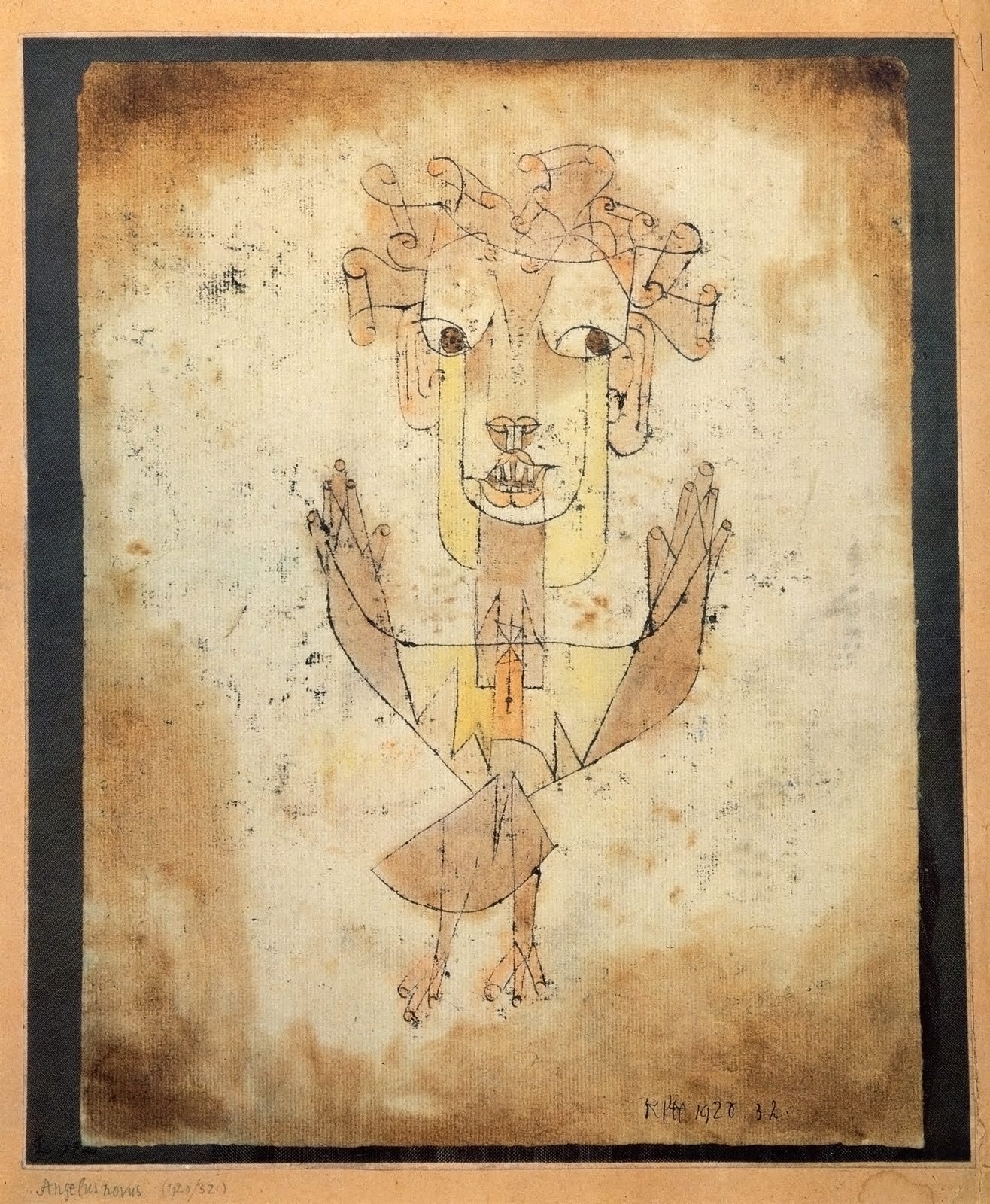
The potential of memory to achieve a certain level of progress is evident: one learns from one’s mistakes and, by correcting them, improves the result, optimises resources, makes better use of time… Empirical learning by trial and error is decisive in architecture, both at the constructive and at the compositional level: the success or failure of a work conditions the approach to the next project because of an inevitable desire to surpass oneself. Unfortunately, this urge to experiment sometimes ends in stagnation, either because it is impossible to keep improving or simply because of the comfort of having found a reliable formula, leading to complacency and a loss of originality. Nevertheless, it is always advisable to be critical of the idea of historical progress, as Walter Benjamin2 warned us, using the visual metaphor of the Angelus Novus painted by Paul Klee in 1920 (Fig. 2).
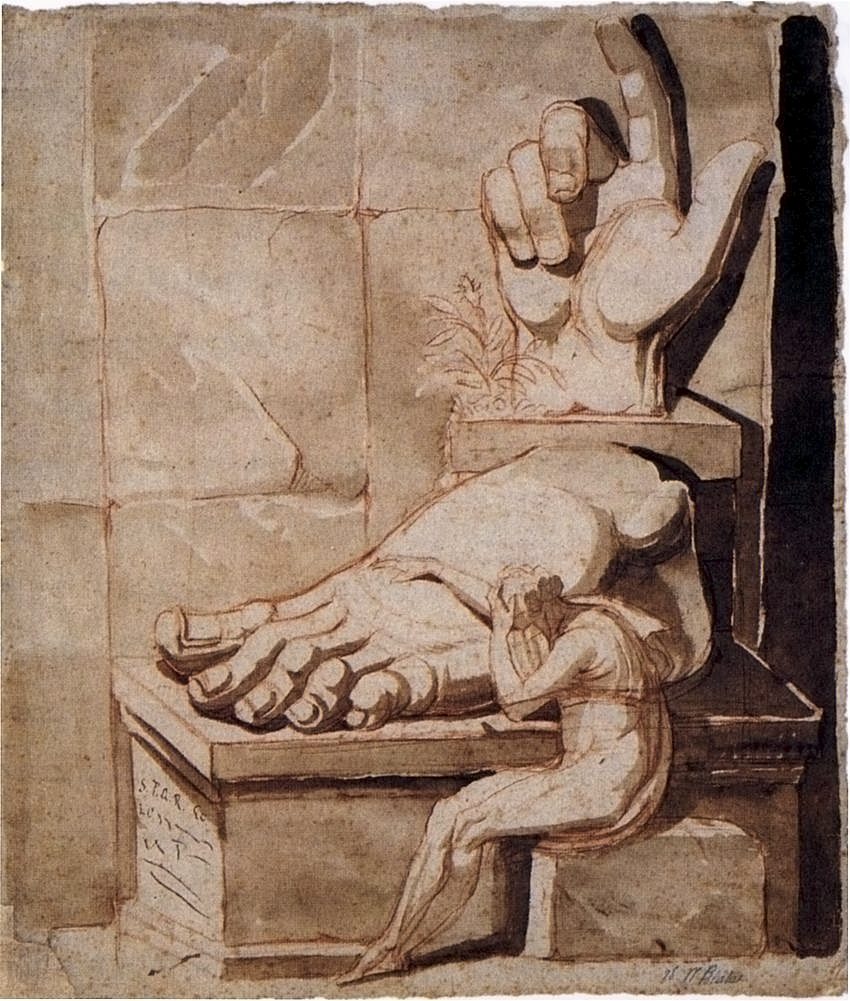
From another point of view, in art in general and in architecture in particular, memory can prove frustrating and even paralysing, because of the pain of recognising the enormous worth of the masterpieces of the past, with which it is futile to try to compare oneself, as the pre-Romantic Füssli3 so aptly portrayed in his drawing known as The Artist Moved to Despair at the Grandeur of Antique Fragments (Fig. 1). At that moment memory ceases to serve the creative act and allows little more than mimetic processes, thus distancing the project from the zeitgeist. Like the protagonist of Borges’s Funes the Memorious,4 an excess of memory atrophies present life and expectations for the future are cancelled out. Much of the architecture of the fascist regimes or of the postmodern alternative could be placed within this theoretical framework of feigned vitality.5
Conversely, we might think that amnesia – understood as the complete absence of memory – would lead to an absolutely innovative stage by freeing us from the weight of history. That disruptive quality was claimed by many of the pioneers of modern architecture – and even more so by those who helped to disseminate it – although historiography has been able to recognise the patterns of continuity with the preceding period… After all, Kafka did not wish to deny Gregor Samsa the time he had lived after his transformation into a strange kind of insect in The Metamorphosis,6 even though it was of little use to him either for his new daily habits or for sustaining family relationships in his own home.
In a context such as the present one, in which architecture aligns itself, out of laziness and resignation, with Zygmunt Bauman’s “liquid thought”,7 the value of memory as a design tool has been greatly devalued: it is often invoked with insipid, disjointed arguments which, relying on a supposed “critical regionalism” of universal validity, justify the arbitrariness of the architectural proposal, whether to refer to the place, to the traditional typology or to the materials with which (supposedly) to advance vernacular architecture, without making the effort to understand the anthropological, technological and even bioclimatic rationale underlying those historical precedents, even when they are recent.
With the aim of investigating the role of memory in architecture, this issue presents critical positions through case studies and theoretical reflections that seek to outline an idea of how memory has served, serves and can serve to explore new disciplinary horizons at different scales, from the territory to the bedroom. Understanding how memory or amnesia has operated in architectural production – whether actually built, failed or even utopian – can stimulate us to reconsider the operativeness of the past in the urban planning or architectural design of the future. Insofar as, as architects, we wish to contribute to the culture of humanity, can we allow artificial intelligence to act as the sentinel of memory and, worse still, as a tool for designing the future?
Notes
- 1↩
José Ortega y Gasset, Historia como sistema (Madrid: Revista de Occidente, 1935).
- 2↩
It should be recalled that Walter Benjamin acquired this painting in 1921 and that it inspired Thesis IX of his text “Theses on the Philosophy of History”, written in 1940 shortly before he took his own life while fleeing the Nazi regime. Cf. Walter Benjamin, Tesis sobre la filosofía de la historia (Madrid: Alianza Editorial, 1971/2008).
- 3↩
Füssli made this composition after having previously devoted himself to copying the figures of the Ancestors, the Prophets and the Sibyls of the Sistine Chapel painted by Michelangelo during his stay in Rome (1770-1778), and with the experience of having translated into English, in 1765, Winckelmann’s book Reflections on the Imitation of Greek Works of Art (1755). Cf. Johann Joachim Winckelmann, Reflexiones sobre la imitación de las obras griegas en la pintura y la escultura (Madrid: Fondo de Cultura Económica, 2008).
- 4↩
Jorge Luis Borges, “Funes el memorioso”, in Ficciones (Buenos Aires: Emecé, 1944).
- 5↩
It is not surprising, then, that renowned postmodern architects such as Leon Krier promoted the reappraisal of the work of the Nazi architect Albert Speer. Cf. Leon Krier and Lars Olof Larsson, Albert Speer: Architecture 1932-1942 (Brussels: Archives d’Architecture Moderne, 1985).
- 6↩
Franz Kafka, La metamorfosis (Madrid: Alianza Editorial, 2011).
- 7↩
Zygmunt Bauman, Modernidad líquida (Buenos Aires: Fondo de Cultura Económica, 2000).
How to cite
Almonacid Canseco, Rodrigo. “La memoria” [Memory]. VAD. Veredes, arquitectura y divulgación, no. 15 (2026): 32–35.
© 2026 Rodrigo Almonacid Canseco. CC BY-NC-SA 4.0.