
No. 13, The heritage, June 2025
Architectural criticism
Does Heritage Have Borders?
¿Tiene fronteras el patrimonio?
Heritage is that to which we give value, whether economic, emotional or historical. Art, if it is not historical, is not considered heritage. Nor is science, although many of us disagree.
What counts as historical or cultural heritage is decided in common, whether by scholars and professionals, as was the case until a few decades ago, or through the claims or practices of citizens, as the Faro Convention tells us.1 Thus, Burgos Cathedral or the Mayos festival are heritage, but Fisac’s Pagoda building was not, and it was demolished with all the permits in order.
The value attributed to heritage depends on time and space. An adobe wall in the Ksar of Ait-Ben-Haddou,2 in southern Morocco (Fig. 1), is not the same as an adobe wall in a village in La Mancha. One is World Heritage. The other is replaceable. It depends on the use made of them. The first is still functional, whereas the second has lost that capacity.
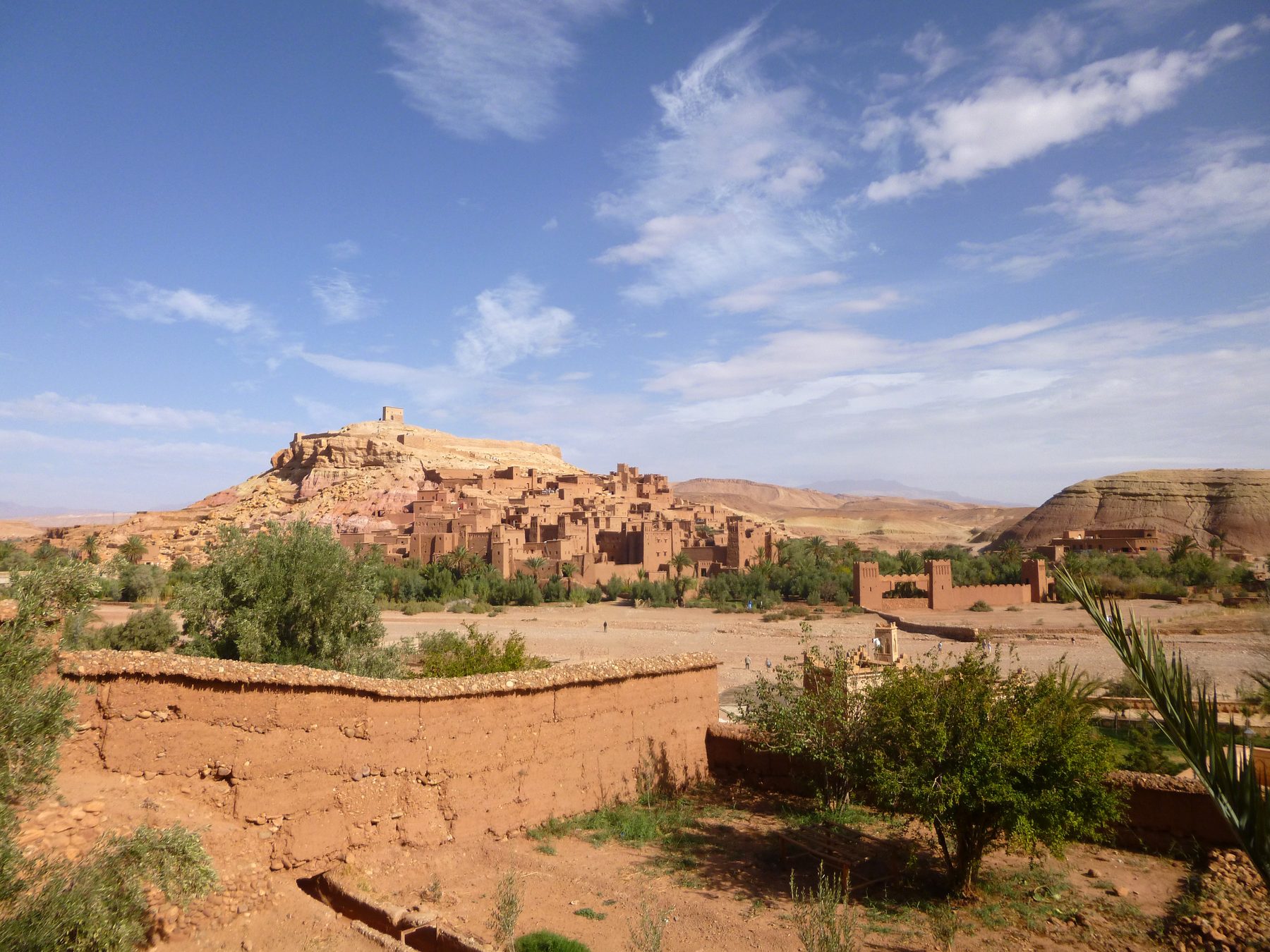
So, to a large extent, the value of heritage rests on its functionality. Hence interventions to rehabilitate and restore historic buildings base their success, and the future of those buildings, on making them functional and useful – while, mind you, preserving their character and the historical additions that explain their evolution3 and reconciling new technical requirements for protection and accessibility with the preservation of more or less complete fragments of their past. A building that has no function ends up deteriorating irremediably and collapsing. In the long term, all that remains is legal protection based on legislation and on a justification that are often obsolete, protecting what to a great extent no longer physically exists and preserving a value no longer recognised by citizens. What do we do then? We wait for it to fall down. Or we have it declared a ruin so that it can be pulled down.
The new, inclusive concept of heritage embraces intangible practices, actions and attitudes that are closer to people, to their socialisation and to the way in which they generate society and culture. One need only think of the loss of importance of hermitages and churches in favour of other spaces such as parks and fairgrounds (Fig. 2).
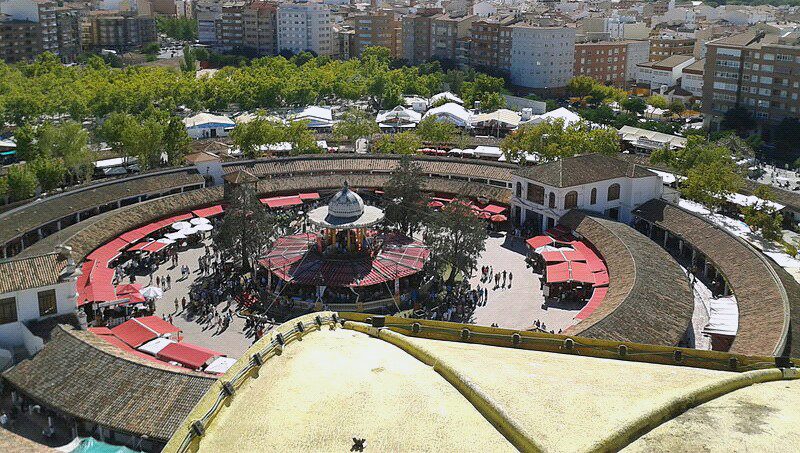
Heritage is therefore a concept that flows with time, abandoning some spaces in favour of others, depending on shared use and bound up with an action that involves an emotion or a socialised activity.
This changing concept calls for an analysis that moves forward in the treatment of the physical elements of heritage, the true frontier. We remain bound by rules that are conceptually outdated, whose application depends on the people who take the decisions in each case, and which force us to accumulate ruins whose social value has been lost.
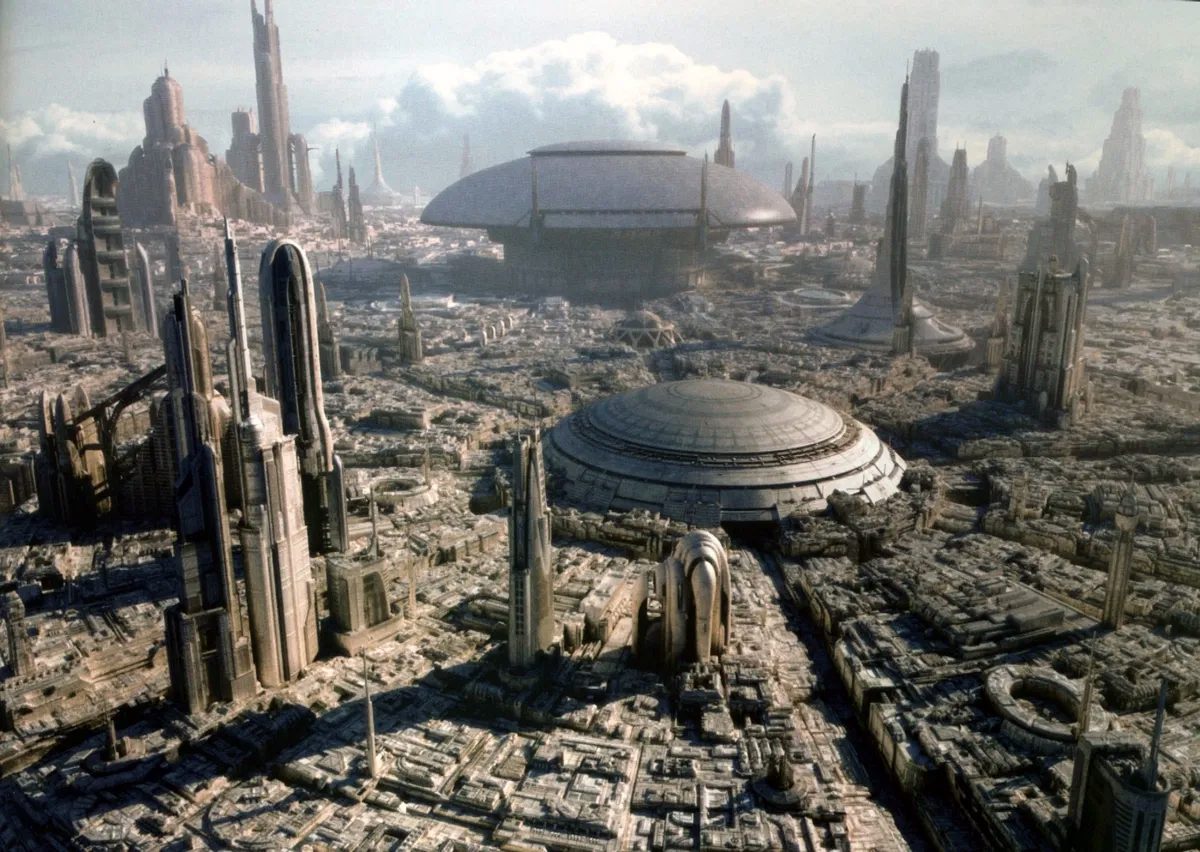
Science fiction, which is the projection of History into the future, bears out what has been said (Fig. 3). Only those buildings from the past that are used by archaic populations are preserved; the replacement of urban planning and habitability is absolute and subordinated to the technological needs of the new societies. The heritage of the future is solely that which serves scientific and technical knowledge and development. Everything else is mutable for the sake of the most radical functionality, that is, of the use people make of it.
So perhaps we could now address the question of what to conserve and what not. Or we could question whether functionality, the use people make of things, should be the only guide in defining heritage and in intervening in it. We would have to agree on how we preserve history, its knowledge and study, its material remains, its role within the concept of heritage. And what, without being heritage, ought to remain.
The greatest glory of a building does not, in fact, depend on its stone or its gold. All its glory lies in its age, in that deep sense of expression, of grave vigilance, of mysterious sympathy, of approval or of criticism, that emanates for us from its walls, long washed by the swift waves of humanity.
In its testimony of endurance before men, in its quiet contrast with the transient character of things, in the strength which, amid the passing of the seasons and of time, the decline and birth of dynasties and the changes in the face of the earth or of the shores of the sea, keeps the beauty of its sculpted forms imperishable and joins forgotten centuries with others: it is in all this that it gains our sympathy.
It is in the golden patina of the years that we must look for the true light, the colour and the merit of architecture. Only when a building has taken on this character, when it has been entrusted to the fame of men and hallowed by their deeds, when its walls have witnessed our sufferings and its pillars have risen out of the shadow of death, is its existence, more lasting than the natural objects of the world around it, wholly endowed with language and with life.4
Notes
- 1↩
Article 2(a) of the Instrumento de ratificación del Convenio marco del Consejo de Europa sobre el valor del patrimonio cultural para la sociedad, hecho en Faro el 25 de octubre de 2005, BOE, no. 144, 17 June 2022. Available at https://www.boe.es/eli/es/ai/2005/10/25/(1) (last accessed: June 2025).
- 2↩
“Ksar de Ait Ben Hadu”, UNESCO. Available at https://whc.unesco.org/es/list/444 (last accessed: June 2025).
- 3↩
Article 39 of Ley 16/1985, de 25 de junio, del Patrimonio Histórico Español, BOE, no. 155, 29 June 1985. Available at https://www.boe.es/eli/es/l/1985/06/25/16/con (last accessed: June 2025).
- 4↩
John Ruskin, Las siete lámparas de la arquitectura (Buenos Aires: Librería y Editorial “El Ateneo”, 1944), 240-241. Originally published as The Seven Lamps of Architecture, 1849; the quotation is given here in Ruskin’s original English (chapter VI, “The Lamp of Memory”). Available at https://www.cervantesvirtual.com/nd/ark:/59851/bmc1071954 (last accessed: June 2025).
How to cite
Perlines Benito, María R.. “¿Tiene fronteras el patrimonio?” [Does Heritage Have Borders?]. VAD. Veredes, arquitectura y divulgación, no. 13 (2025): 140–142.
© 2025 María R. Perlines Benito. CC BY-NC-SA 4.0.