
No. 11, The Archives, June 2024
Research articles
An Imprint of Water Infrastructures: The Public Washhouses as Spaces of Everyday Life and Fragments of Women’s Work
Una marca de las infraestructuras del agua: Los lavaderos públicos como espacios de la vida cotidiana y fragmentos del trabajo de las mujeres
Abstract
This article is an overview of the historical and architectural study, as well as the practice of archiving Porto’s public washhouses using sensitive cartography. The historical context of the study is presented, as well as the justification for studying the washhouses from the point of view of aesthetics, typologies and cultural heritage. In Porto, these fragments of women’s work in various urban environments are abandoned and in ruins, despite the fact that they are still present in the memories of the inhabitants. This archive work is gradually being transformed into an artistic, self-ethnographic work of interpretation, mixing the personal and the public, but also serving as a basis for research into architecture and urban planning: how can we preserve the memory of washhouses? This work is part of the feminist historiography of recent years, which aims to recover the presence of working-class women and their history in the public space.
Keywords: archive; women; public space; washhouses; mapping
The link between women and water is immemorial. It was reinforced in the 19th century by the concern for clothes, the key to the first industrial revolution which was essentially textile, a concern made more obsessive by the demand for cleanliness which was still largely illusory because of the weakness of the equipment. (…) Laundry became an integral part of their schedule, and the washhouse an integral part of their daily practice. 1
Michelle Perrot
Preface: Lavoir, Case Study (Wash)houses
The lavoir is a relatively recent architectural typology and therefore its origin is little or not discussed. From my mother tongue and that of my father, French and Corsican, the word lavoir originates from the Low Latin lavatorium. It is a place built on the edge of a courtyard or a room containing basins supplied with running water for washing clothes.2 In Corsica too (Fig. 1), lavatoghju comes from the same Latin root as in French, as well as in Spanish and Portuguese. In Latin,
A lavatorium (plural lavatoria), also anglicised as laver and lavatory, was the communal washing area in a monastery, particularly in medieval abbeys and cathedral cloisters. Monks were required to wash before meals; thus the lavatorium was typically adjacent to the refectory. 3
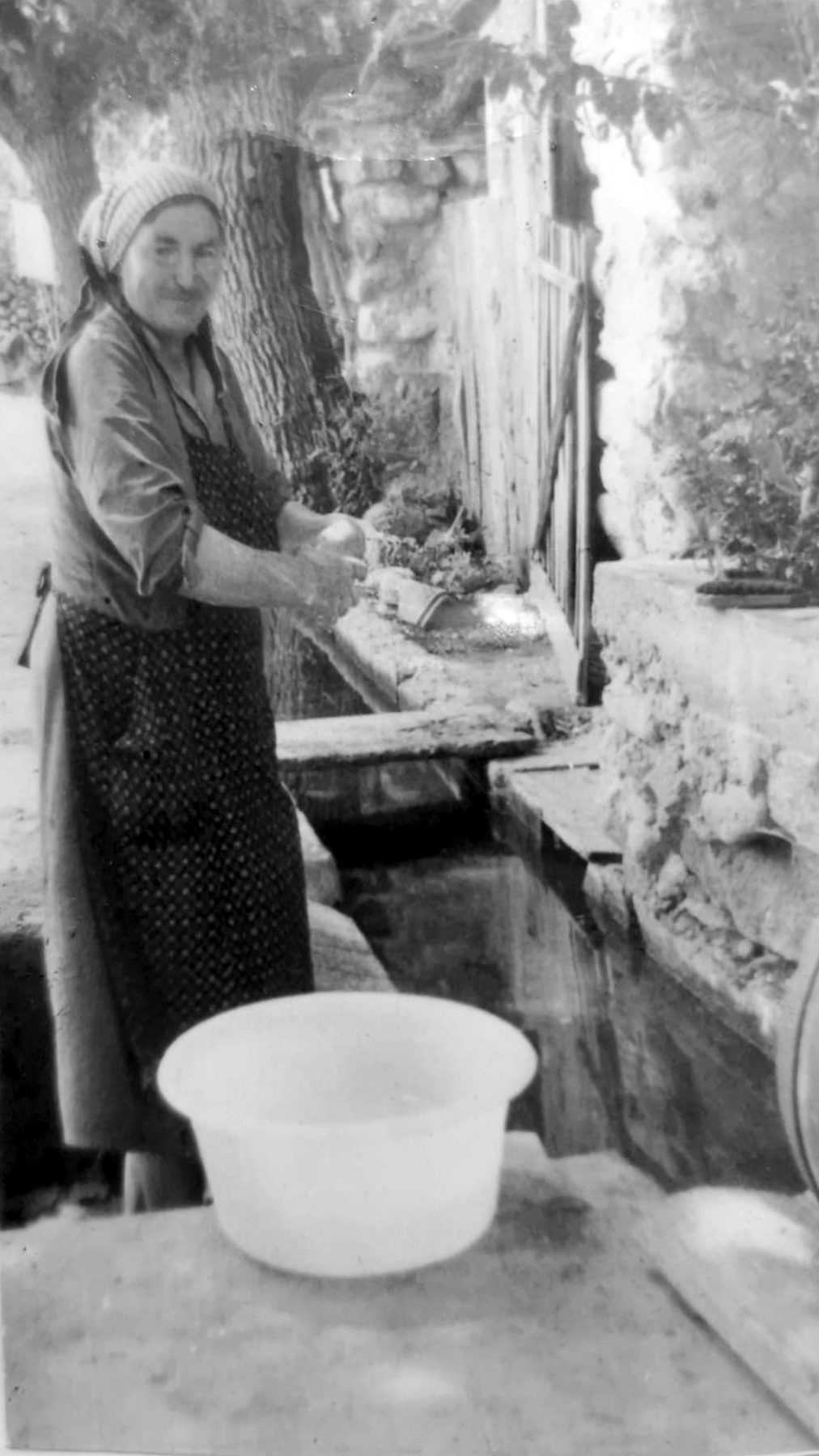
The origin of the “washhouse” is etymologically in medieval times a common space in a place of worship for men to wash their hands and therefore their bodies. This can be compared with its modern meaning to women and washing clothes. It is interesting to compare the Latin etymology of the French with the English translation “washhouse”, whose definition is a building or outbuilding in which laundry was done.4 These are two words from the verb “to wash” and “house”, which refer to the domestic space, the architectural space. In a sense, the Latin etymology and the English translation of lavoir are complementary. On the one hand, we find the connotation of the common, of community, on the other hand, the idea of shelter and the house refers to the domestic, to the idea of protection, and therefore of architecture. These complementary definitions allow us to understand the origin and meaning of lavoirs and the choice of translations from French, to English, or Portuguese – lavadouros. The word in Portuguese, douro refers to the river, therefore to water. The definition of lavadouro:
It is a basin or place where clothes are washed, but also the board/stone for beating and rubbing the clothes during washing.
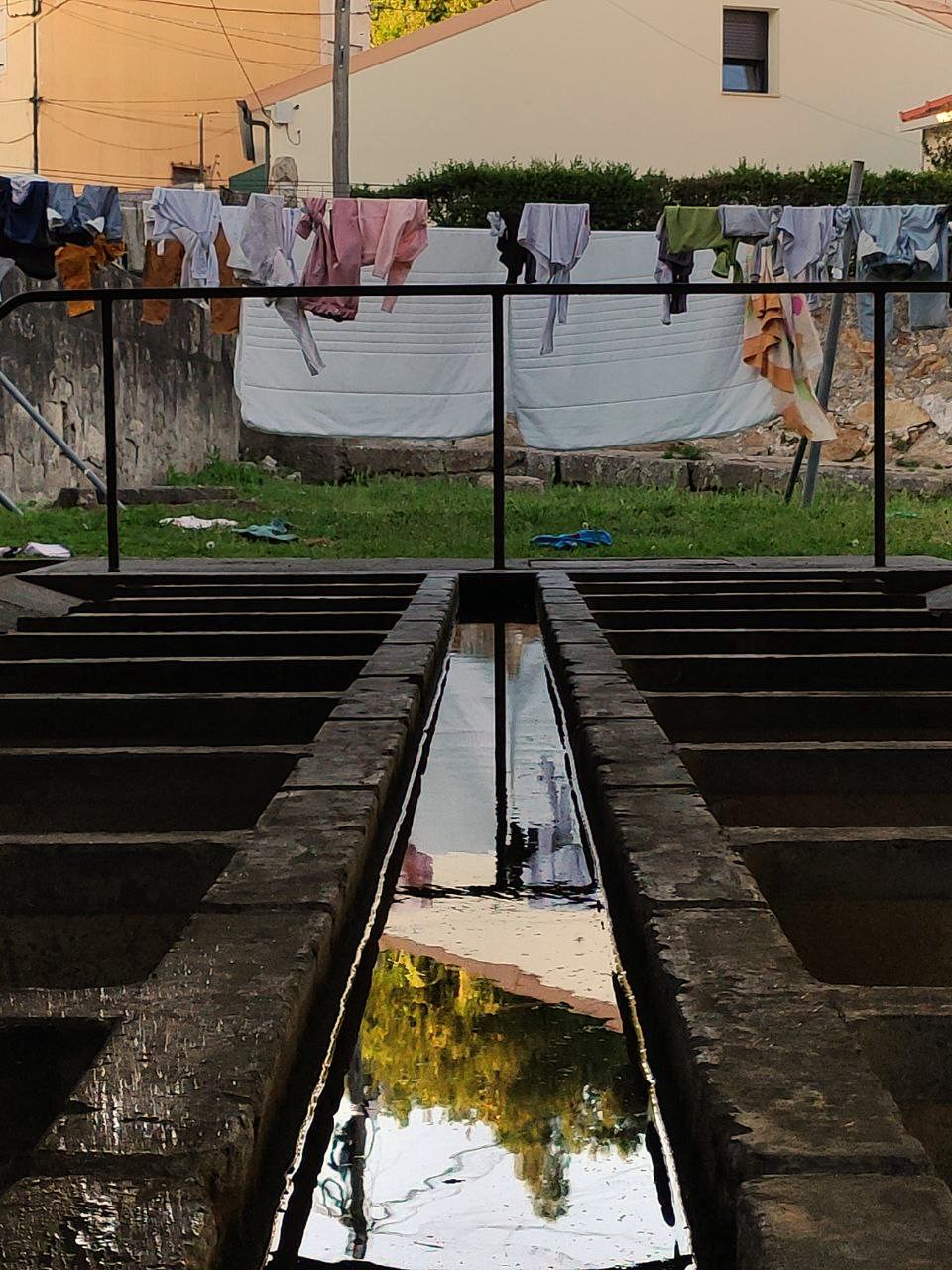
In conclusion, the definition of a washhouse encompasses several concepts that refer to the occupation and use of space, as well as the notions of communal, domestic, and even habitat. Case Study (Wash)houses is a name for a counter-narrative and also a way of building a new analysis of civic architecture and those contemporary public spaces. In fact, the domestic space shows through and diffuses itself through the washhouses, places that still have a vivid memory due to their relatively recent abandonment (Fig. 2).
Washhouses as Aesthetic Tools of Everyday Life
The paradigm shift in the valuing of what heritage is, and the many voices raised in support of women’s rights and against sexual violence, cannot go unnoticed in the way we practice, appropriate, and think about public spaces as women. It is a debate that can be found in the smallest detail of house design, in the smallest scale of space creation, intrinsic to our urban condition, “the personal is political”.5 It is imperative to rethink the paradigms of aesthetic criteria of beauty. From a heritage point of view, this is explained by what we decide to value or not. Therefore, the aesthetics of everyday life is important to show another aspect of what should be highlighted. The valorisation of everyday spaces —calls for encountering beauty in small things and small gestures— will perhaps provide a counterpoint to the systematic destruction of urban communal spaces of the working classes. To perhaps counter the “fetishisation of the household”6 and to situate the discussion of aesthetics outside of the traditional debate on the architecture of the great and rather in informal, natural, and transforming spaces, a hybrid between the house and the street, the washhouse is an architectural typology full of connotations, from romanticism to industrial to nineteenth-century hygienism. The washhouse is the starting point of this reflection on aesthetics, to open a reflection on being, remaining, and disappearing on the scale of the neighbourhood, the city, and the landscape. The Punt-6 Collective, in Feminist Urbanism: Radical Transformation of Spaces of Life, wrote that the washhouses are a perfect example of the transgression of the “public-private dichotomy”:
For the working class woman, the house was where she slept and ate, but the street was a means of subsistence: the fountains where she fetched water, the public washhouses, the stairway, etc. Almost all daily needs implied a displacement or use of public space. 7
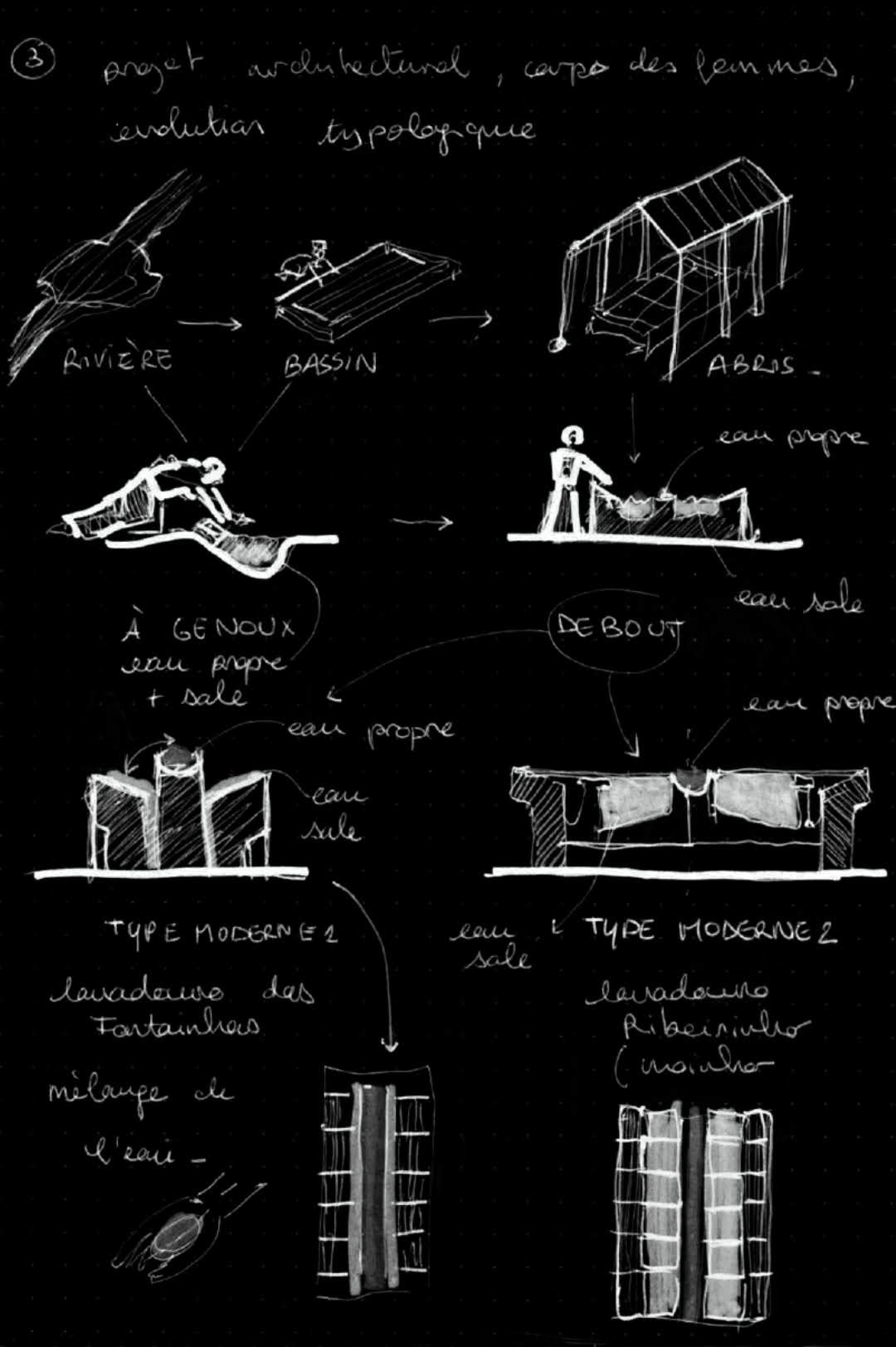
Analysing the concept of aesthetics from a practical case allows us to focus on its tangible, sensitive, and multi-sensorial character. It is a crossroads between a ruin, an obsolete object, and a catalyst of memories that is still recent in the memory of towns and villages: it is a witness to the urban practices of women. The washhouse is a poetic-memorial “object”, a contemporary curiosity whose analysis makes sense through the study of the proliferation of typologies, their progressive abandonment, and their state, sometimes romanticized, sometimes tokenized but little used as tools for the acquisition of a feminist political consciousness and a critical discourse on the production of both space and image. Both tangible and intangible, the empirical experience of the washhouse is very special, at once universal, international, and still relevant, each washhouse is an aesthetic attempt to respond to a problem, hence architectural. Each site is unique, and therefore each washhouse is different/singular because it is perfectly situated in its context: the watercourse, the need for the place, and the social conditions are factors that justify each location, in the centre of a village, in the immediate vicinity of a factory, along a watercourse in the countryside. They respond to an organic growth of the city, at the beginning simply waterways, they have been transformed by stratum to be built. Beginning with the creation of basins, then the design of the cover, and finally the arising of the basin for the comfort of women.
In the case study of the washhouses of Porto, we can say that these objects are above all the physical representation of the inequalities between men and women in the public space:
This inequality can also be seen in the design and type of architecture, materials or location in the city of spaces considered “feminine”, such as public washhouses, for example. 8
As a space for female socialisation they have a functional, utilitarian, and hygienic architecture, a rudimentary design of the roofs, and their materials are of low cost and regional. One can see a constructive simplicity, as the location of these spaces is in the periphery, at the limits of the city, below the street level, invisible, or in the countryside, but always near watercourses. The washhouse is an object of civil and not religious architecture, and a witness space of the everyday life of the cities. They are sincere and rudimentary constructions that respond to a need. But in a first sense of aesthetics, it is this rudimentary character of the shelter that makes the washhouse a functional element before being beautiful, but its beauty comes precisely from the simplicity of its construction. As Viollet-le-Duc explained in 1885:
There is often more art in a small village fountain, in a washhouse showing to all the sincere and judicious realisation of a program than in certain sumptuous buildings whose most real merit is to make everyone say: this must have cost a lot of money. 9
Starting from the Greek meaning of aesthetics (aestétikos) which refers to perceptions, to the sensible, we understand that aesthetics can mean a certain empirical experience of space and not a consensus on what is beautiful, or a mere fashion. This is in line with Vitruvius’ definition of good architecture —firmitas— form and function —utilitas— come before beauty —venustas—, and even these two components create a sense of beauty. From the study of the public washhouses of Porto carried out for my master thesis,10 I was able to discover these architectural places as ruined spaces in the city, whose use gradually disappeared with the domestication of laundry in the 1990s.
The washhouse is an architectural object that can be divided into three dimensions: Historical, it is an urban fragment of the landscape that evokes emotions, and sensations, constitutive of family memory, and therefore refers us to a singular and empirical experience. Practical, relatively recent in the urbanisation of cities, and representative of the efforts of 19th-century hygienism, the washhouses are a palpable and still measurable reality allowing for the material analysis of the practice of space. The Contemporary history of washhouses, their tangible and intangible reality, and the living memory generated by the empirical and sensitive experience of the washhouse, thus aesthetic, leads us to a critical reflection on the presence of community spaces, spaces of water in urban and rural areas, for a search for possible futures. Thus, the multi-dimensionality of the washhouse counteracts the traditional debate of form and function, form vs. function, and form in the service of function. Indeed, what is the form and the function —and therefore the beauty— of an architectural object without the very use of the space it produces?
Women’s Work
From an in-depth typological analysis of washhouses, it is possible to elaborate a critique of the very notion of function. Historically, their planning and design have had the aim of domesticating and controlling women’s bodies in public spaces. We then witness a progressive confinement of women’s practices in the twentieth Century City. The idealisation of the function of a “perfect” drawing in the world of abstraction, without taking into account the use and techniques developed by the practical knowledge of the washhouse, gave rise to conflicts between women and the washhouse designers themselves (engineers, architects, doctors), who were exclusively men in the 19th and 20th centuries.
An example of this is the first modern washhouse in Porto, Lavadouro das Fontainhas (Fig. 3), known as modern typology 1, whose original design does not take into account the use and practices of women in the urban space. These washerwomen that use it are mostly poor and come from the rural exodus between the 19th and the 20th century. The idealised solution for a problem such as the separation of clean and dirty water in the process of washing clothes is violent on the women who use these spaces daily (Fig. 4). Women had to pay fines because of the way they were using the washhouses, coupled with the constant presence of policemen to control the new architectural project’s uses. Description of the image of the archive from the author’s master thesis:
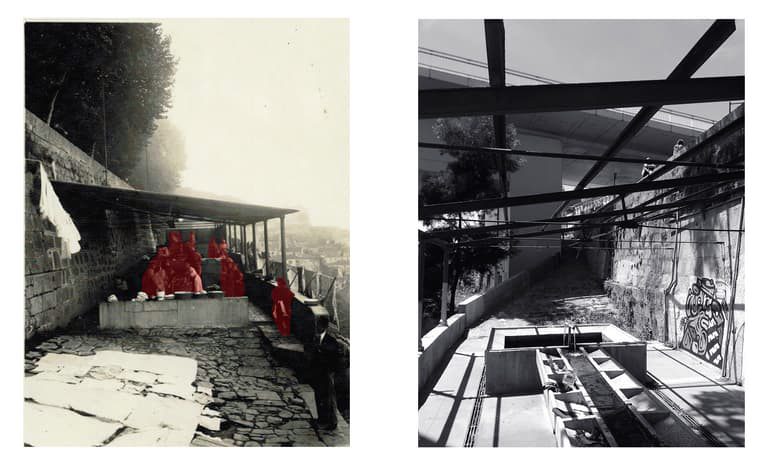
The washhouse is filled with women who are working, with the laundry bleached on the floor and drying on the ropes. The space of the washhouse is entirely female and there is only one man in the foreground who is not included in the space. In the background, the washhouse is enclosed by walls, probably to protect against the wind. This typology does not allow the laundry to be immersed in water, as there was no individual basin of clean water for the 52 individual compartments: “inveterate and routine habit […] which it took so much to master and overcome”. 11
The designer,12 master of pure function, and neglectful of use, does not understand why the common women refuse to use his washhouse as he wishes. He does not question the functionality of his design, but the empirical and sensitive experience of the women in the washhouses, and thus condemns the washerwomen to an “informal” use that he considers inappropriate. As Anna L. Tsing says to emphasise the hygiene standards that were first tested in the Colonial Empire of European Countries, known as “eugenics”:
Re-imported into the metropolis, this public and private hygiene loaded class dichotomies (…). Vulnerable upper-class women became the angels of the house; poor women were accused of being the agents of infection. 13
In this way, the architecture becomes a barrier, a rule to be transgressed. The sensitive experience here refers to the meaning, to the sensoriality of women’s work and of the action of washing clothes, an action that is painful because of its physical effort. This said, we can start thinking about the ambiguous character of the washhouses for women, they are a space of work but also a space of communitarian and everyday life. Working-class women were creating a life outside the household to work, to do the laundry, and take care of children. As Michelle Perrot says:
The washhouse appears to be an ambivalent place. It is the centre of a real female solidarity —material, emotional, cultural. The washhouse is also a means of educating the space-time of the housewife, which the (hygienist) urban planners consider excessively fragmented, fluid, and irrational. 14
The “female solidarity” in opposition to the point of view of the hygienist urban planners is interesting to look at. It demonstrates to us that, because of the use and empirical experience of everyday life and space, the notion of space and time was really different between urban planners and washerwomen/working-class women, therefore the will to control the habits and practices of women creates a place of conflict.
Paradoxical Aesthetics and “Post-Industrial Fragments”
The aesthetics of washhouses is a paradoxical aesthetic, historically they are work spaces, daily spaces, full of women and children, where painfully rough and demanding work was done daily. In the contemporary world, silent spaces, places of meditation almost like chapels, dot the European rural landscape, or in urban areas, as in the very specific case of Porto. A parallel can be drawn between this analysis of the city of Porto and the north of the Iberian Peninsula, in Galicia, and also more generally in the Spanish context through two papers published in 2018: “Washerwomen, gender and architecture. A peripheral critique of laundry spaces”15 by architects Sofía Paleo Mosquera and María Novas Ferradás, and “The washhouse where women wash. A contradictory and diffuse space in urban policies” by architects Rosa Pardo Marín and Carlos Barberá Pastor.16
The paradox lies in the still vivid memory of the washhouses, as complex places of urban life, on several scales, from the village to the neighbourhood, from the domestic space to the public space. The washhouses are marked by their usage, but also by the passage of time. They can be assimilated to the passive admiration of the ruin, but the fear of seeing them disappear with this ruination, the fading away of a culture, pushes us to want to act on these spaces.
A paradoxical aesthetic, then, because they are abandoned living spaces, and especially fragmented in the landscape —both rural and urban. We can also consider washhouses as “works of art” in the Viollet-le-Duc’s definition, so as Anders Fjeld says about Jacques Rancière’s definition of Art, washhouses can be considered as “places of experimentation” and “places of multiple conflicts”. Jacques Rancière says that art is a “tension that unites and opposes both the democratic principle and the exercise of a new regime of expression”.17
To get out of this paradox, we must consider the washhouses as fragments of a whole, fragments of a textile industry relocated in several stages. The washhouses are an imprint left behind, Inês Moreira explains that these post-industrial fragments have a strong narrative potential:
The post-industrial condition escapes, however, the lexicon and categories inherited from industry. In the messy contemporary post-industrial condition there are “things” and “places” that are not “coherent”, as such they tend to be disregarded: the remnants, the voices, the debris, the contaminants, the matter, the small elements that were part of a larger structure, that had a functional life in industry, that lived other lives. We find post-industrial fragments in abundance today and some, as we shall see, have narrative and articulating potential for very wide-ranging concerns. 18
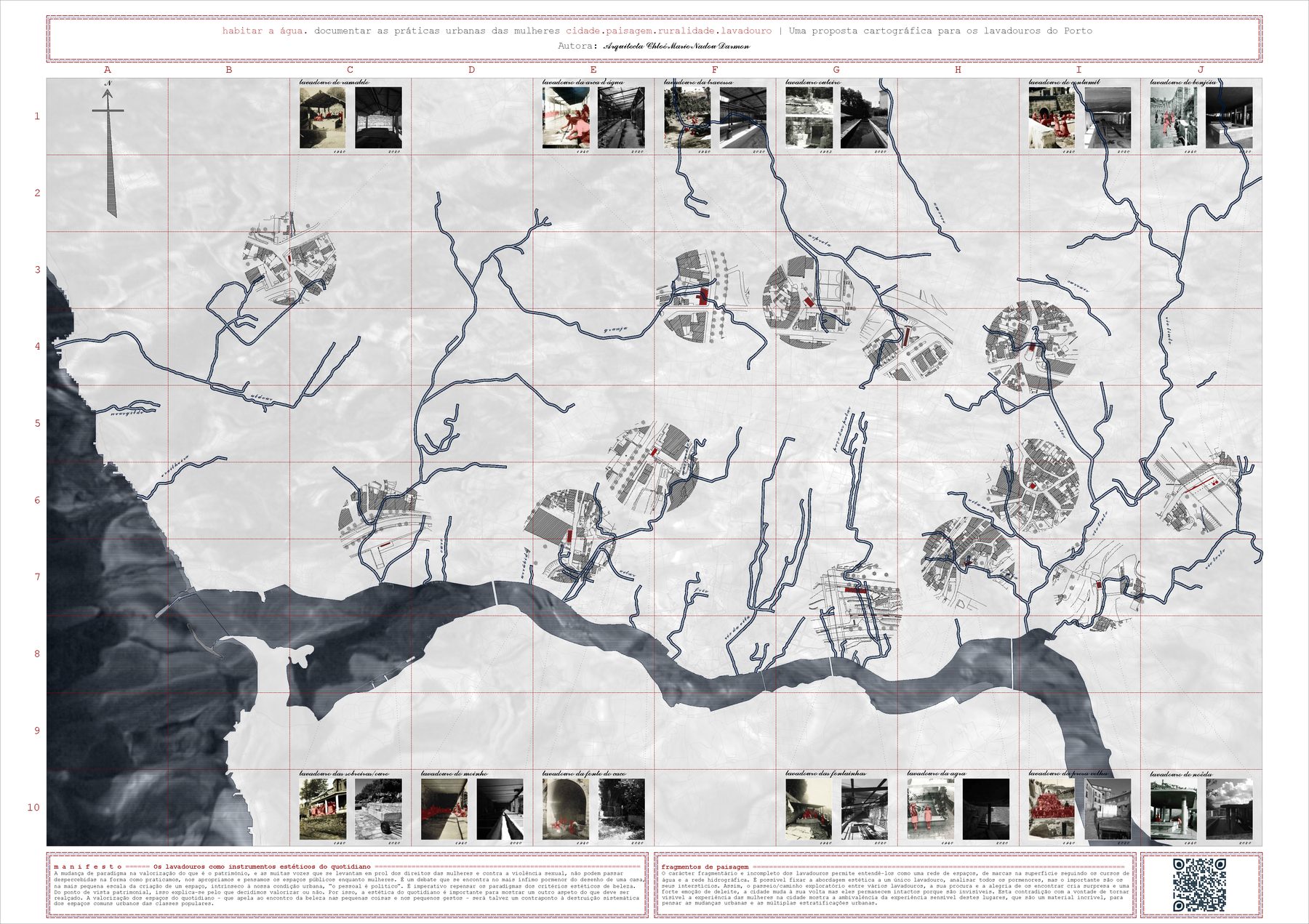
The fragmentary and incomplete nature of the washhouses allows them to be understood as a network of spaces, of marks on the surface following the watercourses and the hydrographic network. It is possible to fix the aesthetic approach to a single washhouse, to analyse all the details, but what is important are their interstices. Thus, the exploratory walk between several washhouses, their search, and the joy of finding them creates surprise and a strong emotion of delight, the city changes around them but they remain intact because they are invisible. This contradiction with the will to make visible the experience of women in the city shows the ambivalence of the sensitive experience of these places, which are an incredible material, to think about urban changes and multiple urban stratifications.
Tsing developed an idea of searching for mushrooms in the woods as an experience of wandering and walking through the margins of the roads and landscapes,19 since, for the author, “the imperial and industrial transformations of the landscapes encourage the spread of non-human collaborators”.20 This process could be applied to the walking dérive of looking for abandoned washhouses, at the margins of the city, where other types of life are in proliferation due to their condition of oblivion.
The urge to act on those spaces could be translated to the urge to register something that is fragile and will soon disappear if there is no action taken. As Ines Weizman explains:
The impetus to document the existing environment is more compelling at certain moments in history than others and is often driven by social and political change. The transformation or destruction of buildings, villages, and even cities in contexts of war, natural disaster, or capitalist expansion to make space for new urban developments strengthens the urge to record “what is going to disappear”. 21
The process of researching those urban and social facilities started with the open access to the public archive of Águas do Porto. It directly questioned the role and responsibility of the public institutions in the selection of which type of heritage should be protected or not. The methodology used —the “before/after” technique— is a way of understanding the material reality of the spaces and show their transformation over time. This documentation has been assembled into a cartography of the washhouses of Porto in 2019-2020, that can be considered as a first contemporary diagnosis of the state of those water facilities, that is still to be completed and in a constant state of actualisation.22
Over the past years, this continuous documentation of this abandonment process showed the progressive disappearance of the washhouses in Porto caused by the slowness of the heritage classification that engendered the degradation of this public heritage, material and immaterial. Ines Weizman describes this phenomenon as follows:
The greater the contrast between the situation before and after the transformation, the more political power these images tend to have. On the other hand, those who produce and collect before and after images can hold fast-moving developers to account. They become evidence to document a lack of care and compassion as well as a failure to consider collaboration and consultation with the community. 23
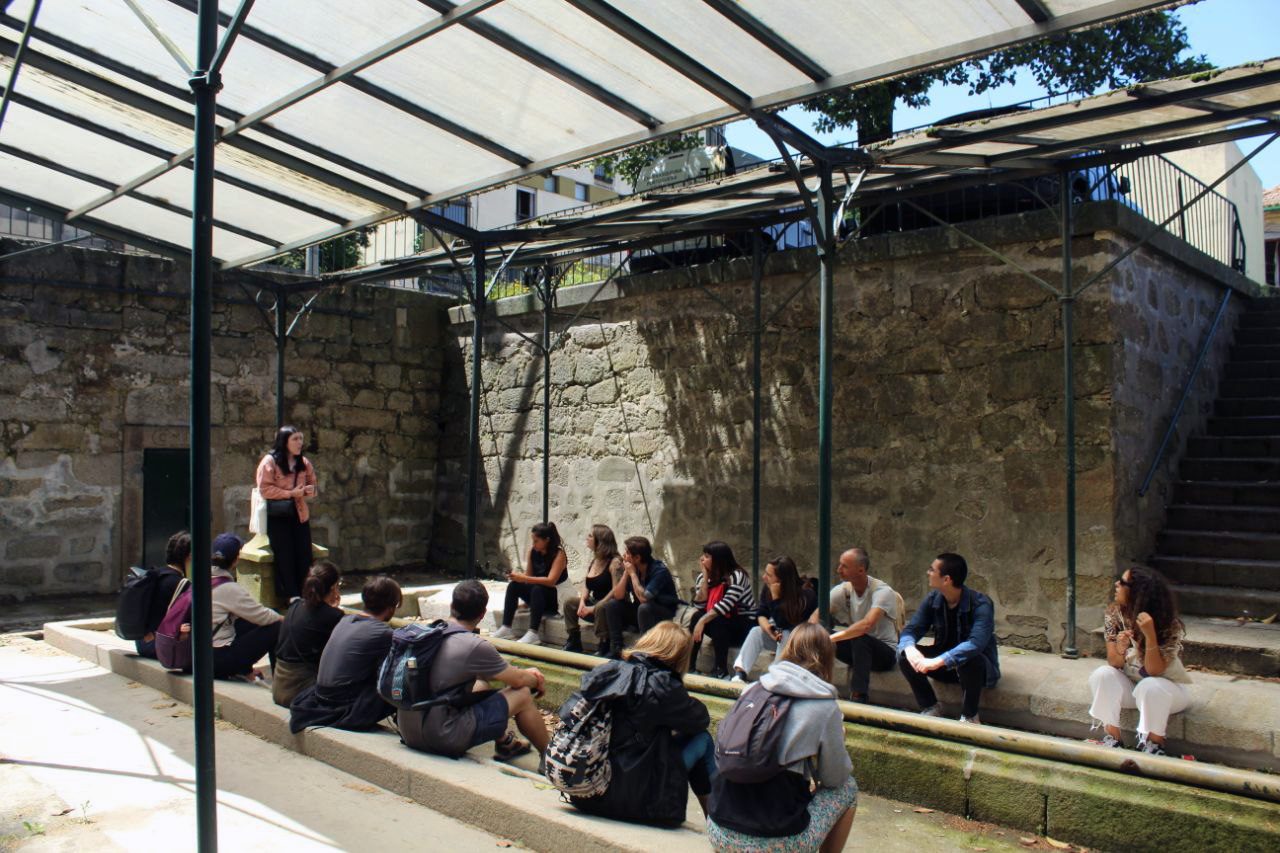
However, the disclosure of the images in the archives and their public access were essential to the start of awareness on the heritage value of the public washhouses as water facilities and fragments of women’s work, also as their potential re-activation (Fig. 5).24
Living Memory of Women and a Precocious Act of Transformation
According to Françoise Choay, “the historical monument maintains a different relationship with living memory and with time”.25 Even if they are ephemeral, a necessity of the moment, washhouses can be considered as historical monuments because of the history they carry. It is a “living memory” which inhabits them and which is part of everyday discussions, which represents a theme in literature and poetry, as in the work of the Brazilian author Conceição Evaristo, daughter of a washerwoman. In the documentary film Filhas de Lavadeiras,26 by Edileuza Penha de Souza, 2019, Conceição Evaristo tells us:
The eye of the sun beat down on the clothes on the clothesline and Mama smiled happily. Droplets of water sprinkling my life-girl swayed in the wind. Little tears from the sheets. Little blue pebbles, bits of indigo, bits of lonely clouds falling from the sky were found around the basins and tubs of washing clothes. Everything caused me a greater commotion. Poetry visited me and I didn’t even know it… 27
The author’s empirical experience of washing clothes as a child and the space associated with it (in this case the riverside in Brazil), made her feel the “beauty”, the poetry linked to the landscape, the happiness of being with her mother. This interpretation immerses us in an intimate moment of the author’s life and for this reason, even though it is specific, we imagine what kind of “commotion” she may have felt. This experience is still part of the living memory of millions of women around the world, and also lets us think of the global issue of women and water:
Without safely managed water, sanitation, and hygiene (WASH) services, women and girls are more vulnerable to abuse, attack, and ill-health, affecting their ability to study, work and live in dignity. 28
Imprint and Archive Public Washhouses: Cartography, Water Memories and Feminist Herstory
Based on feminist historiography and the movement to fill in the gaps in history, the project to extend my master’s dissertation was created: Habitar a água. Documentar as práticas urbanas das mulheres (cidade, paisagem, ruralidade). This is a mainly archival project that aims to think critically about access to documentation on washhouses, their abandonment in the public space, and the memories attached to them. When I started this project, people (friends, family, among others) started sending me photographs of washhouses from all over the place, mainly in Portugal (from north to south). From movements that I couldn’t control, I started to talk to my grandmother and she began to tell me about her memories of water, washhouses and washerwomen. She started to send me photographs from her personal archives, where you can see the well in the house in the south of France, the river where her grandmother used to wash clothes by hand, and photographs of my mother hanging out the laundry as a child. My grandmother’s testimony reads:
The water of the Tarn, which we had to cross in a boat to get to my grandmother’s farm. It flowed below the house and I can still remember the sound it made on the gravel. My grandmother washed her laundry there and dried it on the meadow when the weather was fine. My cousin used to fish for trout there. 29
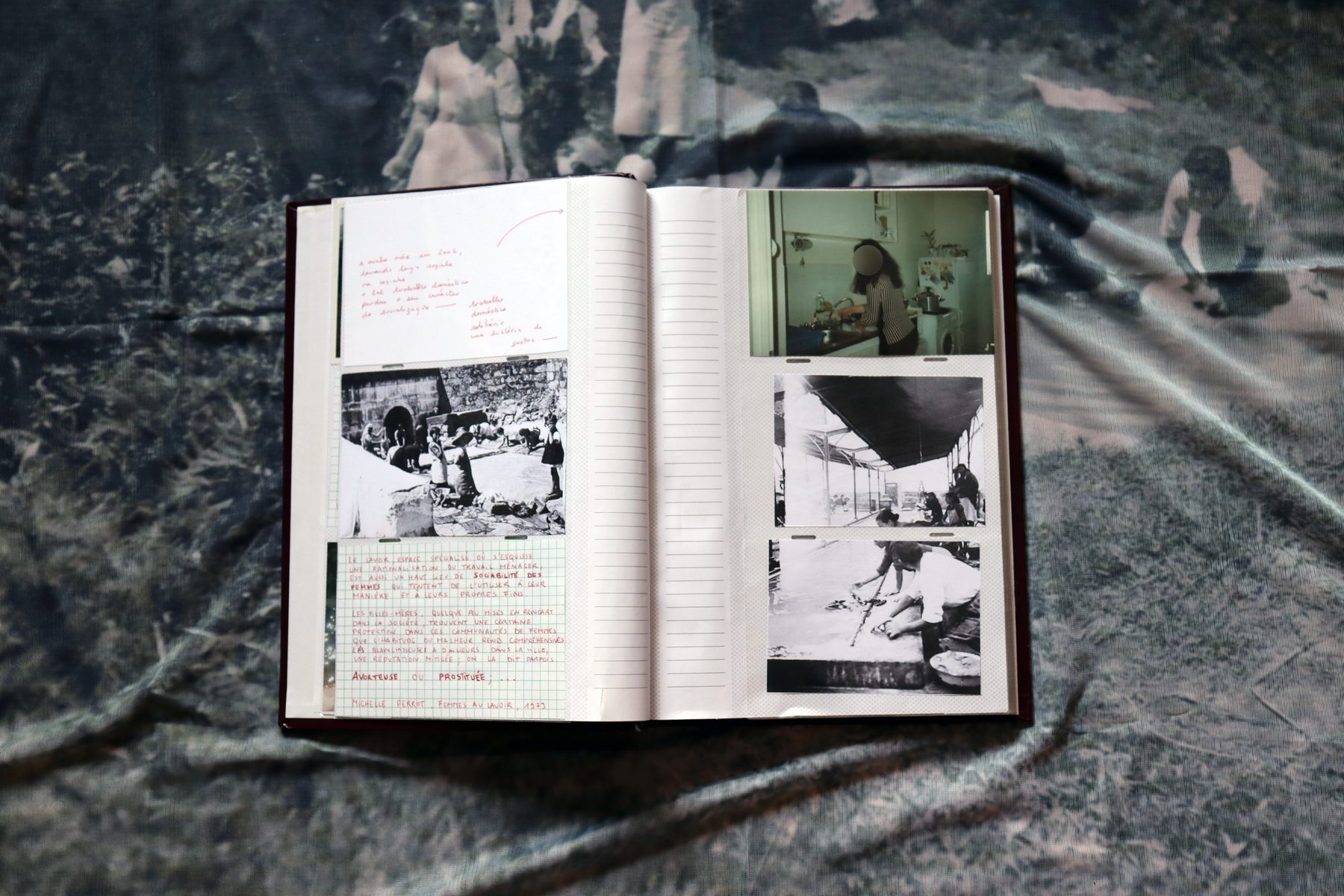
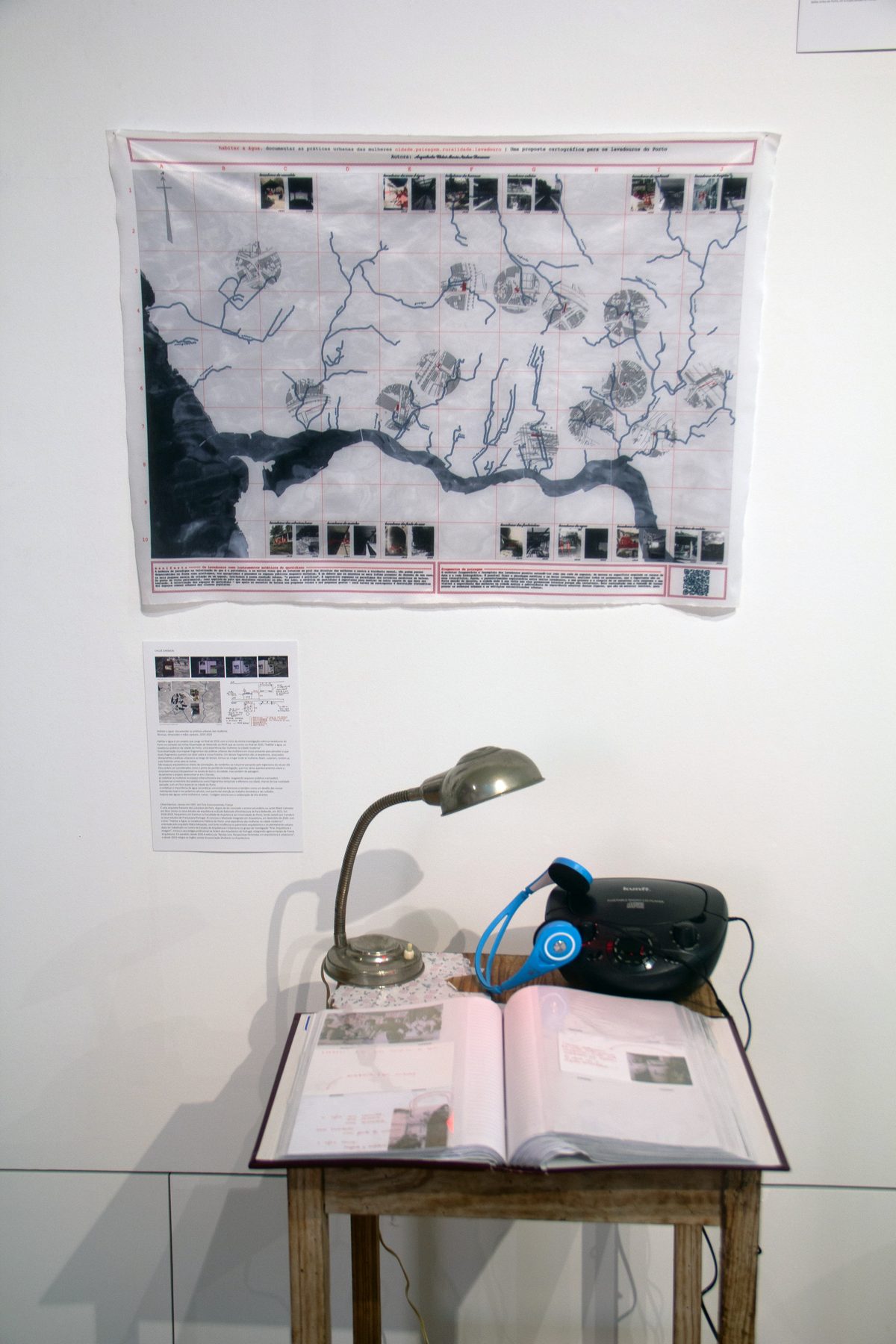
This artistic and auto-ethnographic work formed the basis of the artistic production Water archive: Between women and ruins (Fig. 6). The first memories of water were used to compile an archive book, based on old family photo albums. The photographs of the ruined washhouses, the old postcards and archive photographs, and the texts of the water memoirs are all mixed together, using the space of the washhouses to develop the imagination of the participants. It is an archive in constant creation, and gave rise to the multimedia installation (Fig. 7) at the “Voices of the Landscape” exhibition in the oMuseu of the Faculty of Fine Arts University of Porto, with a sound collage by the architect and artist Ana Arantes, who transcribed her memories of water through sound rather than text.
The complexity of the modes of socialisation linked to these spaces and the complexity of transcribing them, but the effort to document them is part of an international movement to recover the forgotten history of women, mainly of the working class. This is not a piece of research, nor is it isolated to Portugal, but part of a wider historical movement. As historian Michelle Perrot wrote in Les femmes ou les silences de l’Histoire:
Last but not least, feminism has led to a huge interest in the lives of obscure women. One of the concerns of a burgeoning women’s history has been to make visible, accumulate data and establish places of memory (women’s archives, dictionaries, etc.). And, in the absence of written testimonies, oral testimonies were sought. 30
In the Portuguese context of the Carnation Revolution (1975), the feminist activist Maria Velho da Costa (1938-2020) published the collection of texts O Cravo, in which we can read in the spaces between the lines of the text “Revolution and women” the hidden presence of women as a labour force, domestic labour, but also a force that enabled the revolution and the struggle for better living conditions. In this text, the washhouses are mentioned in the context of the domestic work associated with them, particularly in relation to textiles and clothing:
They wash the sheets and shirts that will sweat again. (…) They wash the pants smeared from the first semen, the first salary, the conscription. (…) They make the needle pass back and forth across the fabric of the carpet. (…) They make all the beds and dumps for someone else’s family. (…) They hide their bloodstained cloths, carrying a great sadness for no reason. (…) They came to the street in red. They went to ask for a tarmac road and water pipes. They shouted a lot. 31
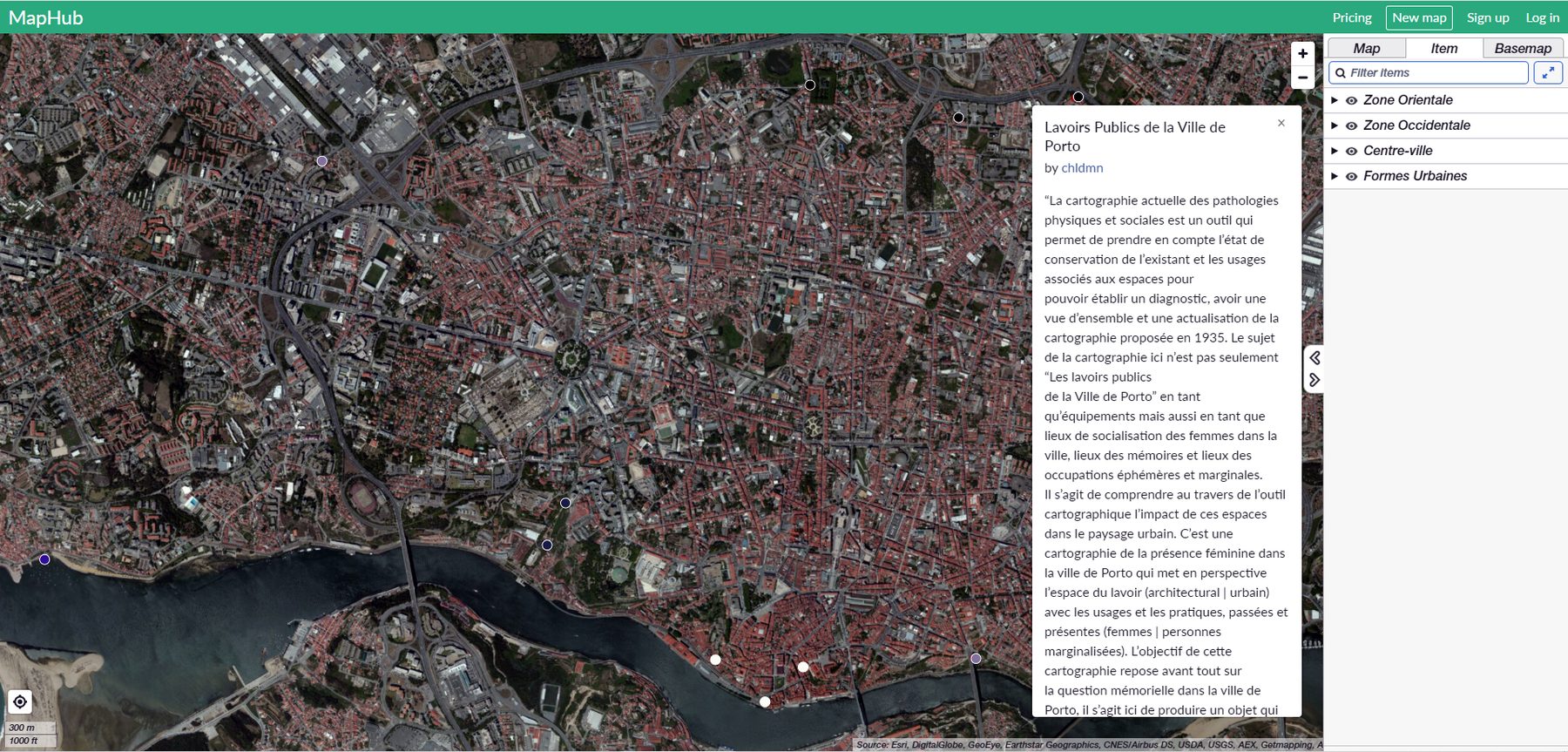
In conclusion, the extension of this archive work to architecture, the visual arts and art in the public space makes it possible to transcribe the complexity of the work of recovering what might be called a “women’s historical heritage”, through the mapping of memories and existing spaces in ruins and at risk of destruction (Figs. 8 and 9).32
Bibliography
- Choay, Françoise. L’allégorie du patrimoine. Paris: Seuil, 1999.
- Col·lectiu Punt 6. Urbanismo feminista: por una transformación radical de los espacios de vida. Barcelona: Virus, 2019.
- Darmon, Chloé. “Da fragilidade dos lavadouros públicos do Porto Apontamentos sobre um património em risco”. habitar a água, March 18, 2024. Available at https://habitaraagua.substack.com/p/da-fragilidade-dos-lavadouros-publicos (Last consulted June 2024).
- ———. “Habitar a Água, os Lavadouros Públicos do Porto: uma experiência das mulheres na cidade moderna”. Master Thesis, Universidade do Porto, 2020. https://repositorio-aberto.up.pt/handle/10216/133165.
- ———. “Abandoned wash-houses. Archiving wash-women practices in Oporto modern urban space”. Sophia Journal 6, no. 1 (2021): 154-169. https://doi.org/10.24840/2183-8976_2021-0006_0001_17.
- ———. “Lavoirs Publics de la Ville de Porto”, Digital Map of the Washhouses of Porto. Published in 2020. Available at: https://maphub.net/chldmn/lavoirspublicsporto (Last consulted June 2024).
- ———. Habitar a água. documentar as práticas urbanas das mulheres | Uma proposta cartográfica para os lavadouros do Porto. Cartography of the washhouses of Porto printed in fabric, exhibited in 2023. Available at: https://drive.google.com/file/d/1DzKs2KEhafNnB5vz3Q2ZbmzXzRQrpAXu/view?usp=drive_link (Last consulted June 2024).
- Darmon, Chloé, and Gabriela Manfredini. “Rite of the Waters: procession through the Campanhã Washhouses”. Scopio Magazine AAI Utopia 1, no. 1 (2023): 84-98.
- Fjeld, Anders. “Chapitre 3. L’égalité sensible du régime esthétique de l’art.” In Pratiquer l’égalité, edited by Anders Fjeld, Alejandro Quintana and Étienne Tassin, 75-108. Paris: Michalon, 2018.
- Hanisch, Carol. “The Personal Is Political.” Notes from the Second Year: Women’s Liberation (1970): 76-78.
- Lefébure, Christophe, and Marie Rouanet. La France des Lavoirs. Toulouse: Editions Privat, 1995.
- Lima, Dr Oliveira. “Os Lavadouros Públicos do Porto”. Boletim de Higiene e Sanidade Municipais, 1936.
- Moreira, Inês. “Após a fábrica, novas abordagens à ruína e aos fragmentos pós-industriais.” Revista Arqa, Arte e Arquitectura 112 (2014): 118-119.
- Paleo Mosquera, Sofía, and María Novas Ferradás. “Lavandeiras, género y arquitectura. Una crítica periférica sobre los espacios de la colada”. Ábaco 95-96 (2018): 192-196.
- Pardo Marín, Rosa, and Carlos Barberá Pastor. “El lavadero donde la mujer lava. Un espacio contradictorio y difuso en las políticas urbanas”. Feminismo/s 32 (2018): 23-47. https://doi.org/10.14198/fem.2018.32.01.
- Perrot, Michelle. “Le genre de la ville.” Communications 65 (1997): 149-163. https://doi.org/10.3406/comm.1997.1996.
- ———. Les Femmes ou les silences de l’Histoire, 57-58. Paris: Flammarion, 1998.
- Tsing, Anna L. Proliférations. Paris: Wildproject, 2022.
- Velho da Costa, Maria. O Cravo. Lisbon: Moraes Editores, 1975.
- Weizman, Ines. “Performing the Counter-Archive.” In Critical Neighbourhoods: The Architecture of Contested Communities, edited by Paulo Moreira, 165-167. Zurich: Park Books, 2022.
Notes
- 1↩
Michelle Perrot, “Le genre de la ville,” Communications 65 (1997): 158, https://doi.org/10.3406/comm.1997.1996.
- 2↩
Dictionnaire Larousse, Français.
- 3↩
“Lavatorium”, Wikipedia, https://en.wikipedia.org/wiki/Lavatorium (Last consulted June 2024).
- 4↩
Collins Dictionary, English.
- 5↩
Carol Hanisch, “The Personal Is Political”, Notes from the Second Year: Women’s Liberation (1970), 76-78.
- 6↩
Anna L. Tsing, Proliférations (Paris: Wildproject, 2022), 103.
- 7↩
Col·lectiu Punt 6, Urbanismo Feminista, Por una transformación radical de los espacios de vida (Barcelona: Virus, 2019), 76.
- 8↩
Ibidem, 72.
- 9↩
Christophe Lefébure and Marie Rouanet, La France des Lavoirs (Toulouse: Editions Privat, 1995), 135-138.
- 10↩
Chloé Darmon, “Habitar a Água, os Lavadouros Públicos do Porto: uma experiência das mulheres na cidade moderna” (Master Thesis, Universidade do Porto, 2020).
- 11↩
Doutor Oliveira Lima, “Os Lavadouros Públicos do Porto”, Boletim de Higiene e Sanidade Municipais (1936).
- 12↩
Ibidem. This reference is available in the annex of my master thesis, courtesy of the Water of Porto. It was a really helpful document to understand the role of the “designer” and also how working-class women were perceived in the beginning of the 20th century.
- 13↩
Anna L. Tsing, Proliférations (Wildproject, 2022), 101-102.
- 14↩
Michelle Perrot, “Le genre de la ville,” Communications, no. 65 (1997): 159, https://doi.org/10.3406/comm.1997.1996.
- 15↩
Sofía Paleo Mosquera and María Novas Ferradás, “Lavandeiras, género y arquitectura. Una crítica periférica sobre los espacios de la colada”, Ábaco 95-96 (2018): 192-196.
- 16↩
Rosa Pardo Marín and Carlos Barberá Pastor, “El lavadero donde la mujer lava. Un espacio contradictorio y difuso en las políticas urbanas”, Feminismo/s 32 (2018): 23-47, https://doi.org/10.14198/fem.2018.32.01.
- 17↩
Anders Fjeld, “Chapitre 3. L’égalité sensible du régime esthétique de l’art”, in Pratiquer l’égalité, edited by Anders Fjeld, Alejandro Quintana and Étienne Tassin (Paris: Michalon, 2018), 75-108.
- 18↩
Inês Moreira, “Após a fábrica, novas abordagens à ruína e aos fragmentos pós-industriais”, Revista Arqa, Arte e Arquitectura 112 (2014): 118-119.
- 19↩
Anna L. Tsing, Proliférations (Paris: Wildproject, 2022), 73.
- 20↩
Ibidem, 27.
- 21↩
Ines Weizman, “Performing the Counter-Archive”, in Critical Neighbourhoods: The Architecture of Contested Communities, edited by Paulo Moreira (Zurich: Park Books, 2022), 165.
- 22↩
Chloé Darmon, “Abandoned wash-houses. Archiving wash-women practices in Oporto modern urban space”, Sophia Journal 6, no. 1 (2021): 154-169, https://doi.org/10.24840/2183-8976_2021-0006_0001_17.
- 23↩
Ines Weizman, “Performing the Counter-Archive”, in Critical Neighbourhoods: The Architecture of Contested Communities, edited by Paulo Moreira (Zurich: Park Books, 2022), 166-167.
- 24↩
Chloé Darmon and Gabriela Manfredini, “Rite of the Waters: procession through the Campanhã Washhouses”, Scopio Magazine AAI Utopia 1, no. 1 (2023): 84-98.
- 25↩
Françoise Choay, L’Allégorie du patrimoine (Paris: Seuil, 1992), 21.
- 26↩
Translation: Daughters of Washerwomen.
- 27↩
Conceição Evaristo, in Filhas de Lavadeiras, documentary film by Edileuza Penha de Souza, 2019.
- 28↩
“Water and Gender”, in Water Facts by the UN Water, https://www.unwater.org/water-facts/water-and-gender (Last consulted June 2024).
- 29↩
Bernadette Vol, “Little Water Memories”, in Water archive: Between women and ruins by Chloé Darmon.
- 30↩
Michelle Perrot, Les Femmes ou les silences de l’Histoire (Paris: Flammarion, 1998), 57-58.
- 31↩
Maria Velho da Costa, “Mulheres e revolução”, Cravo (Lisbon: Moraes Editores, 1976). Cf. https://ocastendo.blogs.sapo.pt/revolucao-e-mulheres-de-maria-velho-da-229097 (Last consulted June 2024).
- 32↩
Chloé Darmon, “Da fragilidade dos lavadouros públicos do Porto Apontamentos sobre um património em risco”, habitar a água, March 18, 2024, available at https://habitaraagua.substack.com/p/da-fragilidade-dos-lavadouros-publicos (Last consulted June 2024).
How to cite
Darmon, Chloé. “An Imprint of Water Infrastructures: The Public Washhouses as Spaces of Everyday Life and Fragments of Women’s Work”. VAD. Veredes, arquitectura y divulgación, no. 11 (2024): 84–96.
© 2024 Chloé Darmon. CC BY-NC-SA 4.0.